

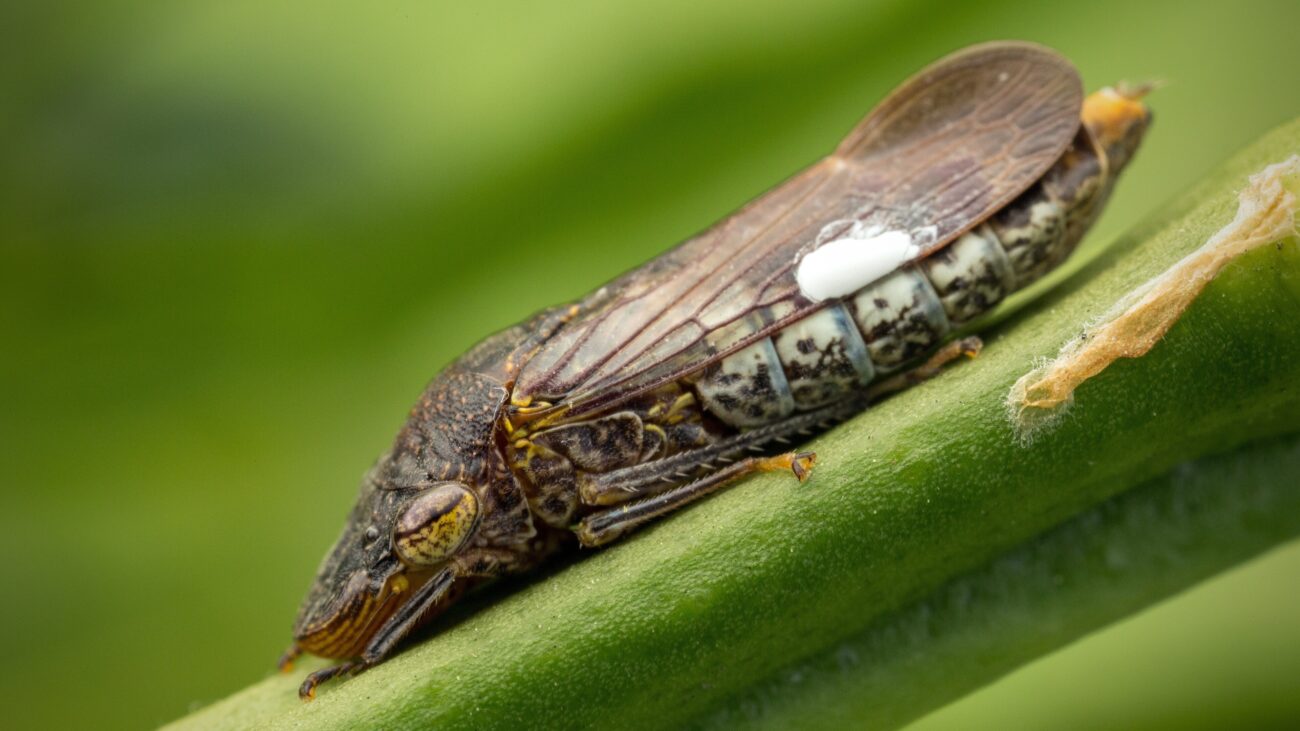
A county biologist shows up at your door — not about a noise complaint, not about your fence line. They want the grapevine you impulse-bought at Costco in April. Santa Clara County agricultural officials launched door-to-door visits in mid-July to recover roughly 1,300 grapevines sold at local Costco locations between April and May 2026. About 1,180 remain unaccounted for. The culprit: the glassy-winged sharpshooter (GWSS), an invasive insect that carries a bacterium capable of killing grapevines — and potentially devastating California wine country.
The Bug Behind the Knock
A tiny insect, a billion-dollar threat, and no cure once it arrives.
The GWSS delivers Xylella fastidiosa — a bacterium that blocks a grapevine’s water-conducting system, causing leaves to scorch and vines to wither. There is no cure once Pierce’s disease takes hold; infected vines cannot be saved. The sharpshooter is highly mobile, spreading the bacterium simply by feeding and moving between plants — essentially a flying syringe working through your neighborhood. GWSS has been successfully eradicated from several Northern California counties before, but only through fast, aggressive removal of infested material. Speed is everything here.
If you bought flagged plants, here’s what to do:
- Grapevines sold at Santa Clara County Costco locations between April 21–May 19, 2026, and desert willows sold June 24–July 3, 2026, are part of the recall.
- Do not move, compost, or throw away the plant — relocating it can spread the pest further. Isolate it away from other vegetation immediately.
- Contact your local County Agricultural Commissioner’s Office for inspection and pickup; Costco is offering full refunds and coordinating with agricultural officials on your behalf.
County officials deliberately started door-to-door work in Gilroy and surrounding South County areas — and that geography is intentional. “We really wanted to start here in South County because this is where a big part of our grape and wine industries [are] located, so we want to provide protection for our growers,” said Deputy Agricultural Commissioner Ericka Mora, as reported by NBC Bay Area. Only about 200 plants have been recovered so far through Costco cooperation and voluntary returns. Officials are physically uprooting and removing the rest for safe destruction.
What’s Actually at Stake
This isn’t a backyard hobby problem — it’s a regional wine economy problem.
California’s wine industry generates tens of billions of dollars annually, and Santa Clara Valley is a contributor with its own recognized wine identity. Its proximity to Napa and Sonoma means a new GWSS foothold here could ripple outward quickly, putting at risk the vineyards behind every local wine list. Prior incursions in counties like Solano and Butte were stopped — but only because the response moved fast.
If you bought a grapevine or desert willow from Costco during the flagged window, don’t compost it, don’t move it, and don’t ignore the knock at the door. Contact your County Agricultural Commissioner’s Office for safe removal. Costco will refund you. Acting now protects both your neighbors and the vineyards behind every Bay Area wine list.