

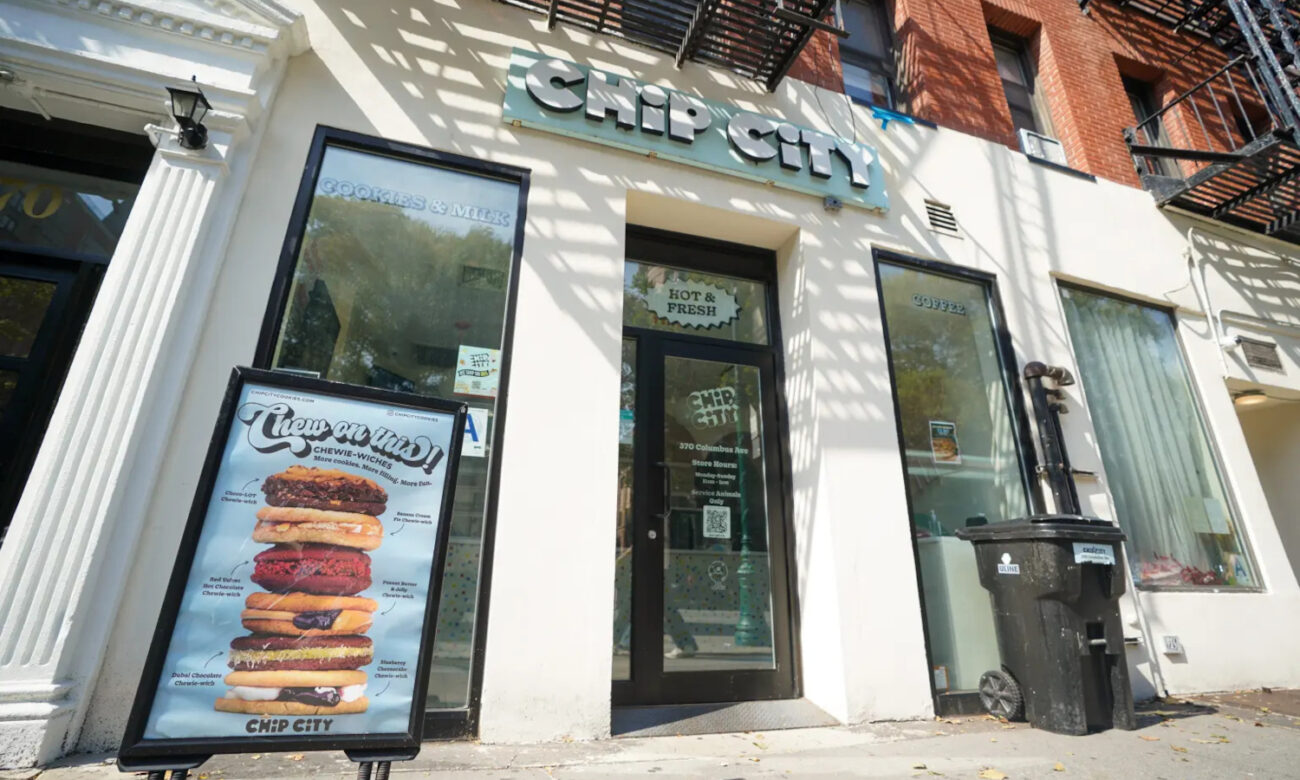
Chip City’s Astoria location, where the chain launched in 2017, among the stores that shuttered without public advance notice. The weekly flavor drop appeared on Instagram right on schedule. An hour later, customers arrived at darkened storefronts and locked doors — a fate familiar to fans of treats that disappeared without warning.
That’s how Chip City ended. The Queens-born oversized-cookie chain announced on October 2, 2026, that it was closing every remaining U.S. location after employees were told stores would shut at the end of business. No public countdown. The company cited “significant macroeconomic headwinds” and insufficient funding. Customers in Astoria, the Upper West Side, Long Island City, and beyond found out the way you discover a restaurant is gone: by showing up.
A Queens Cookie Empire – and a $17.5 Million Bet
How a single Astoria storefront became a multistate chain that a reported $17.5 million still couldn’t sustain.
Chip City launched in Astoria in 2017 on a straightforward premise: nearly six-ounce cookies, crisp edges, molten centers, and rotating weekly flavors built for social media — the same format that helped favorite chains like Crumbl generate lines around the block. Danny Meyer’s Enlightened Hospitality Investments reportedly put in $10 million in 2022, then another $7.5 million in 2024. The chain expanded into multiple states, then contracted — Connecticut gone, Virginia gone — until late September showed roughly 22 to 24 locations across New York, New Jersey, and Texas, depending on the source. Then nothing.
A few facts stand out:
- Employees reportedly received same-day notice; final pay promised through October 18 under Fair Workweek policies
- Chip City publicly blamed “significant macroeconomic headwinds” and a funding shortfall
- Enlightened Hospitality Investments reportedly invested $17.5 million across two rounds
- Co-founder Peter Phillips filed suit on September 28 — days before the closures — alleging breach of contract and unpaid wages
- NYPD Evidence Collection Team officers were photographed at the Upper West Side location; the reason remains unconfirmed
Workers reportedly received a message attributed to President Nicolas Baizan confirming stores would permanently close at end of day — and that it was their last day as Chip City employees. The total number of affected workers has not been confirmed in available reporting. Meanwhile, the brand’s Instagram kept posting new flavors.
“We have made the very difficult decision to close all of our Chip City locations.” — Chip City
A Lawsuit, a Founder’s Exit, and Unanswered Questions
Phillips’ allegations are serious — but available reporting does not establish that they caused the shutdown.
Days before the closures, co-founder and former CEO Peter Phillips filed suit in New York Supreme Court against Chip City, Enlightened Hospitality Investments, and executives Baizan and Fred LeFranc. Phillips alleges breach of contract, unlawful wage withholding, and retaliation. He claims he stepped down as CEO in March 2026 during a restructuring that handed Enlightened Hospitality a controlling stake. He alleges he was promised $157,500 in salary and family health coverage through December, then had his compensation frozen. He further alleges the company pressured him to transfer web domains and sought documents tied to more than $640,000 in SBA loans he says he personally guaranteed. The defendants had not publicly responded as of available reporting.
The timing is striking. The causation is not established. Chip City’s stated reason for closing after years of expansion centers on operating difficulty and a funding shortfall — the lawsuit is a parallel story, not a confirmed explanation.
Viral food brands run on visibility, but visibility doesn’t pay rent or cover labor across a multistate network. What happens to the Chip City name, its recipes, and its employees’ final-pay arrangements remains unclear.