

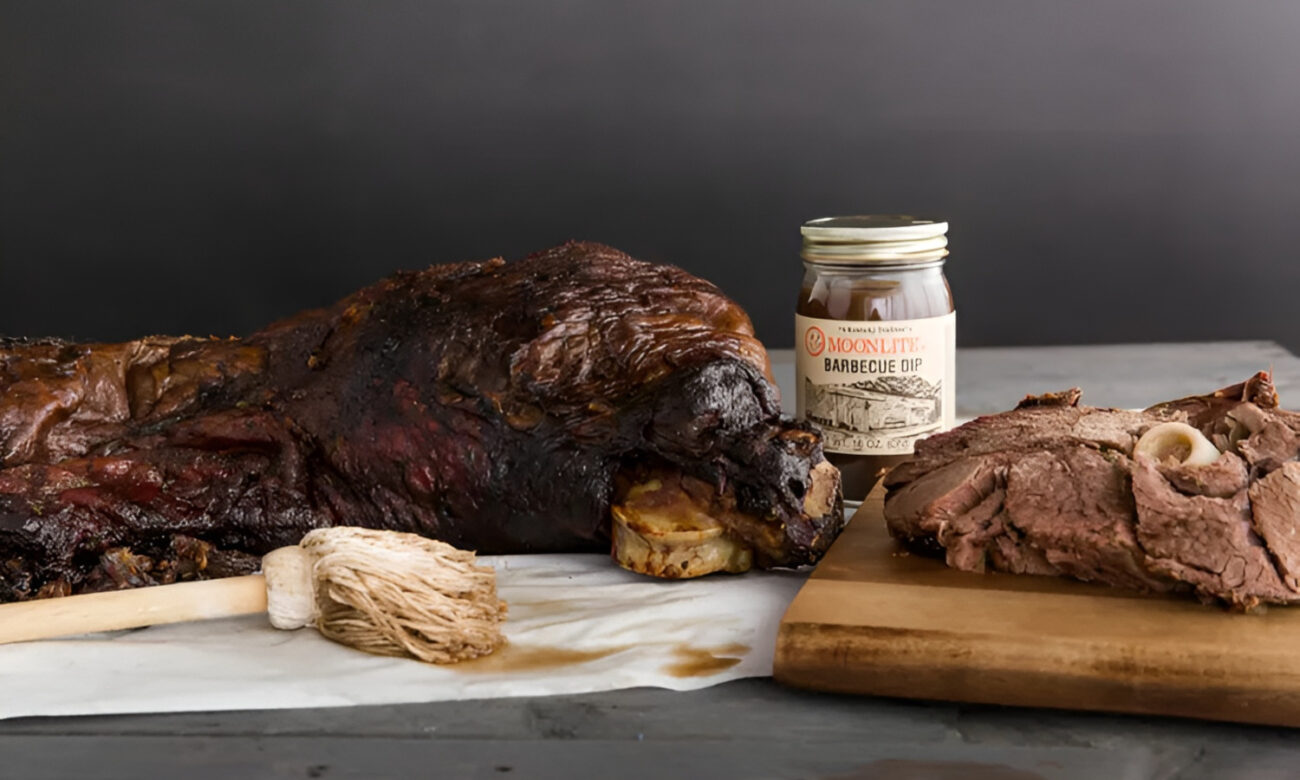
While the rest of America’s barbecue conversations orbit brisket and pulled pork, Owensboro, Kentucky never entered that debate. This western Kentucky river city runs on mutton — meat from sheep older than one year — slow-smoked over hickory and basted with a vinegar-pepper dip that has no interest in being sweet. The tradition traces back to 19th-century sheep farming, Catholic parish fundraisers, and the practical necessity of feeding large crowds. It’s still very much alive.
When Wool Ran Out, the Pit Fired Up
Agricultural economics, not culinary fashion, turned Owensboro into one of America’s most distinctive barbecue destinations.
Daviess County recorded 11,000 sheep in 1860 — more than its cattle population. Farmers raised them primarily for wool. Once an animal aged past productive shearing, its meat became too tough for quick cooking. Hickory smoke and low heat offered a practical solution, tenderizing the meat while feeding entire communities at once.
Local records cite a community barbecue as early as 1834, linked to Reverend Reuben Cottrell. Catholic parish picnics later institutionalized the method, transforming a practical cooking approach into a shared civic tradition. What separated Owensboro wasn’t sentiment — it was agricultural economics becoming cultural identity.
What defines Owensboro’s style today:
- Mutton carries a deeper, earthier flavor than lamb — richer and more pronounced, though properly prepared meat doesn’t tip into gamey.
- Hickory wood, long cook times, and repeated basting with a vinegar-water-salt-pepper dip form the flavor backbone.
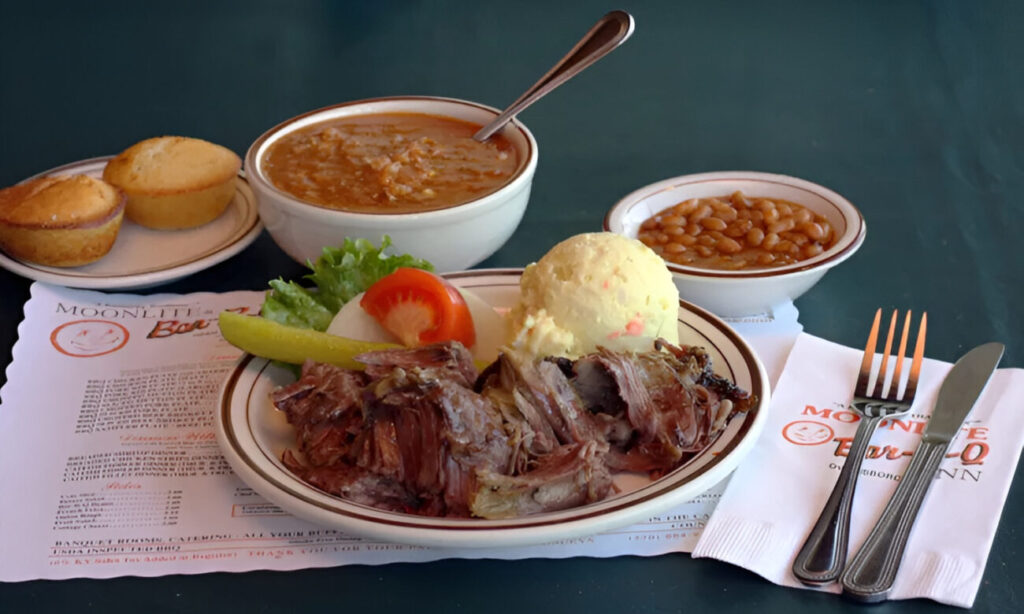
- Burgoo — a thick stew of mutton, mixed meats, vegetables, beans, and corn — arrives still ladled from large kettles, a communal dish as central to Owensboro’s table as the meat itself.
Where to Eat It – and When to Show Up Ready
Two anchor restaurants and a city-wide May festival give visitors more than one way into Owensboro’s barbecue tradition.
The vinegar dip is the clearest signal of Owensboro’s culinary philosophy. Where Kansas City leans sweet and Memphis builds on spice, Owensboro’s dip cuts through the meat’s fat with acid and pepper — designed to complement rather than conceal. Mutton’s intensity may help explain why the tradition never spread nationally; long cook times, experienced preparation, and a bold flavor profile make it a demanding specialty.
- Moonlite Bar-B-Q Inn, with roots to 1949 and Bosley family ownership since 1963, remains the natural starting point for first-timers — hickory pits, a large buffet of sliced and chopped mutton, burgoo on the side, and national shipping for those who can’t make the trip.
- Old Hickory Bar-B-Q offers a more focused experience: sliced and chopped mutton served with the traditional dip.
If timing allows, the BBQ and Barrels festival — held the second full weekend of May and rooted in a tradition dating to the late 1970s — brings the whole city into the process. Church cooking teams compete alongside restaurant vendors and backyard competitors, and a mutton-eating competition anchors the proceedings. Verify current dates and programming through official tourism sources before booking.
Owensboro’s barbecue endures not because it’s been preserved behind glass, but because church teams still show up, fire the hickory, and feed thousands. That’s not a food trend — that’s a community that never stopped cooking.