

Audubon Zoo sits under a canopy of old live oaks at 6500 Magazine Street, and its best-known exhibit recreates the swamp that surrounds New Orleans.
The zoo’s story starts with Louisiana’s first world’s fair. The World’s Industrial and Cotton Centennial Exposition of 1884 took place on this ground, and the improvements made for it laid out what became Audubon Park. An aviary served as the first animal exhibit, and plans for a full zoological garden followed in the years after. Today the zoo belongs to the Audubon Nature Institute, which also runs the Aquarium and the Insectarium downtown. USA Today readers have repeatedly ranked it among the best zoos in the country.
The Louisiana Swamp is the reason to come if you only have time for one exhibit. It walks visitors through the wetlands and the people who built lives around them, with cypress, Spanish moss, and old Cajun-style structures set among the animals. Alligators, black bears, river otters, and wading birds share the space. The rare white alligators draw the biggest crowds, their pale skin standing out against the dark water. The Cypress Knee Café sits inside the exhibit and serves jambalaya and other Louisiana plates, and the exhibit has its own gift shop.
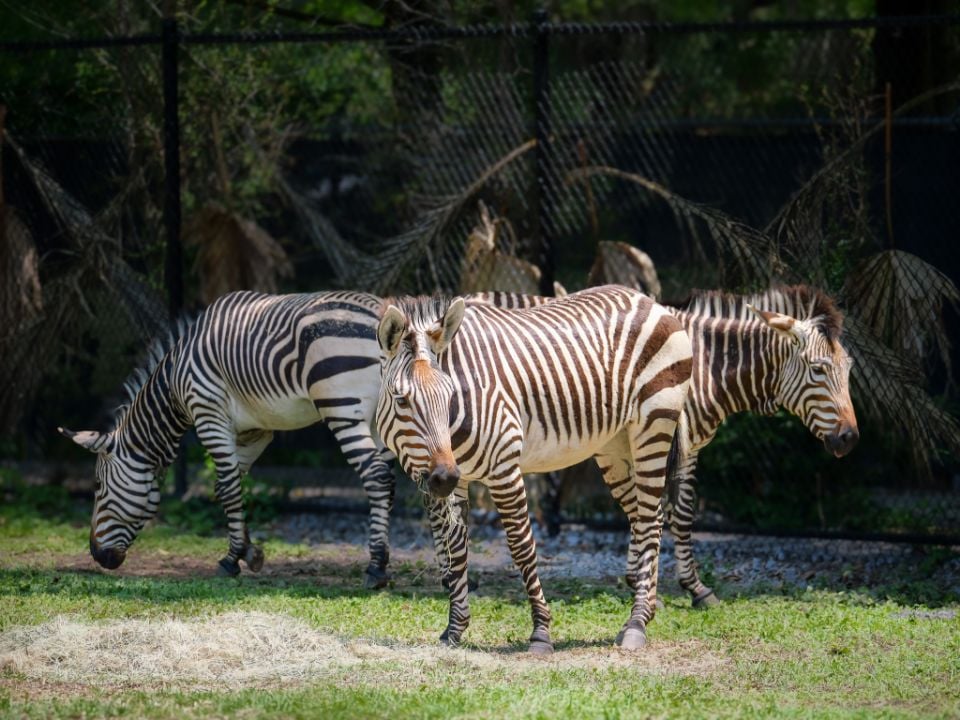
The rest of the zoo covers the world. Jaguar Jungle recreates a Mayan rainforest setting for its big cats. The African Savanna holds giraffes, and visitors can pay extra to feed them. The Asia section, orangutans, a white tiger, Amur leopards, endangered whooping cranes, and sea lions round out the list. A nocturnal house and a reptile building cover animals most visitors never see in daylight.
Families have plenty beyond the animals. Monkey Hill, one of the zoo’s oldest landmarks, gives children in a pancake-flat city a hill to climb and roll down. The Cool Zoo splash park and Gator Run help on hot days, and the Gottesman Endangered Species Carousel spins riders on endangered animals instead of horses. The Swamp Train gives a narrated ride past the main exhibits for anyone who wants to rest their feet. Keeper chats run through the day, and paid Wild Encounters put guests closer to animals like the giraffes.
Seasonal events add reasons to return. Boo at the Zoo, a family Halloween event with trick-or-treating, runs October 16 through 18, 2026. Other events fill the calendar through the year.
Timing matters here. The zoo runs on a seasonal schedule, and winter hours returned on September 8, 2026. Through early March, it opens Thursday through Monday from 10 a.m. to 5 p.m. and closes Tuesdays and Wednesdays. The last ticket sells at 4 p.m., and final entry is at 4:30. Summer hours, which add Tuesday and Wednesday, typically begin in early March. Weather and special events can change the schedule.
Tickets are sold online, and all sales are final with no refunds or exchanges. Seniors 65 and older get $5 off standard admission, and memberships cover all three Audubon attractions. Check the ticket page for current prices. Call guest services at 1-800-774-7394 with questions.
The easiest way to arrive is the St. Charles streetcar to the Audubon Park stop across from Tulane, then a shaded walk through the park to the zoo gate. Go early on a weekday, start with the swamp, and save Monkey Hill for the end.