

Louis J. Dufilho Jr. passed Louisiana’s pharmacy licensing exam in 1816, which made him the first licensed pharmacist in the United States, and his French Quarter apothecary now houses the New Orleans Pharmacy Museum.
Louisiana passed a law in 1804 requiring pharmacists to pass an exam before they could practice, the first rule of its kind in the country. Before that, almost anyone could run an apothecary after a short apprenticeship. Dufilho became the first to earn the license, and in 1823 he opened his own shop on the ground floor of a Creole townhouse he built at 514 Chartres Street. He lived upstairs with his wife, Emy Adel Becnel, and their seven children.
The shop did more than fill prescriptions. It also held a hardware store, a soda fountain, and a post office, which made it a busy stop for the neighborhood. Dufilho experimented with quinine against yellow fever, a disease that killed about one in six people in the city and took his own brother. He also joined the Howard Association, a volunteer relief group that cared for the sick during epidemics. In 1855, he sold the business to Dr. James Dupas and returned to France, where he died soon after. Ghost tours still repeat dark rumors about Dupas, and the museum’s own exhibits push back on them.
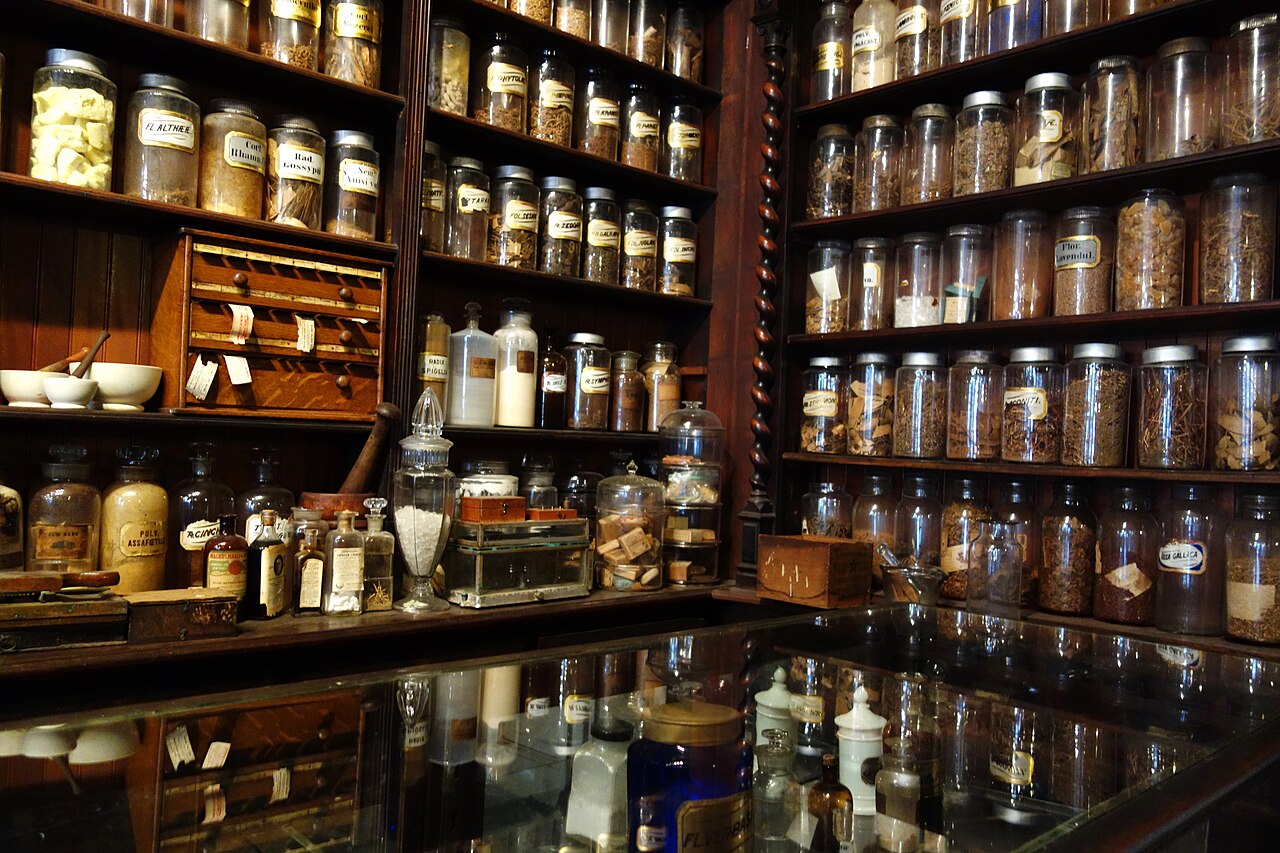
The collection shows how strange early medicine could be. Hand-blown apothecary jars line mahogany cabinets and hold crude drugs, medicinal herbs, and gris-gris powders tied to Voodoo practice. A jar marked leeches recalls the era when bloodletting was routine care. Opium-based pain remedies, patent medicines, purgatives, early hypodermic needles, and a bone saw fill out the displays. Pharmacists in that period often treated patients the way doctors do now, so the tools cover diagnosis as well as dispensing.
The soda fountain stands out among the larger pieces. It dates to 1855, and the museum explains that fountains like it helped patients wash down bitter medicines. A few items trace directly to Dufilho, including a wax seal he used to brand his prescriptions and ceramics archaeologists pulled from the old courtyard privy. Most of the founding collection came from Louis Wilson, who began saving pharmacy artifacts as a Loyola University student in the 1930s. Donations have since grown the holdings well past 10,000 objects, along with thousands of books and periodicals.
A visit covers the ground-floor shop, the upstairs rooms, and a courtyard garden where herbs grow. Most people need about an hour for a self-guided walk through.
Self-guided visits run Tuesday through Saturday from 11 a.m. to 4 p.m. and need no reservation. Admission costs $10 for adults and $7 for seniors 65 and up, students, people with disabilities, and military members. Children 6 and under get in free. Guided tours cost $20 for adults and $17 for the reduced rate, and they must be booked online in advance. They run in the morning on a schedule that shifts with the seasons, so check the museum’s website or social media before planning around one. Hours can also change during peak season.
You can find the museum at 514 Chartres Street, a short walk from Jackson Square, and it can be reached at (504) 490-6263.