

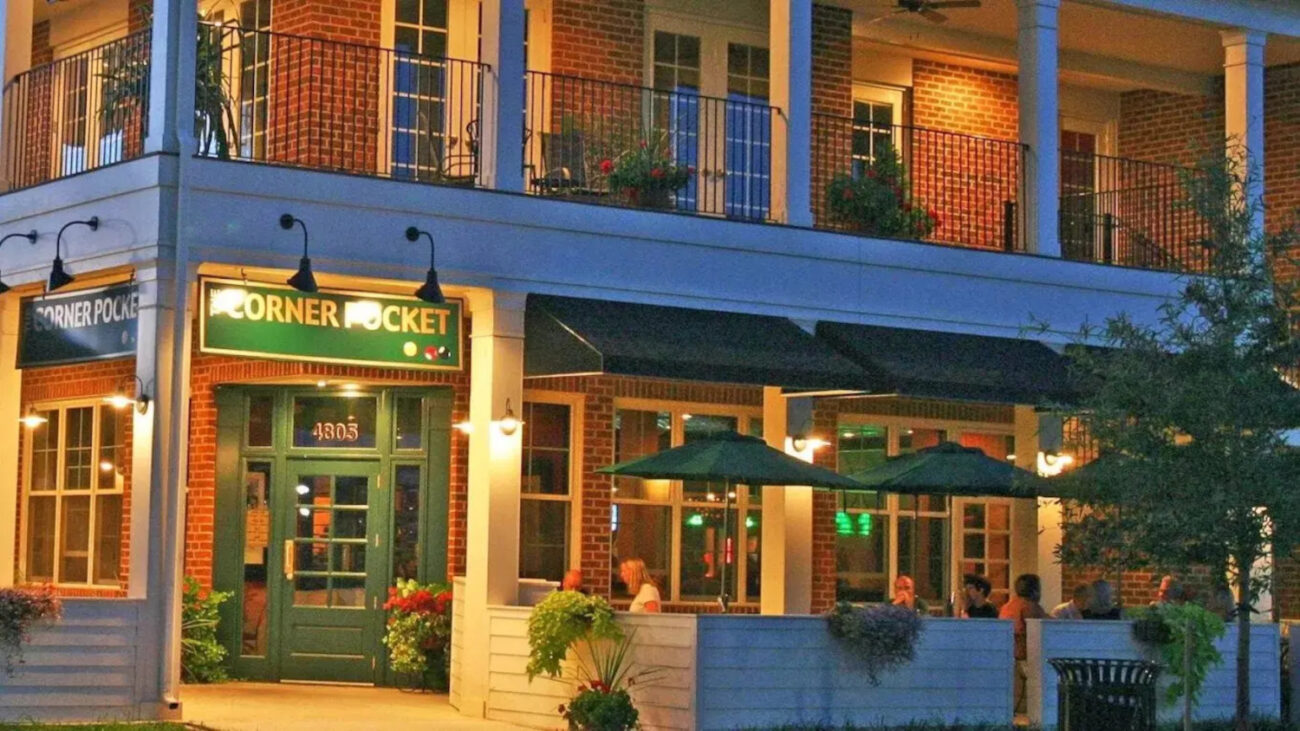
Wednesday night in Williamsburg, Virginia. A couple, reportedly finding few other venues still open, settles into a high-top near the bar at The Corner Pocket — a pool hall and bar that describes itself as a longstanding Williamsburg tradition — and orders two Guinnesses. Then the bill arrives.
Two beers, one surcharge, and one Reddit post that generated considerable online reaction.
What the Receipt Actually Said
The math is straightforward; the disclosure question is anything but.
According to secondary reporting that reproduced the receipt, the tab showed $8.50 per Guinness, a $17 subtotal, $1.87 in tax, and a $3.40 line item labeled “late night auto gratuity” — bringing the total to $22.27. The arithmetic checks out: 20% of the $17 pre-tax beverage subtotal equals exactly $3.40. A footnote on the receipt reportedly explained the policy: automatic gratuity applies to parties of six or more and to checks after 10 p.m. Worth noting — any additional amount written on the receipt would be added on top of that automatic charge.
A few details from the reported account:
- The couple ordered at 10:40 p.m. on a Wednesday; reportedly, few other venues were open
- Drinks arrived in plastic cups at a high-top near the bar
- The customer said no signage explaining the charge was visible before ordering
- The owner responded that the policy appears on signs, menus, and the venue’s website — and acknowledged customers could still miss it
The customer described the charge as “ridiculousness,” according to secondary reporting. The owner, for their part, said the venue didn’t want guests leaving dissatisfied and invited a follow-up by email. What remains genuinely unresolved: available reporting cannot independently confirm whether signage was visible to this particular couple before they ordered. Both accounts are plausible, and the full picture remains incomplete. For more on hidden-fee practices, the receipt transparency argument has broader context worth considering.
Tipflation Has a Researcher, and the Numbers Are Uncomfortable
Cornell tipping researcher Michael Lynn has been tracking the slow expansion of where and how much Americans are expected to tip — and the consumer frustration building behind it.
Michael Lynn told CNN that tipping settings and amounts have spread into more contexts, generating real uncertainty for customers. Reporting on his research found that the share of Americans who wanted tipping abolished rose from 32% in 2016 to 52% in 2022 — a pattern that mirrors how convenience retailers routinely overcharge customers in ways that go unnoticed. Anyone who has fumbled through a checkout screen at a coffee counter — confronted with a tip prompt before picking up a cup — will recognize the dynamic now showing up on bar tabs.
Lynn’s practical advice is direct: ask whether gratuity or a service charge is already included before paying. Any amount beyond that remains the customer’s choice, unless another charge is clearly itemized on the bill.
The $3.40 was never really the point. Knowing before ordering is. One question — “Is gratuity included?” — can prevent the entire dispute from arising in the first place.