


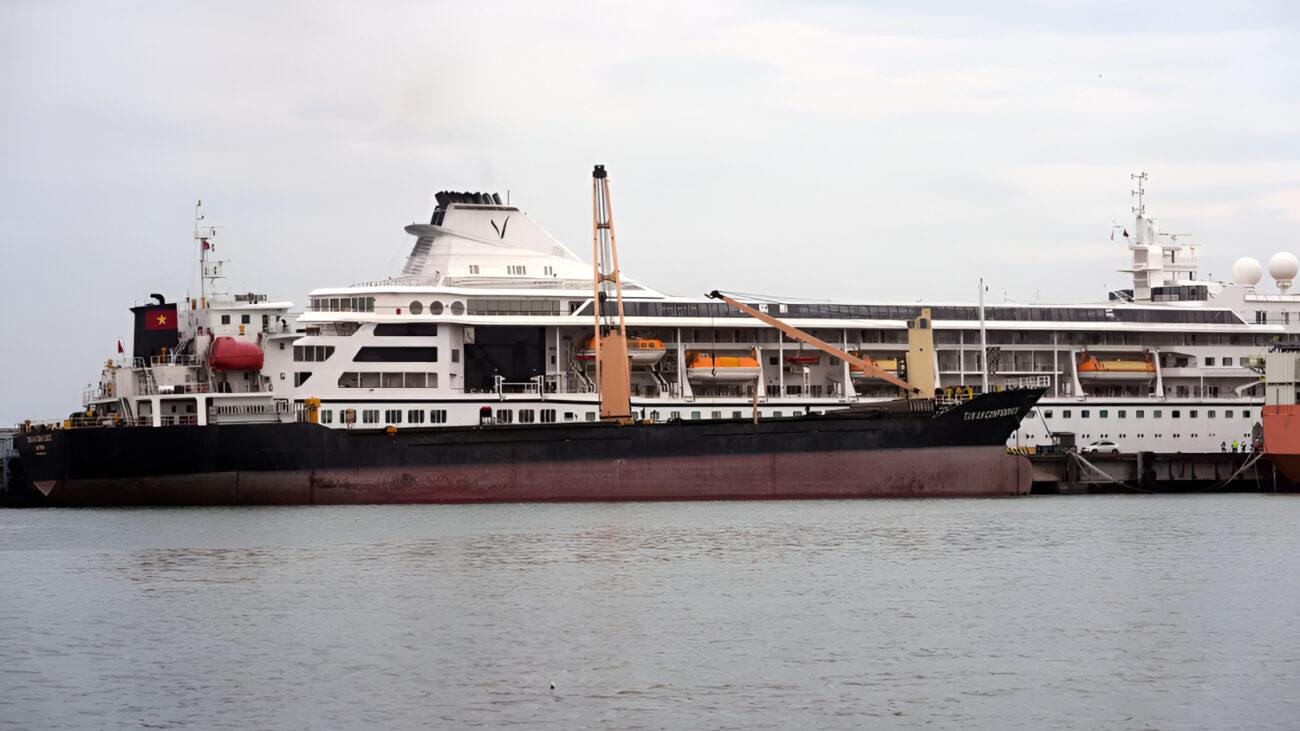
The pitch was seamless: a 642-foot ship, a luxury cabin, and a rotating roster of the world’s port cities as a permanent backyard. Villa Vie Residences built its business on that promise — the Villa Vie Odyssey was designed not for vacationers with return-date itineraries, but for residents who had purchased or leased cabins as an ongoing home at sea. Then the ship stopped in Cambodia, and residents reportedly learned about it through a message board.
From Floating Home to Floating Problem
Residential cruising is a housing product that happens to float — and the Odyssey’s operating model faced unsustainable financial pressure in Asian waters.
When a conventional cruise ship has problems, passengers lose a vacation. When a residential ship stops, residents lose something closer to an address. The Odyssey’s model centered on ongoing global occupancy — cabins purchased or leased for extended living rather than a single voyage. What put that model under pressure was fuel. According to Villa Vie’s official announcement, historical fuel costs ran about $1,800 per cabin per month. In parts of Asia, that figure reportedly surged to $6,000–$8,000 per cabin. The company tried slowing the itinerary and extending port stays to reduce consumption. Those measures were not enough to offset the increase.
The gap between $1,800 and $8,000 is not a rounding error. Villa Vie acknowledged it could no longer carry the resulting operating losses.
The Clause Nobody Read Closely Enough
When the ship stops, the hard questions about refunds, ownership rights, and what “temporary” actually means come into sharp focus.
According to NBC News’ account of his blog post, Randy Cassingham — a resident who writes about residential cruising — described residents learning through a message-board notice that the ship would enter temporary layup, with everyone required to disembark by a specified afternoon deadline. Crew would remain aboard to maintain the vessel and its essential systems. Residents, meanwhile, potentially faced the immediate logistics of involuntary displacement in a foreign country:
- arranging hotel rooms
- managing onward flights
- accessing medications
- handling luggage
though the full scope of disruption and the company’s support varied across reports.
Villa Vie said passing the full fuel increase on to residents “was not realistic” and described the vessel’s status as a temporary layup while it pursued restructuring and recapitalization. No outcome, the company acknowledged, was assured.
What remained publicly unresolved at the time of reporting were the financial questions at the core of the story: potential refunds, cabin purchase rights, deposits, onboard credits, and future travel entitlements. These are open questions, not confirmed losses — but they are precisely the questions a residential-cruise contract should answer before anyone signs. Whether the Odyssey’s contracts addressed them clearly is not established by available reporting.
Worth stating plainly: Sihanoukville is a real Cambodian coastal port city, not a cautionary backdrop. Cambodia did not strand these residents. The operator’s inability to sustain its fuel costs did.
Before anyone considers treating a ship cabin as a long-term home, the meaningful due diligence has little to do with itineraries. Ask about:
- fuel-cost clauses
- insolvency protections
- emergency disembarkation procedures
- what “ownership” legally means when a vessel stops moving
Those are the questions worth answering before boarding — not after a message-board notice sets a 2 p.m. checkout deadline.