


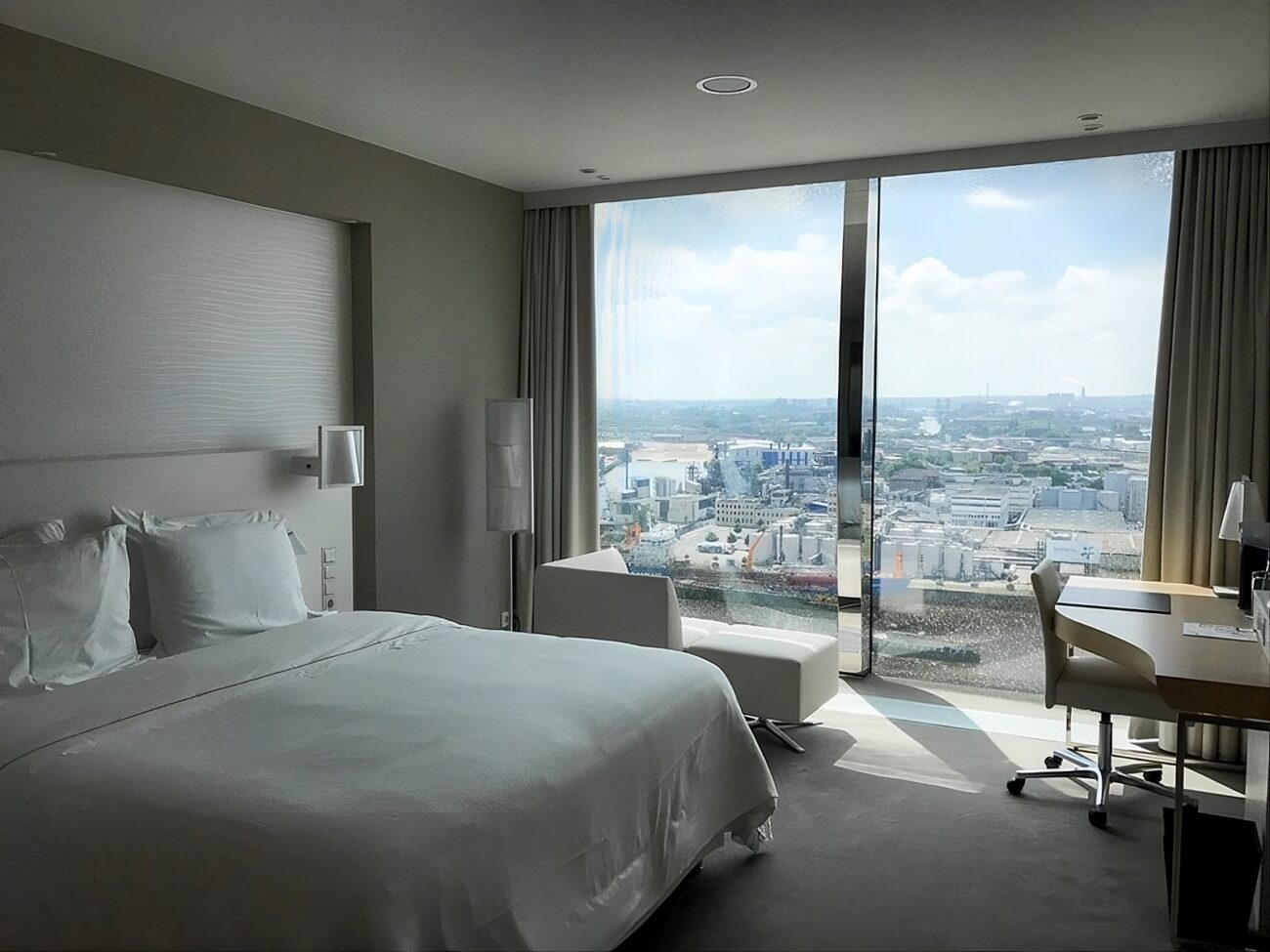
Somewhere between booking confirmation and arrival, many travelers fall into the same trap: refreshing the hotel map, hunting for a “safe” room number like it’s a cheat code. Tony Byerly, global president and CEO of Securitas Technology, says that fixation misses the point. “The overall security environment of the hotel matters more than any specific floor or room number,” he told Travel + Leisure. Edward Troiano, founder of Knight Security New York and a security consultant with more than 20 years of experience, agrees — and both experts offer practical frameworks that take about five minutes to apply.
The Floor Range That Actually Makes Sense
Floors three through six hit the practical sweet spot between intrusion risk and evacuation speed.
Both experts land in similar territory on floor selection. Byerly recommends floors three through six as a reasonable middle ground — high enough to deter ground-level intrusion, low enough to descend by stairwell if elevators become unavailable during a fire. Troiano leans toward the fourth floor or higher. Neither treats this as gospel. Property layout, stairwell access, and building age all shift the calculus. Think of it as a starting point, not a reservation requirement.
Once settled in, follow U.S. Fire Administration guidance and run through these steps immediately after check-in:
- Find the two nearest exits and count the doors between your room and each one — navigating in the dark may become necessary.
- Choose a room near a stairwell, close enough to use it quickly but not so close it draws constant foot traffic past your door.
- Avoid rooms above lobbies, ground-floor restaurants, garages, loading docks, or car drop-off areas — quieter locations sit outside the paths that attract the most activity.
- Confirm the deadbolt fully engages; check windows and balcony doors before unpacking.
- Keep your room number private and verify any unexpected visitors with the front desk before opening the door.
Property Security Is the Real Door Policy
A well-run hotel builds security into its bones — not just into the deadbolt on your door.
Byerly points to three property-wide signals worth checking before you even reach your floor:
- Key-card access to guest areas
- Monitored entrances
- Well-lit public spaces
A hotel that gets those basics right has integrated security throughout the property rather than concentrating it at a single door. Think of it as the difference between a venue with a genuine door policy and one waving everyone through unchecked.
Troiano’s shorthand for room placement is “quiet in, quiet out” — rooms away from high-traffic, high-noise zones tend to sit outside the corridors that attract problems. That principle, combined with Byerly’s property-wide checklist, gives you a layered approach that no single floor number can replicate.
For travelers with mobility needs, the calculus shifts. Call the hotel before booking to confirm that elevators, ramps, and accessible features are fully operational. The safest room is always the one that works for your specific situation — not a universal ranking on a floor plan.
Spending two minutes on arrival to locate exits and test your locks is the simplest safety habit most travelers skip — and according to these experts, it’s the one that matters most.