

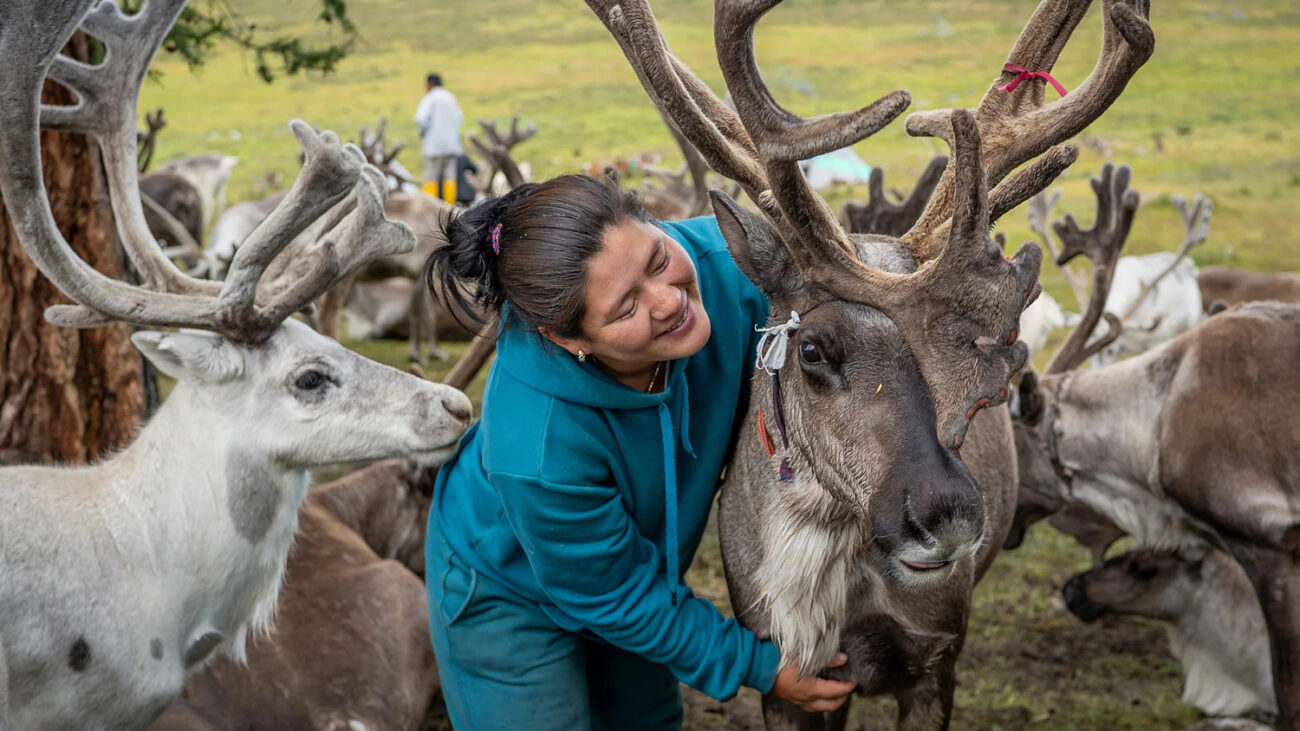
The 4×4 stops. The horse is waiting. Somewhere ahead, through the taiga — the boreal forest stretching across northern Mongolia’s Khuvsgul Province toward the Russian border — a Tsaatan family has already moved camp since last week. The Tsaatan, also known as the Dukha, are a Turkic, Tuvan-related people who herd reindeer across this vast, isolated landscape. Getting here requires a flight to Mürün, a long drive to Tsagaannuur, a border region permit, and then roughly four hours on horseback to wherever the camp currently sits. This is not a package tour. It is a working community that has chosen, carefully, to let you in.
A Cup of Tea, a Working Camp, and No Electricity
Arrival strips away expectations quickly — and the food culture that greets you is built entirely around movement and reindeer.
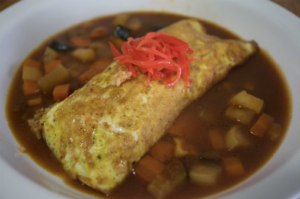
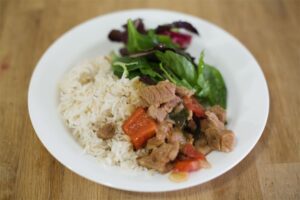
The ortz — a portable, conical dwelling designed for frequent seasonal moves — has no electricity and no running water. Bedding is basic. The family’s day started before you arrived and will continue long after you sleep. Reindeer milk anchors the food culture: it becomes tea, cheese, yoghurt, cream, and butter. Tea functions as a hospitality ritual, not a beverage option. What ends up on the table varies by family, season, and supply access. Some visitors report beef, bread, and vegetables; others encounter freshly slaughtered sheep with organ meats eaten immediately because there is no refrigeration. No single standardized meal awaits — real camp life is messier and more interesting than that.
Before You Go — What This Trip Actually Involves
The logistics are straightforward only once you understand the scale of the journey.
- Route: Ulaanbaatar to Mürün, then 4×4 to Tsagaannuur, then horseback to the current seasonal camp — reportedly around four hours, though the duration shifts with camp location. Border permits are required.
- Stay: Minimum three days, two nights inside an ortz with a host family. No electricity, no running water.
- Cost: Approximately $200 per person for two nights, varying by group size and season. Book through Zaya Oldov (+976 9977 0480) — reconfirm price and contact details before travel.
- Best time: June through September for accessible trails and milder weather. Winter brings extreme cold, with reported air temperatures near −58°C and significantly harder conditions.
- Conduct: Arrange everything in advance through the community center. Ask before photographing people, animals, or ceremonial objects. Earlier BBC reporting documented visitors arriving without interpreters and leaving rubbish behind. Arrive prepared, pack out everything, and bring an interpreter.
Community Income, Not Cultural Performance
The tourism model here was built by the Tsaatan — and that distinction matters entirely.
Zaya Oldov helped establish the Tsaatan Community and Visitors Center, which connects travelers with host families and coordinates accommodation, transport, and permits. According to the center, visitor fees go directly to participating families — though this is not independently audited data. The stakes are real: hunting restrictions and environmental pressures have made traditional self-sufficiency harder, so tourism provides one meaningful source of cash income. Where hosts invite participation — milking, collecting firewood, helping with food preparation — accepting that invitation offers a far clearer sense of camp rhythm than watching from the sidelines.
The Reindeer Are Not the Meal – Mostly
These animals are transport, dairy producers, and the center of Tsaatan cultural identity — slaughter is neither routine nor universal.
Reindeer provide milk, carry packs during seasonal migrations, and sit at the heart of Tsaatan cultural life. Meat consumption varies between families; some reportedly reserve it for winter or particular circumstances, and slaughter is by no means routine. Visitors may also encounter shamanic traditions that shape daily life — ceremonial objects or medicinal plants may be present in and around camp, according to travel accounts. Approach these with curiosity and restraint, and always ask before raising a camera.
What lingers after the ride back out isn’t the saddle soreness. It’s the cup of reindeer-milk tea — steam rising in the early chill — pressed into your hands while someone beside you is already heading out to check on the herd. That, according to everyone who has made the journey, is the entire point.