


Algiers Point was settled in 1719, making it the second-oldest part of New Orleans, and the neighborhood that grew up along this curve of the Mississippi’s west bank built its identity on the riverfront shipbuilding and ship repair trade that took hold around 1819. The cottages and townhouses that filled in the streets afterward still carry that working-class maritime character today. These four corridors cover the neighborhood from its architectural core to the levee that built it.
Pelican Avenue Walkways
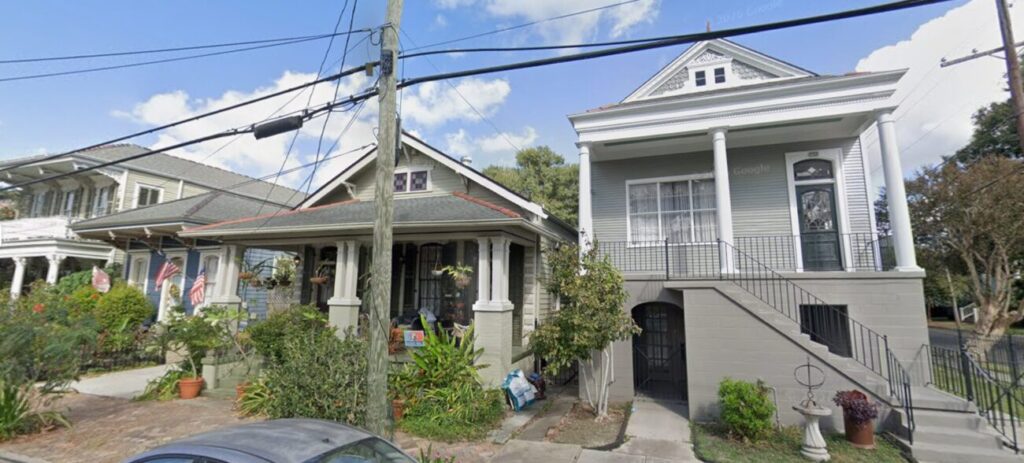
The 700 block of Pelican Avenue holds a sampling of seven homes that together represent the full range of styles found across Algiers Point: Greek Revival, Italianate, and Craftsman standing side by side along the same brick sidewalk. The oldest house on the block, a Greek Revival centerhall home at the corner of Vallette, dates to 1848 and still anchors the corner today.
Walking the even-numbered side of this block means passing porches in nearly every configuration the era produced: full double-gallery wraparounds, single-story stoops, box columns stacked five over five. One house painted bright pink sits on an oversized lot thick with angel trumpets and bougainvillea, the kind of unplanned color choice that somehow reads as exactly right rather than out of place. The brick sidewalk itself, original to the period, runs the length of the block and stays remarkably level given its age.
Pelican Avenue runs through the heart of the Algiers Point Historic District, with the 700 block between Belleville and Vallette streets offering the densest concentration of varied architecture.
Vallette Street Sidewalks
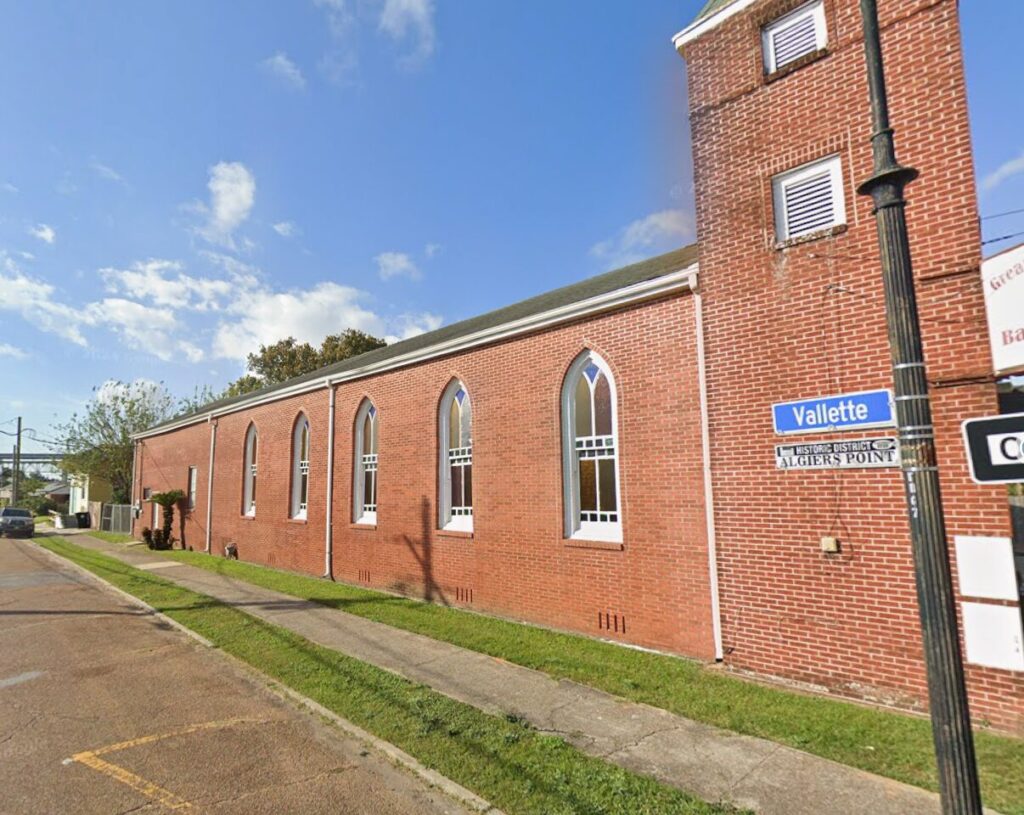
Vallette Street cuts through the district at a right angle to Pelican, and the corner where the two streets meet anchors much of the neighborhood’s oldest surviving housing stock. The Peter Bocage House, home of the early jazz trumpeter who played alongside some of the genre’s founding figures, sits at the corner of Vallette and Newton Street, a quiet residential marker of the neighborhood’s deep musical lineage.
The street itself runs through territory that was Barthelemy Duverje’s plantation before it was subdivided into the grid that defines Algiers Point today. Walking Vallette end to end covers ground that shifted from agricultural land to shipyard worker housing within a few decades, and the architectural mix along the street, much of it built in the Greek Revival and Italianate styles that dominated the neighborhood’s 1850 to 1900 growth period, reflects that transition directly.
Vallette Street runs through the Algiers Point Historic District between Pelican Avenue and the levee, intersecting Newton Street near the Bocage House site.
Bouny Street Corridor
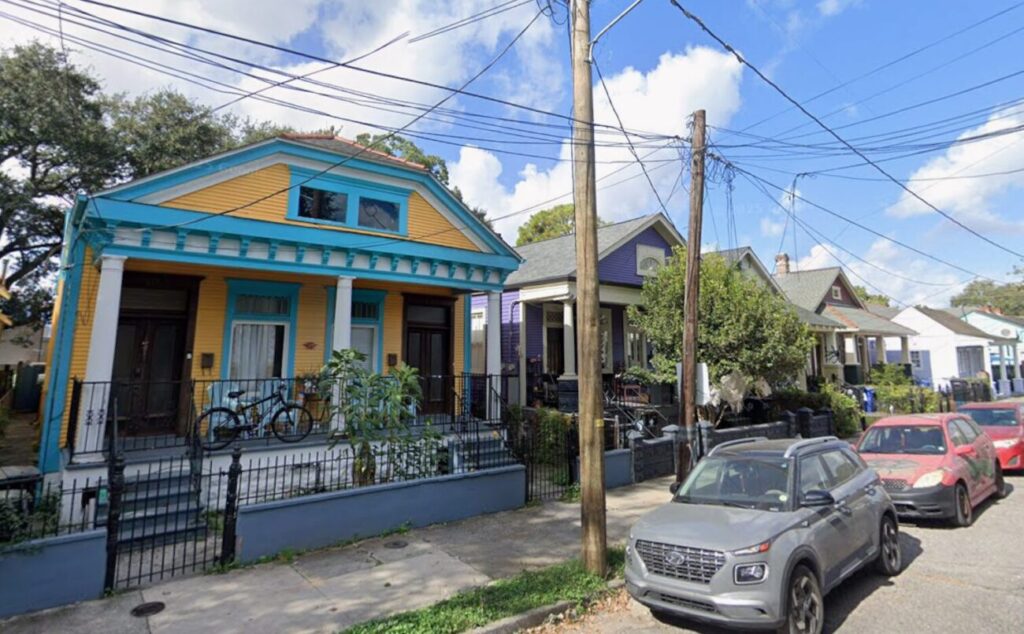
Bouny Street sits within the dense grid of the historic district, dominated like the rest of the neighborhood by Greek Revival, Italianate, and Victorian construction dating to Algiers Point’s primary growth period between 1850 and 1900. A devastating fire in 1895 destroyed hundreds of buildings across Algiers, and much of what stands today on streets like Bouny reflects the rebuilding that followed, giving the corridor a slightly later architectural signature than the oldest pockets near Pelican and Vallette.
The result is a street that reads as a snapshot of turn-of-the-century rebuilding rather than the neighborhood’s earliest housing stock, but the craftsmanship holds up just as well. Shotgun houses and raised cottages line the block in a continuous run, shaded by mature trees that have had well over a century to establish themselves since the fire cleared the way for new construction.
Bouny Street runs through the core of the Algiers Point Historic District, within easy walking distance of both the Pelican Avenue and Vallette Street corridors.
Powder Street Levee Access
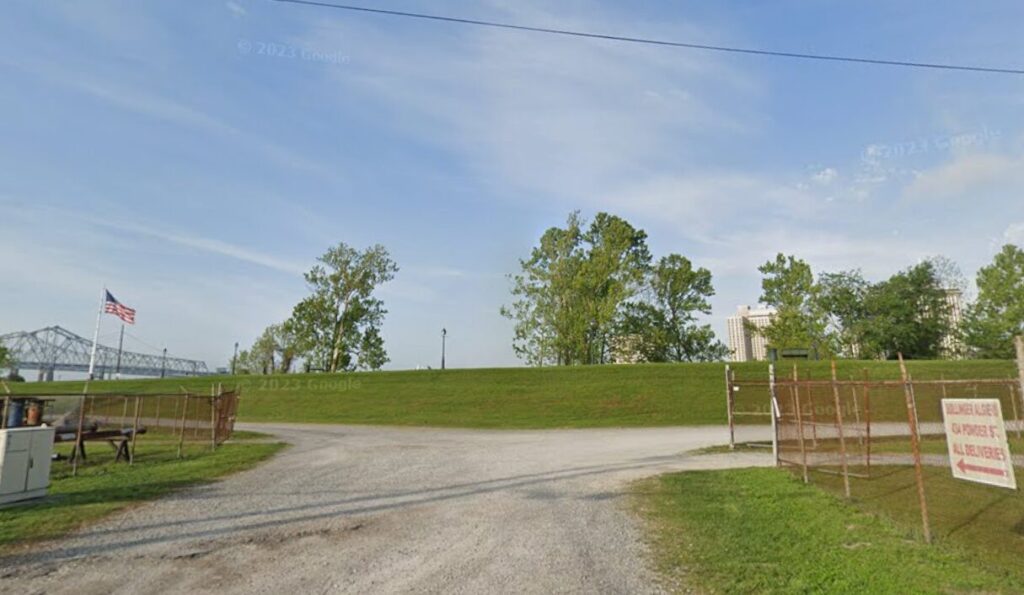
Powder Street takes its name from the city’s powder magazine, which was once stored in this section of Algiers, a detail that ties the street to the neighborhood’s early military and industrial history rather than directly to the shipbuilding trade that came later. The street runs toward the levee, where a paved path opens up along the Mississippi River with unobstructed views back toward the French Quarter and downtown skyline.
This stretch functions as the connective tissue between the residential grid and the river that built the neighborhood’s economy. Shipyards, sawmills, lumber yards, and an iron foundry once operated along this riverfront, and standing at the levee’s edge today, with the working river still moving barges and the occasional towboat past the Point, makes that industrial history feel close rather than abstract.
Powder Street runs from the historic district toward the Mississippi River levee, with paved path access for walking or biking along the riverfront once you reach the top of the levee.