

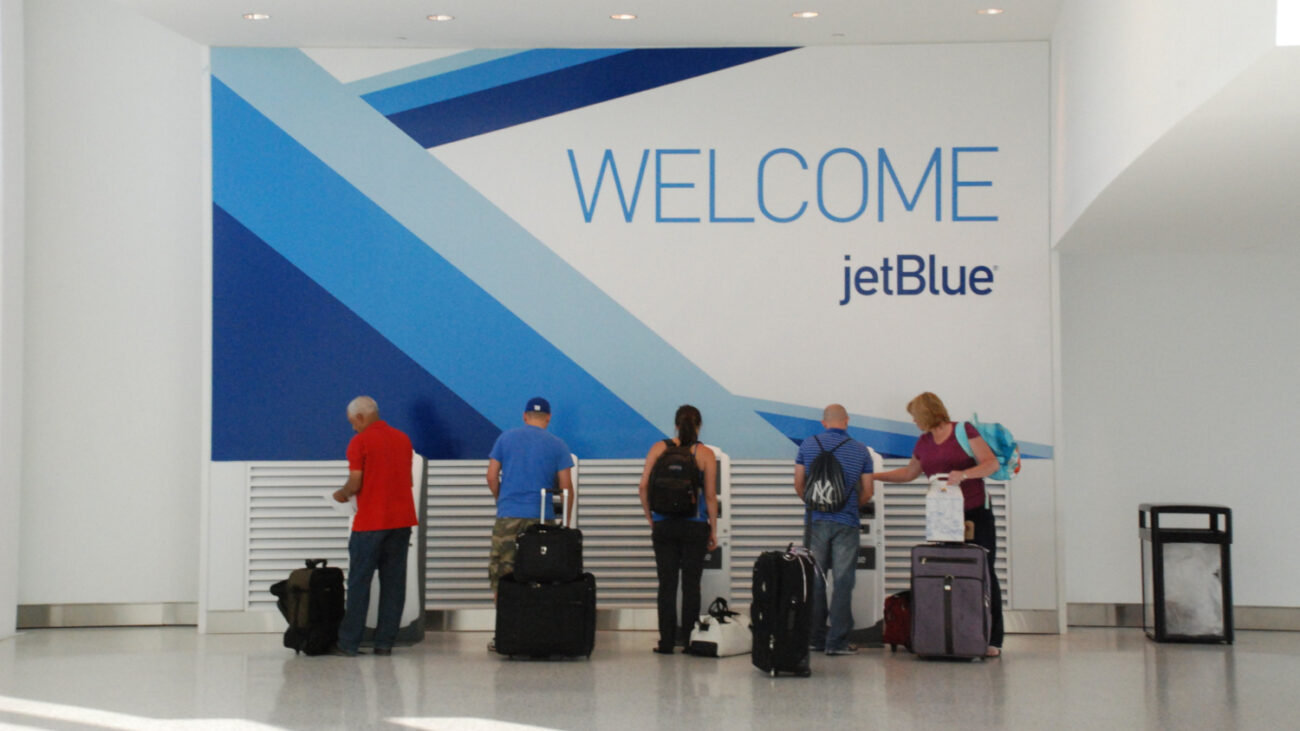
JetBlue has raised checked-bag fees twice in 2026 — and travelers are absorbing every dollar of it. Effective November 3, 2026, the airline increased fees for the second time this year on economy tickets covering U.S., Canada, Latin America, and Caribbean routes. This is not a one-off adjustment. Jet fuel hit roughly $4.41 per gallon in early November, up from about $2 in January, according to CBS News citing Airlines for America’s tracker. Many major carriers are feeling that squeeze. Travelers are the pressure valve.
What You’ll Actually Pay
The new fee structure punishes procrastination — knowing the numbers before you pack can save you up to $15.
Buy your first bag at least 24 hours before departure and the charge is $50 during off-peak periods or $55 during peak. Wait until within 24 hours and those numbers jump to $60 and $70, respectively, according to JetBlue’s official fee schedule and reporting by WRIC.
A second bag runs $70 to $75 when purchased in advance; airport or late transactions can reach up to $85. These rates replaced fees that were already freshly raised. In March, JetBlue bumped first-bag prices from $35 to $39 off-peak and from $40 to $49 during peak periods. That cumulative climb adds up fast for anyone checking bags on a regular basis.
Ways to Avoid the Highest Charges
A few targeted moves can significantly reduce — or eliminate — what you pay at check-in.
- Purchase your bag allowance at least 24 hours before departure and save up to $15 on the first bag, depending on the peak or off-peak comparison.
- JetBlue Plus, JetBlue Business, and JetBlue Premier cardmembers can check one free checked bag for themselves and up to three travel companions; eligibility and itinerary restrictions apply.
- TrueBlue Mosaic 1 members receive one free checked bag; Mosaic 2, 3, and 4 members receive two.
- Carry-on eligibility varies by fare type and route — confirm your specific fare terms before assuming a bag travels free.
The Industry Isn’t Blinking
JetBlue’s increase reflects a wider industry pattern that shows no signs of reversing.
According to a paraphrase of her comments in The Washington Post, travel analyst Katy Nastro of Flighty cautioned that airlines may keep ancillary fees elevated even if fuel prices later ease, because baggage charges have become a core revenue tool — not a temporary surcharge tied to current fuel costs.
JetBlue is not an outlier. United, Delta, American, and Southwest have all adjusted bag fees this year, according to U.S. News. JetBlue’s stated rationale — helping offset rising fuel and operating costs while keeping base fares competitive and letting passengers opt out if they travel light — is accurate as far as it goes. It is also the standard industry justification that has accompanied nearly every fee increase for more than a decade. Ancillary charges are now as baked into air travel as a middle seat.
Before packing, check the baggage rules attached to your specific reservation, confirm whether a credit card or loyalty status covers the fee, and pay early if neither applies. The advertised fare has not told the whole story for a long time — and this year, that gap got a little wider.