

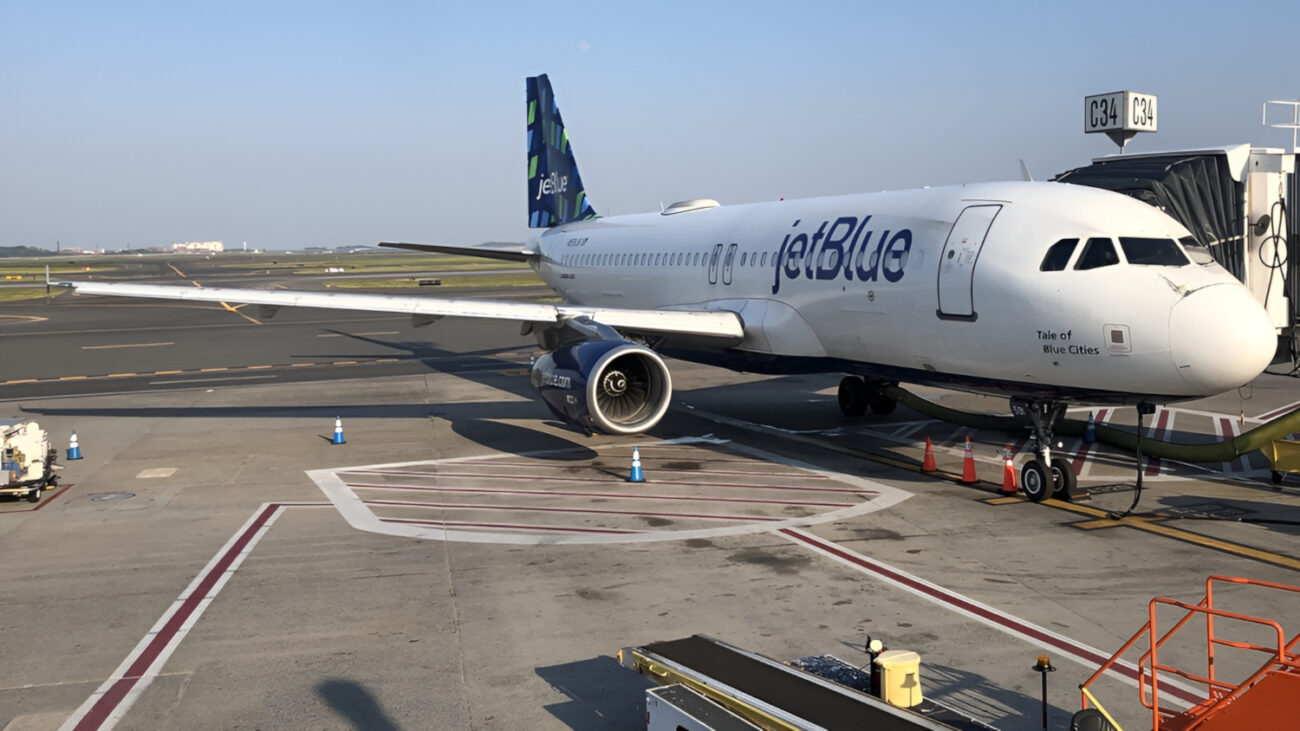
You booked the cheap JetBlue fare. You told yourself it would be fine. The U.S. Department of Transportation‘s October 2026 Air Travel Consumer Report makes the case in cold detail — and with Thanksgiving approaching, the timing is worth taking seriously.
The report, released October 19 and covering August 2026 domestic operations, shows JetBlue cancelled 6.2% of its flights last summer. That works out to roughly one canceled flight for every 16 scheduled. The carrier also ranked last for on-time arrivals, with only 59.7% of flights landing within 15 minutes of schedule. These are August numbers, not a holiday forecast. But they represent the most current official picture available — and Thanksgiving doesn’t move.
The Numbers Don’t Lie
August’s airline report card ranges from solid to genuinely alarming — and the spread is wider than most travelers realize.
Delta led the eight-carrier comparison at 77.0% on-time arrivals and a 2.0% cancellation rate — per Global Work & Travel’s analysis of the DOT report. Allegiant recorded the lowest cancellation rate at just 0.4%; JetBlue’s cancellation rate was approximately 15.5 times Allegiant’s in the same dataset. Alaska (72.3%), United (71.7%), and American (70.6%) clustered in the middle. Frontier hit 3.0% cancellations.
Delta’s top ranking still means 23% of its flights missed the on-time threshold. No airline is running a Swiss train network here. But the gap between the best and worst performers is real, and it carries consequences when a flight connects to a cruise departure or a rehearsal dinner.
How to Stack the Odds in Your Favor
Five practical moves that reduce disruption risk on fixed-date travel — none of them require a business-class upgrade.
- Book the earliest departure you can realistically make. Per the same DOT dataset, 89.7% of flights scheduled between 6:00 and 6:59 a.m. departed on time across the 30 largest U.S. airports in August; only 52.8% of flights in the 8:00–8:59 p.m. window did. Late-day flights were consistently less punctual throughout the dataset.
- Avoid making the last flight of the day your only option when missing it means missing everything.
- Build genuine buffer into connections — especially any itinerary involving a terminal change, passport control, or checked-bag rehandling.
- Arrive a day early for cruises, weddings, or any event that won’t wait.
- Keep booking details and ground transport information saved offline. Scrambling for a rebooking during a disruption is hard enough without fighting for airport security Wi-Fi.
Treat reliability as a line item in the holiday budget, not a footnote.
A fare that looks like a bargain can stop looking that way quickly — factor in an unplanned hotel night, a missed non-refundable excursion, or the conversation explaining why the seat at the table will be empty. Compare cancellation rates and same-day alternative options alongside price. The cheapest seat at the gate is rarely the cheapest seat by the time the turkey is carved.