

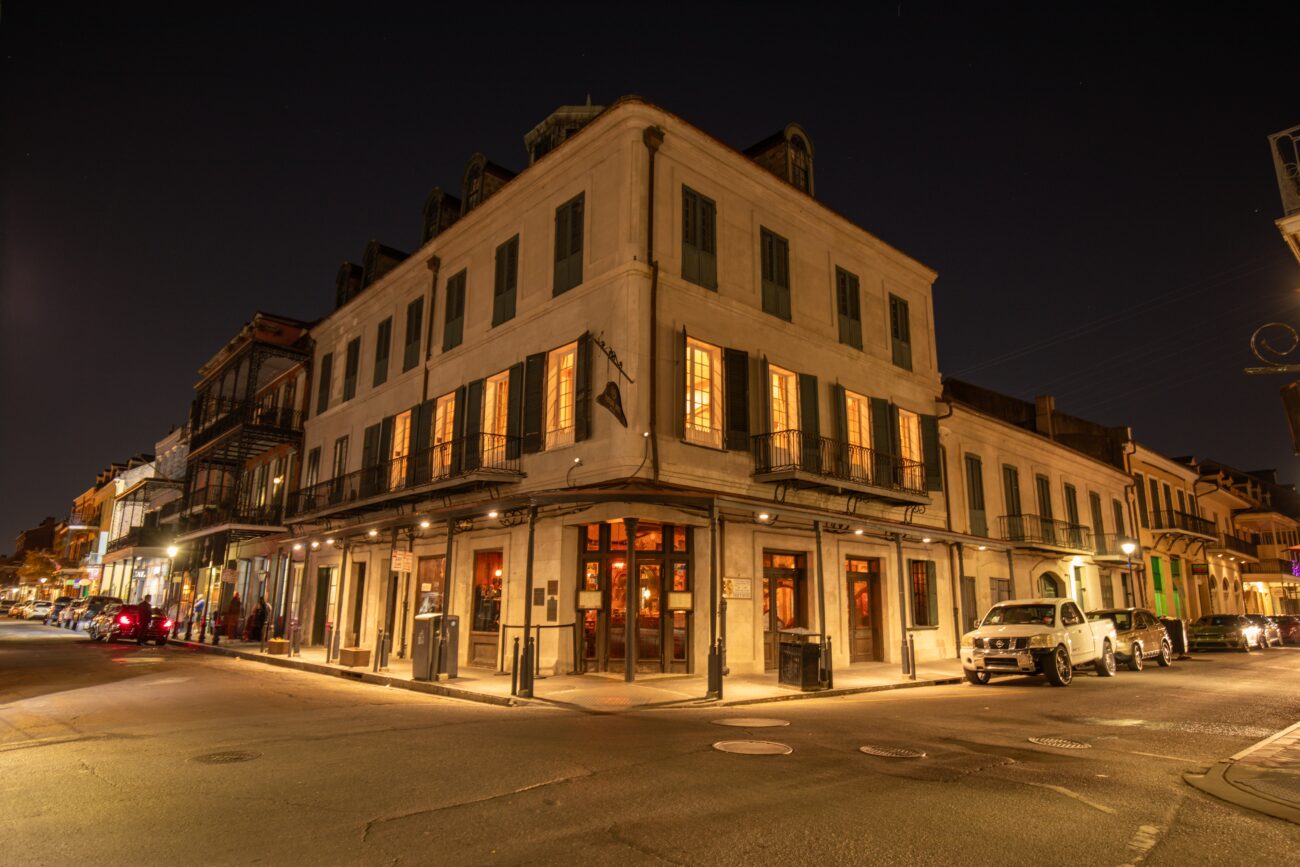
Nicolas Girod served as mayor of New Orleans from 1812 to 1815, and the story attached to his house has outlived every fact about him.
The version everyone tells goes like this: Napoleon Bonaparte sat imprisoned on St. Helena, a group of sympathetic Frenchmen in New Orleans hatched a plan to spring him with help from local pirates, and Girod offered his home at the corner of Chartres and St. Louis as the emperor’s landing place. The crew was preparing to sail in 1821 when word arrived that Napoleon had died.
The historical record is thinner. Reporters who went looking found no documentation of the plot, which believers attribute to the secrecy required to keep the British in the dark. Sources also split on when the building went up, with some saying 1794 and others 1814. What is certain is that the name stuck, the emperor never arrived, and the bar has been serving people in his place for more than a century.
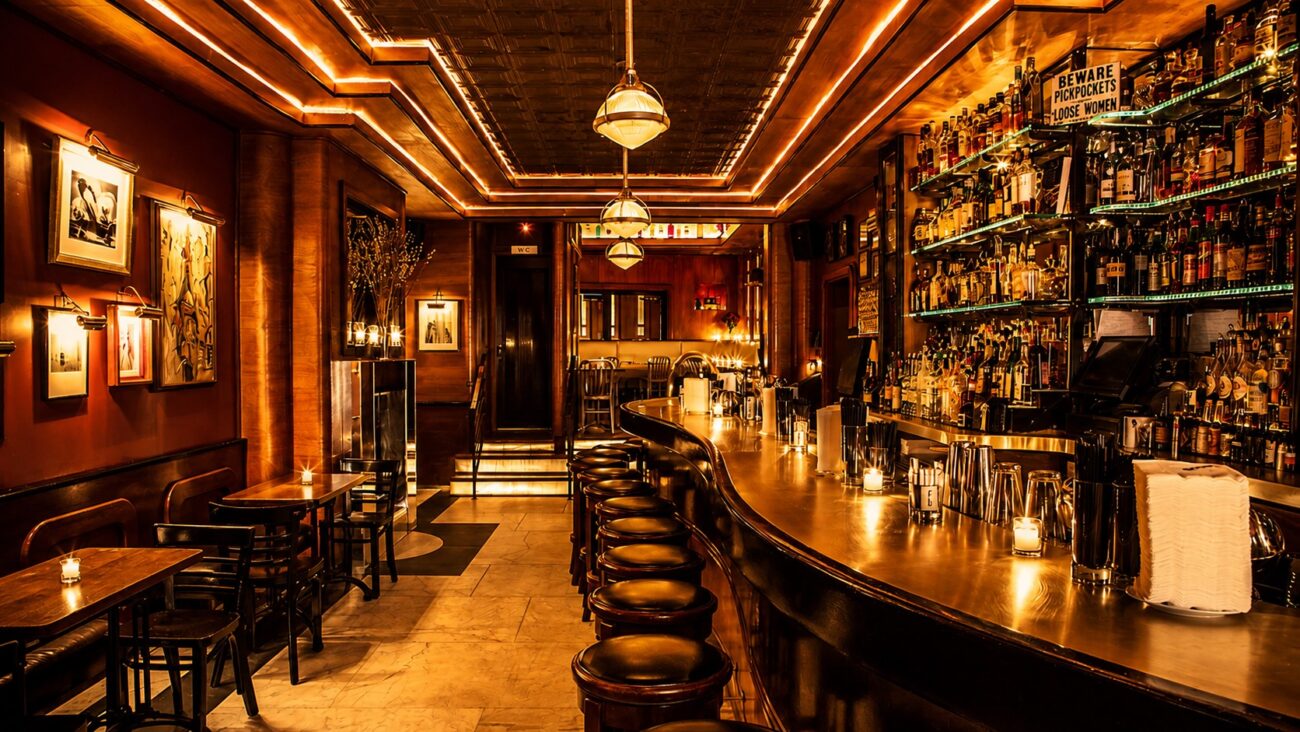
The room does most of the work. Deeply patinated walls hold portraits, artifacts, and framed newspaper clippings. The tile floors run uneven. The old wooden bar has been hollowed out by decades of use. Classical music plays instead of brass, which is unusual for the Quarter and part of why people linger. A shaded courtyard out back sits under banana trees and stays workable through most of the summer.
Joseph Impastato is the man who shaped what people order. Known to generations as Uncle Joe, he traveled in England and came back with Pimm’s Cup, a low-alcohol drink that suited a palate that leaned away from hard liquor. Napoleon House claims it became the first place in America to serve one, and it now sells more of them than anywhere on earth except the London bar where the drink started. It arrives tall, built with Pimm’s No. 1, lemonade, soda, and cucumber.
The muffuletta takes a position that New Orleans argues about. Central Grocery invented the sandwich in 1906 and serves it cold. Napoleon House serves it hot, toasted until the cheese melts and the sesame loaf firms up. Uncle Joe also swapped pastrami in for mortadella, and the kitchen has never changed it back. The olive salad is made in house. Anyone who has found the cold original dry will notice what warming does to it.
The rest of the menu runs through the local canon. Red beans and rice, jambalaya, gumbo, and po-boys including an alligator sausage version. A boudin appetizer comes with Steen’s mustard. The chocolate cake has its own following. A cheese-and-pecan-pesto starter on toasted Italian bread works as the standard opening move before a Pimm’s Cup.
Chris Montero runs the place now as executive chef and general manager, an eighth-generation New Orleanian whose connection to the Quarter predates his career. His approach reads as maintenance rather than reinvention, which is the right call for a building this old.
Napoleon House sits at 500 Chartres Street on the corner of St. Louis, about three blocks from the Mississippi and a short walk from Jackson Square. Anyone searching for it on Girod Street will end up in the Central Business District, since Girod is the man rather than the address.
Go in the afternoon, take a courtyard table, and order the muffuletta hot the way the house intends it.