

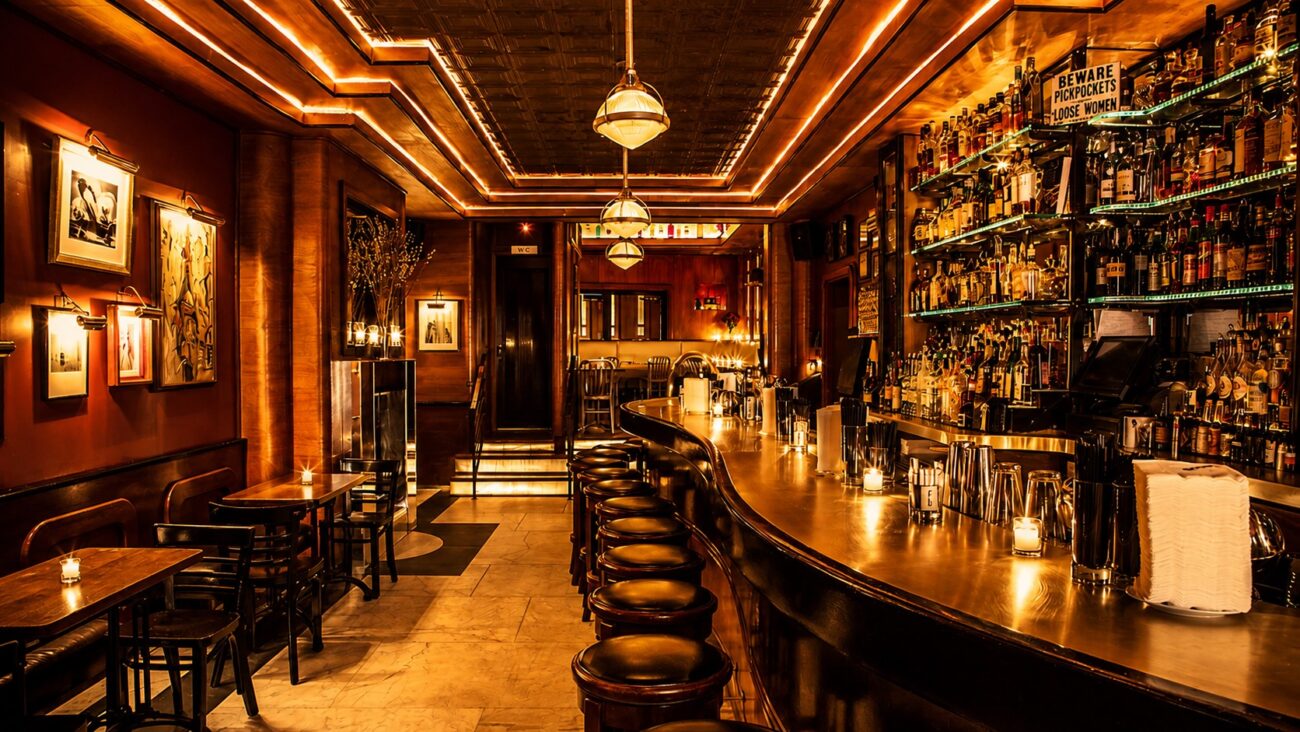
A side entrance on East 13th Street. No sign. Twenty-six seats inside, white-jacket service, and a menu that resurrects cocktails most bars stopped making decades ago. That’s Room 207, the East Village bar that opened in late 2025 under mixologist Hemant Pathak. Finding it feels like a discovery. Booking it on a reservations app feels like anything but. That tension — between genuine craft and manufactured mystique — is reportedly what’s driving NYC’s current speakeasy wave.
One Bartender, Several Hidden Doors
Three of the city’s most prominent new hidden bars trace back to a single PDT veteran, making this wave as much about brand strategy as bartending.
Three of the five notable hidden bars to open recently connect to one person: Jeff Bell, the PDT veteran whose fingerprints are on Kees (West Village, February 2026), Highball Ltd. (Midtown, March 2026), and The Bar at Mandarin Oriental. Kees sits beneath Mixteca on Cornelia Street, accessed through flush doors that vanish into the wall. Its name spells “seek” backward. Highball Ltd. requires a freight elevator to the 11th floor of a Grand Central office tower. Neither detail is accidental — concealment functions as brand identity here, with a cocktail menu attached.
The Five Venues, Fast
Each bar distinguishes itself through a specific design concept and entry ritual, not just its drinks.
- Kees — West Village, 1 Cornelia St.; flush hidden doors; menu organized by cocktail families from martinis to Manhattans; opened February 2026
- Highball Ltd. — Midtown, 10 Grand Central; freight elevator access; luxury train travel theme; opened March 2026
- The Bar at Mandarin Oriental — Columbus Circle, 35th floor; 45 seats; Silk Road-inspired cocktail program; reopened 2025–2026
- Room 207 — East Village, 207 Second Ave.; 26 seats; jazz-era revival with white-jacket service; opened late 2025
- The Collectors Bar — Williamsburg, 305 Grand St.; Hong Kong-inflected design and cocktails; opened July 2026
The World-Building Is the Point
What separates this speakeasy wave from earlier iterations is the precision of each bar’s narrative identity, not simply the presence of a hidden door.
Silk Road ingredients at Columbus Circle. Luxury rail nostalgia in a Midtown office tower. Hong Kong culture layered into a Williamsburg cocktail list. These aren’t aesthetic choices stapled onto a drinks menu — they’re fully committed narrative environments. Like a prestige TV series that actually earned its budget, each bar builds a specific world and invites you to inhabit it for the evening.
The Collectors Bar describes itself as focused on “the hidden depths of flavor.” That’s marketing copy, and worth reading as such. But the underlying instinct — that a bar needs a mythology, not just a menu — suggests something real about where hospitality is heading. It’s a logic not unlike what drives the best kept secret venues in other cities: concealment as a feature, not an afterthought.
The secrecy is partly theater. The cocktails are, by most accounts, genuinely good. In this city, both things can be true at once — and that’s usually enough to fill every seat.