

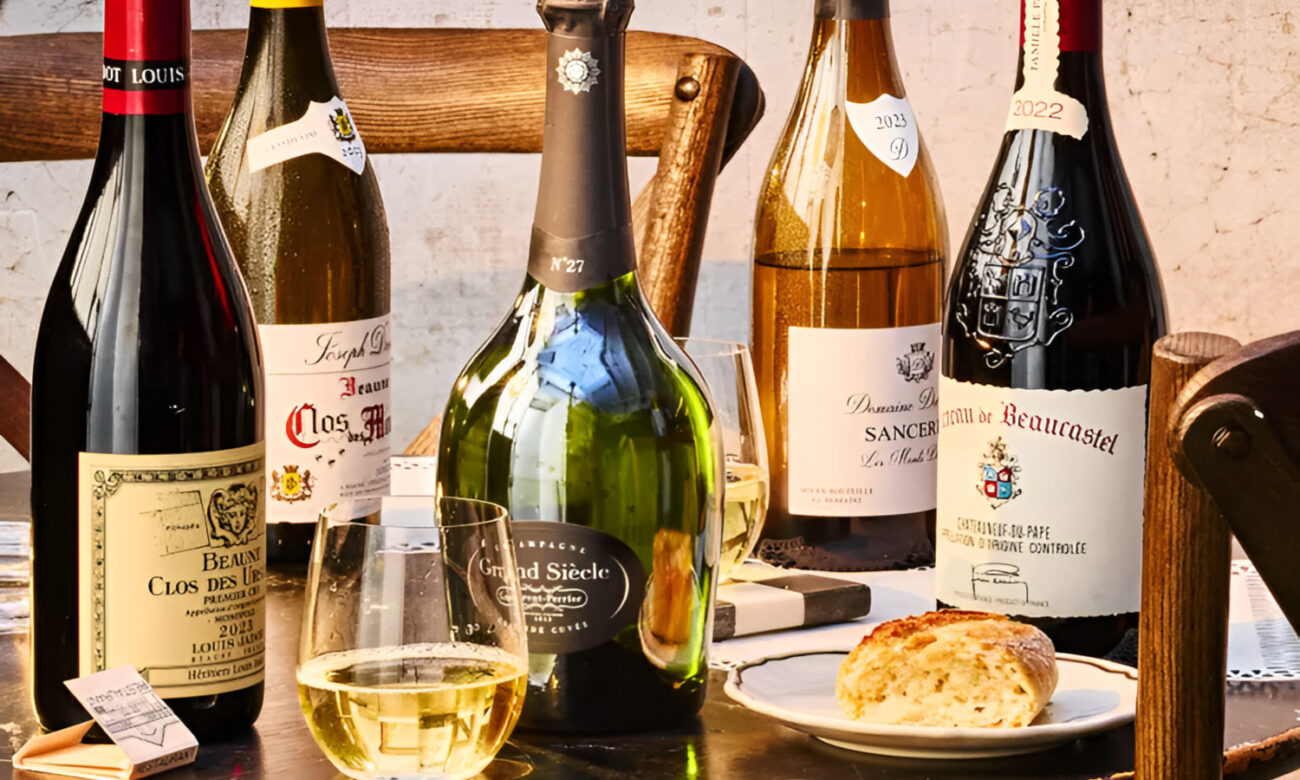
Most people’s relationship with French wine stops at a vague restaurant order. “Something Burgundy.” “A Sancerre, maybe.” The glass arrives, it tastes fine, and nothing is learned. These seven bottles exist to fix that. Spanning the Loire, Burgundy, Bordeaux, Champagne, and the Rhône, they range from roughly $45 to $399 — and each one teaches you something a generic pour never will. No six-figure cellar required. All prices are approximate retail and shift by market, vintage, and availability.
The Bottles, and What They’re Actually Teaching You
Before the list lands, one clarification worth keeping: “Premier Cru,” “classified growth,” and “prestige cuvée” belong to entirely different French classification systems — different grading scales from different schools, not a single universal leaderboard.
- 2024 Domaine Delaporte Les Monts Damnés Sancerre — ~$45 | Sauvignon Blanc from a famously steep Chavignol slope: citrus, stone fruit, mineral, herbal. The most accessible entry point on the list. Pair with oysters or goat cheese. (2024 vintage details and price unverified — confirm before publication.)
- 2023 Joseph Drouhin Clos des Mouches Blanc Beaune Premier Cru — ~$269 | White Burgundy with an aging potential of approximately 15 years, per Drouhin. According to the producer’s own notes, the 2023 delivers floral aromas, yellow fruit, full body, and minerality. Pair with roast poultry or shellfish.
- 2023 Château de Beaucastel Châteauneuf-du-Pape — ~$99 | A 70-hectare southern Rhône estate, Mistral-exposed, blending 30% Grenache, 30% Mourvèdre, and 15% Syrah alongside smaller proportions of additional Rhône varieties. Aged one year in large oak foudres, which allow maturation with less pronounced oak influence than small barrels. Pair with braised meats.
- 2020 Château Batailley Pauillac — ~$109 | Fifth-growth Bordeaux — a historical 1855 classification, not a universal ranking of the region’s best wines. Cabernet-led, with an expected profile of cassis, blackberry, cedar, graphite, and firm tannins. (Blend and vintage-specific notes unverified — confirm before publication.) Pair with braised meats.
- 2023 Louis Jadot Beaune Clos des Ursules Premier Cru — ~$129 | Pinot Noir with spicy red fruit, mineral structure, and accessible depth. (Vineyard history claims and 2023-specific details unverified — confirm before publication.) Pair with roast duck or mushrooms.
- Laurent-Perrier Grand Siècle Iteration No. 27 — ~$330 | Prestige Champagne blended across three vintages: 2015 at 65%, 2013 at 25%, and 2012 at 10%, per Laurent-Perrier. Multi-vintage blending is the defining idea here. Pair with seafood or fried appetizers.
- 2023 Château d’Yquem Sauternes — ~$399 | Premier Cru Supérieur under the 1855 Bordeaux classification. Sauvignon Blanc and Sémillon concentrated by noble rot — Botrytis cinerea, a fungus that, under the right conditions, concentrates sugar and flavor with remarkable precision. Tasting descriptors include honey, apricot, citrus marmalade, and saffron, though the 2023-specific profile remains to be confirmed. Pair with blue cheese, foie gras, or fruit-based desserts.
The Yquem and Beaucastel are the list’s most dramatic bottles. Noble rot sounds like a villain’s nickname — it is actually the mechanism behind Sauternes’ extraordinary sweetness and longevity. At Beaucastel, Famille Perrin describes the 2023 as “powerful, generous, complex, full-bodied, silky, fresh.” Those are producer tasting notes, worth taking seriously as a starting point. The Mistral exposure and foudre aging are genuine influences on the wine’s character, working alongside the winemaking decisions that shape every vintage.
Then there is Grand Siècle. While many prestige Champagnes are vintage-dated, Laurent-Perrier’s Grand Siècle is built by blending three exceptional, complementary harvests — a deliberate house philosophy aimed at recreating a “perfect year” rather than depending on any single season. It is the Spotify curated playlist versus the live recording debate, but with considerably higher stakes and better bubbles.
Where to Start If You’re Not Starting With $399
The two most rewarding entry points are also the most dinner-friendly bottles on the list.
The Sancerre at approximately $45 is the sharpest place to begin. The Châteauneuf-du-Pape at approximately $99 offers the biggest reward for a dinner table. Either way, a 750ml bottle is best shared — French wine has always been more about the table than the glass.