

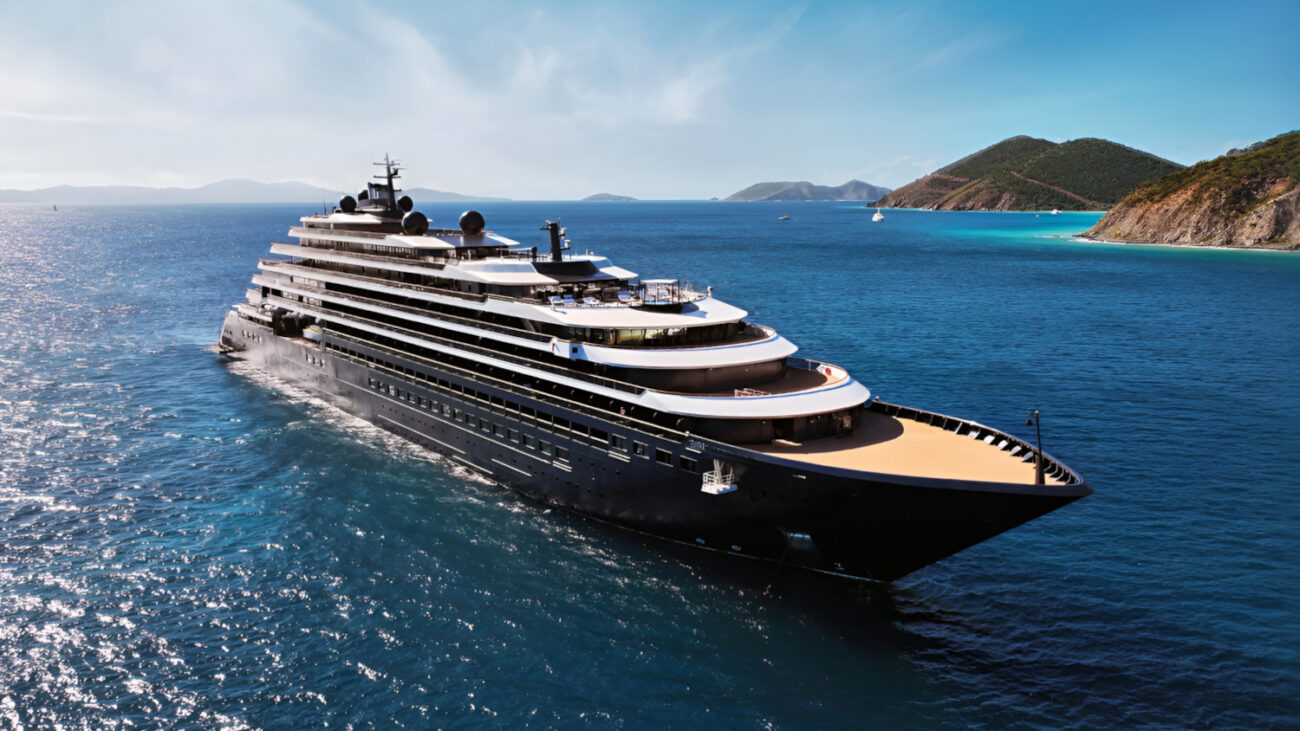
Two ships, same Adriatic morning, worlds apart in price and pace. One carries thousands of passengers through buffet queues and scheduled shore transfers. The other — Ritz-Carlton’s Evrima, 149 suites, each with a private ocean-view terrace — is already berthed at the town quay while its guests take included coffee before the day begins. Same sea. Vastly different cost. The question isn’t which looks better in a brochure. It’s whether that gap is rational, or simply aspirational math dressed up in linen.
What the Premium Actually Pays For
The real value isn’t luxury for its own sake — it’s what fewer passengers and closer ports change about a journey.
Crowd levels are the clearest argument. Evrima‘s 149 suites against a megaship’s thousands isn’t a minor distinction — it reshapes every shared space, from pool access to boarding queues. Emerald Cruises extends this further: their yachts are designed to dock at smaller, more central ports that larger vessels may not be able to reach. In practice, that can mean stepping off the gangway onto cobblestones rather than boarding a transfer bus to a terminal several kilometers from the destination itself.
What’s included matters just as much as the berth:
- Ritz-Carlton fares cover dining, premium beverages, gratuities, Wi-Fi, and onboard amenities; some specialized shore excursions carry an additional charge
- Emerald packages on yacht cruises typically include meals, selected drinks, Wi-Fi, excursions, transfers, port charges, airport taxes, and gratuities — exact terms vary by itinerary and market
- Before comparing headline prices, add drinks, gratuities, Wi-Fi, excursions, and specialty dining to any conventional cruise fare for a fair total-cost comparison
- Ritz-Carlton suites include private ocean-view terraces, daily minibar replenishment, and 24-hour in-suite dining
- Onboard entertainment is marketed around curated cultural programming and intimate live performance — a deliberately smaller scale than the waterparks, large-scale shows, and casinos found on mainstream ships
Who Should Book – and Who Should Pass
The decision comes down to one honest question: is a quieter, more effortless experience the point of the trip, or just a nice-to-have?
On food, both lines deliver genuine quality. Emerald emphasizes regional menus and fresh local ingredients across destinations including the Mediterranean, Adriatic, Caribbean, and Seychelles. Select Ritz-Carlton vessels feature special culinary voyages with Michelin-starred chef collaborations — though these are voyage-specific rather than a feature of every sailing, so it’s worth confirming current availability before booking. Fine dining at sea, at its best, offers real quality and convenience. It is not, however, automatically the best restaurant in port. Travelers prioritizing food-forward experiences should review each specific itinerary for market visits, cooking excursions, or producer encounters — and check whether those are included or priced separately.
The defining idea is simpler than the marketing suggests: a superyacht cruise sells scarcity and effortlessness, not spectacle.
If “fewer people, closer ports, and a largely organized itinerary” sounds like the holiday itself, this is the right product. If waterslides, late-night entertainment, extensive family facilities, or the lowest available fare are the priority, a conventional cruise will deliver more of those things for less.
Choose a superyacht cruise when “less crowded and more effortless” isn’t a feature of the trip — it is the trip.