

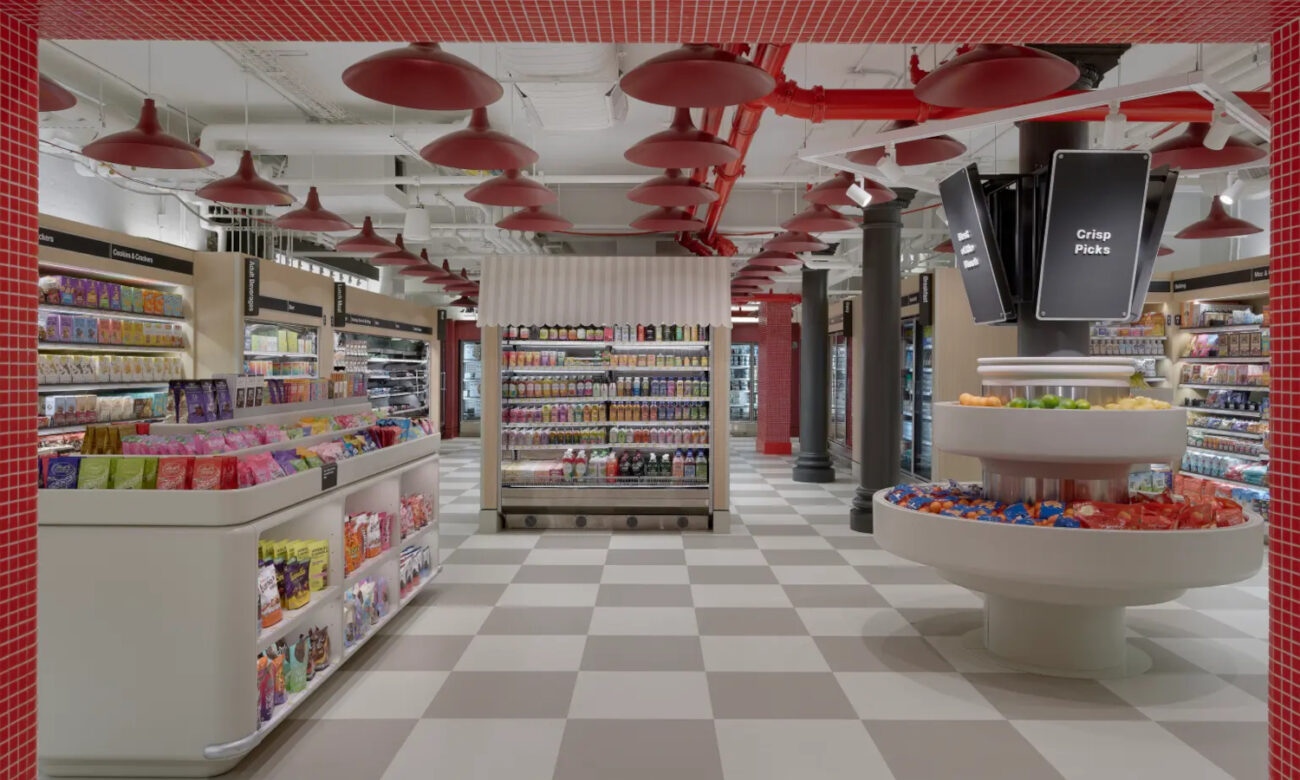
Target’s redesigned SoHo store features a grab-and-go Snack Bar stocked with emerging brands like Wilde and Cadootz.
Costco’s $1.50 hot dog is one of retail’s most stubborn legends — a price that has reportedly held since the mid-1980s, surviving inflation, recessions, and a pandemic. Target just walked into that cultural conversation with packaged snacks and bodega aesthetics. In October 2026, Target completed a major lower-level transformation at its SoHo store, adding a New York-inspired Snack Bar alongside a seasonal shopping bar and city-market food displays. Online comparisons to Costco followed quickly. The reality, though, is more complicated — and more interesting. Some of retail’s most favorite chains have found that cultural goodwill can be fragile.
What Target Actually Built in SoHo
A curated grab-and-go snack stop, not a food court — and that distinction matters.
The redesigned lower level is not built around a kitchen. The Snack Bar is organized into neighborhood-inspired “stops” stocked with packaged offerings from emerging brands like Wilde and Cadootz. Separately, a Seasonal Shopping Bar carries sweet and savory items from Target’s own Favorite Day line. Target describes the transformation as bringing inspiration and discovery to everyday shopping, according to its October 2026 announcement. Worth noting: the available announcement describes these features at the SoHo location only, with no chainwide rollout announced.
What’s Inside the Redesigned Lower Level
The lower floor combines food convenience with immersive retail, organized into distinct destination zones.
- A bodega-style Snack Bar carrying packaged snacks from brands including Wilde and Cadootz
- A Seasonal Shopping Bar featuring Favorite Day sweet and savory products
- A city-market-style food and beverage area designed to encourage exploration
- Additional experiential sections: the Bullseye Loft home area with Threshold products, shoppable living spaces, wellness displays, and fandom-oriented installations
Style Versus Substance
Brand variety is a genuine offer — but the Snack Bar still needs to earn a reason to pull shoppers back.
These are fundamentally different propositions. Costco’s food court is a meal: prepared hot food and a singular, unmissable deal — a hot dog and soda for $1.50 — that requires zero deliberation. Target’s Snack Bar is a browse. Costco feeds you on the spot; Target invites you to discover something new. The appeal of beloved treats often comes down to that same kind of instant, effortless satisfaction. Target’s own framing around New York street culture and destination retail is precisely what invited the comparison in the first place.
Some shoppers have reportedly described the broader interior as sterile and aggressively bright, with individual social media reactions drawing comparisons to a laboratory. Those comments reflect personal impressions rather than any formal measure of customer satisfaction. A store designed with Instagram-grid precision doesn’t always feel built for a hungry shopper at 2 p.m. on a Tuesday. Scrutiny of convenience retail pricing and value has been growing across the industry, and experiential formats are not immune to that skepticism.
Target’s announcement frames the transformation around making shopping more inspirational — a coherent strategy for a brand trying to turn routine errands into something worth seeking out. The real question is whether that inspiration drives repeat visits or simply strong first impressions.
The Snack Bar doesn’t need to beat Costco’s hot dog to succeed. It needs to give shoppers a reason to come back. For SoHo visitors wanting a curated, portable snack stop, it may deliver exactly that. For everyone else, details — and any expansion plans — remain limited to one very stylish New York block.