

Andrew Jackson commissioned the building in 1835, and three decades later it was stamping coins for the Confederacy. That is a strange foundation for a jazz museum, and it works anyway.
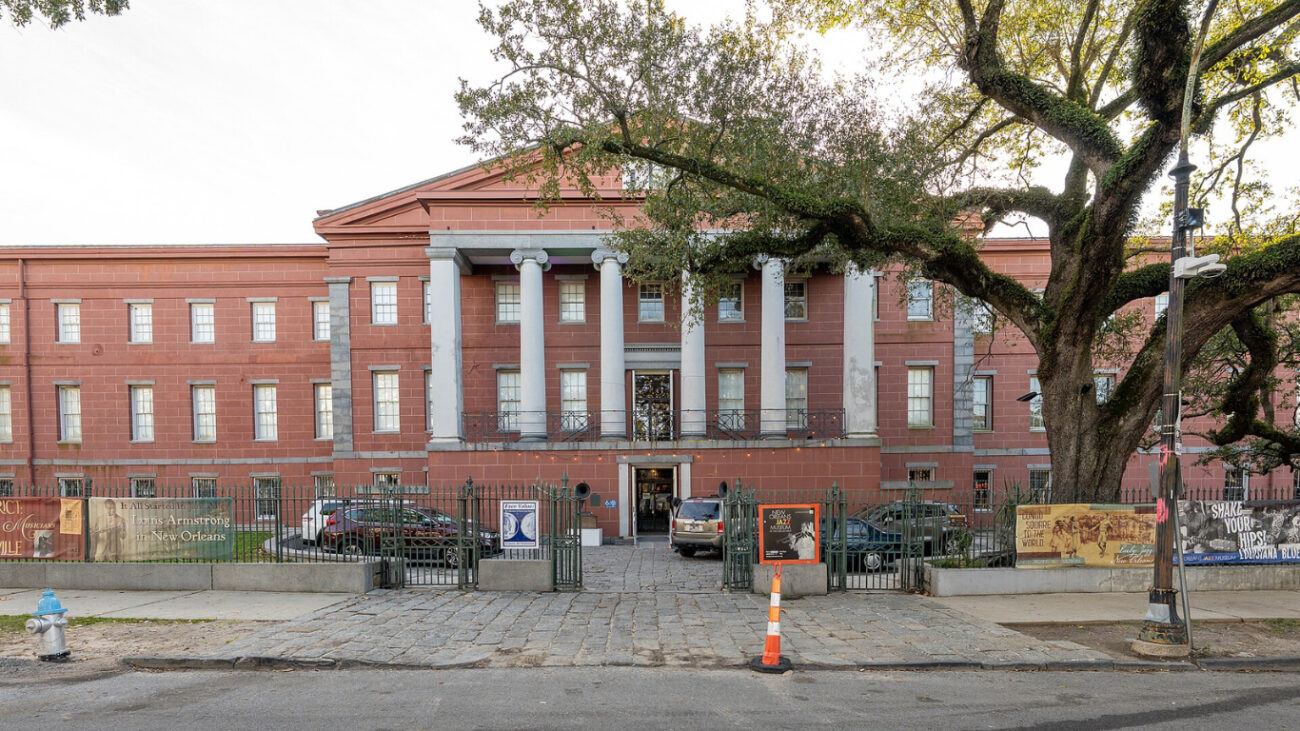
The New Orleans Jazz Museum sits in the Old U.S. Mint at 400 Esplanade Avenue, right where the French Quarter meets the Frenchmen Street music corridor. Philadelphia architect William Strickland designed it in Greek Revival style, using granite, stucco, and brick made from Mississippi River mud. Coin production started in 1838.
The building holds a distinction no other mint can claim. It produced both American and Confederate coinage, striking money for the Union until Louisiana seceded in 1861 and for the South after that. When Confederate supplies ran dry, the building became a barracks and then a prison for Confederate soldiers. It was the only Southern mint to reopen after the war, back at full operation by 1879, and it stopped making coins for good in 1909.
The federal government handed the property to Louisiana in 1966, and it opened as a state museum site in 1981. Hurricane Katrina damaged the building and the jazz collection, and the museum reopened in 2007.
What it holds now is roughly 25,000 artifacts, widely described as the largest jazz collection anywhere. The core came from the New Orleans Jazz Club, which spent decades assembling it before donating the whole thing to the people of Louisiana in 1977. Twelve thousand photographs and more than 10,000 recordings sit alongside sheet music, costumes, manuscripts, and rare film.
The headline object is Louis Armstrong’s first cornet, displayed in a room of its own like something behind museum glass at the Tower of London. A 1917 disc believed to be the first jazz recording ever made is here too, along with Sidney Bechet’s soprano saxophone, Kid Ory’s trombone, and Fats Domino’s piano. Three murals depict Storyville, the red-light district where much of this music found its early audiences. The first floor keeps a coin-making exhibit, bullion cart included.
Music happens on the third floor in a performance space built for about $4 million, with acoustics and recording equipment good enough that shows get archived. The National Park Service runs live programming there for the New Orleans Jazz National Historical Park, and the museum books evening concerts and small-group sets of its own. The events calendar is the reliable place to check what is playing and when, since schedules shift and some performances are free.
Scholars get access through the Louisiana Historical Center, which keeps colonial-era maps and manuscripts in the same building.
Admission runs $15 for adults and $13 for Louisiana residents, with children 6 and under free. Seniors, military, and students with ID take $2 off. Buying tickets on site to more than one Louisiana State Museum saves $2 per additional ticket, groups of 15 or more with a reservation save $1.50 per person, and AAA members get 10 percent.
Doors open Tuesday from 9 a.m. to 6 p.m. and Wednesday through Sunday from 9 to 4. The building is ADA compliant with elevators to every floor, and staff recommend the Barracks Street entrances. Construction is currently underway, so the Esplanade Avenue entrance has a ramp in place.
The phone is (504) 568-6993. Worth calling ahead if a specific exhibit or concert is the reason for the trip.