

For 26 years, the story of Jewish life in the American South lived at a children’s summer camp in Utica, Mississippi, where almost no one outside the camp could see it.
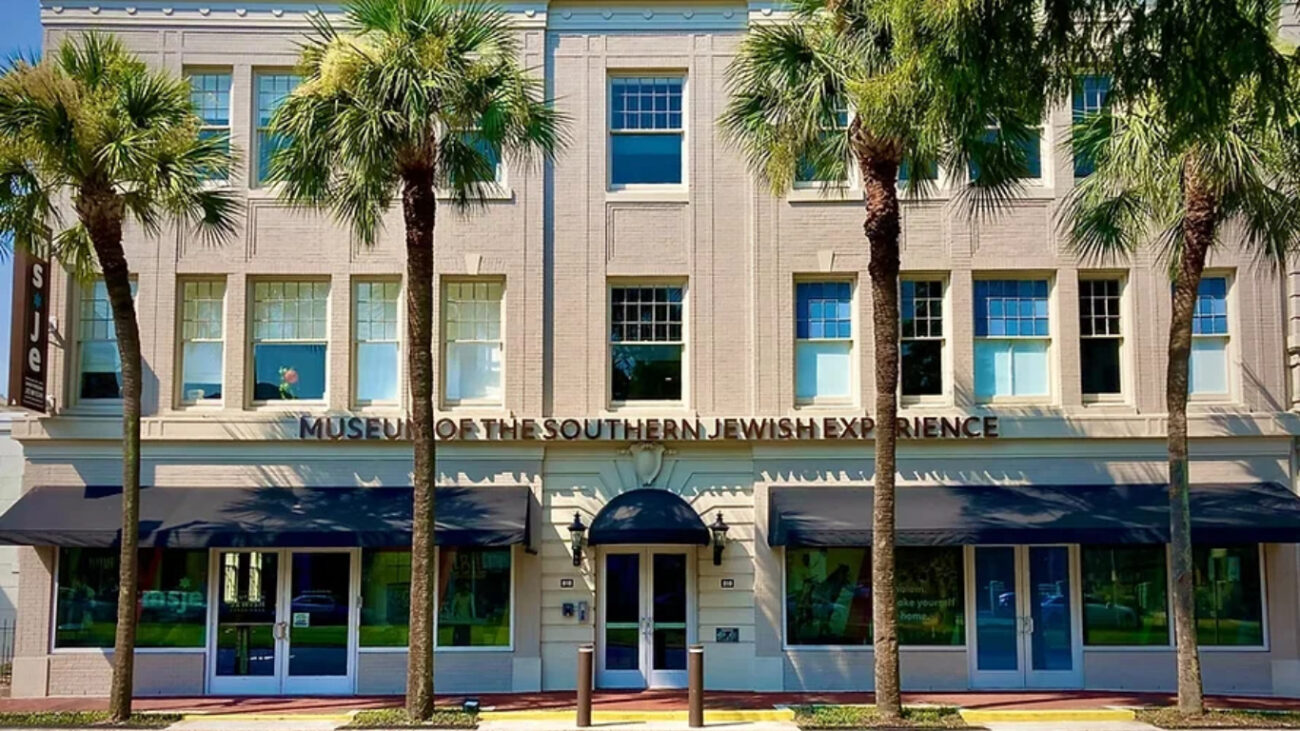
That was the original Museum of the Southern Jewish Experience, which opened at URJ Henry S. Jacobs Camp in 1986 and served mostly campers and their families. When the camp museum closed in 2012, the artifacts went into storage. Jay Tanenbaum, a camp alumnus who was then chairman of the Institute for Southern Jewish Life, started looking for somewhere the collection could reach the public. New Orleans was picked in 2017, and the museum opened on Howard Avenue in May 2021.
The scope is thirteen states and three centuries. Alabama, Arkansas, Florida, Georgia, Kentucky, Louisiana, Mississippi, North Carolina, Oklahoma, South Carolina, Tennessee, Texas, and Virginia all appear in the galleries, covering the colonial era through today. Staff describe the subject as people who had to adapt to a new place while holding onto their own culture, and the exhibits treat the Southerners who accepted those neighbors as part of the same story.
Nine thousand square feet of exhibit space was designed by Gallagher & Associates, the firm behind the galleries at the National WWII Museum three blocks away, plus the National Archives and the National Museum of American Jewish History.
The first gallery runs through early immigration, race relations, the Civil War, and the peddlers and merchants who built small-town stores across the region. The second turns to Jewish life as it is lived now, with a torah, a shofar, and fifty replica stained-glass windows drawn from synagogues across the South. The third, downstairs, covers Jewish participation in the civil rights movement and the activism that followed. A rotating special exhibition gallery sits alongside them.
More than 4,000 artifacts fill the collection, including Judaica, business records, photographs, letters, and household objects donated by families across the region. Cash registers and electric signs from Jewish-owned stores sit among them. Two items worth finding: the Civil War diary of Simon Mayer, a Confederate soldier from Natchez, and the groundbreaking shovel from the 1969 opening of Jacobs Camp, where all of this started.
The Chapman Family Research Center opened in 2025 as a hands-on space for researchers, genealogists, and visitors tracing family history.
Programming runs well past the galleries. Film screenings, book talks, and happy hours fill the calendar, many of them free and some available online. A New Orleans Jewish Streetcar Tour runs separately. School field trips serve third through twelfth grade with guided gallery tours and hands-on work. A museum store carries books, apparel, and Judaica.
Doors open six days a week from 10 a.m. to 5 p.m., closed Tuesdays. Admission runs around $15 for adults, with discounts for seniors, students, active military, and children 6 to 17, and free entry for children under 6 and museum members. Groups of 10 or more get a reduced rate and visit self-guided. Tickets sell online or at the door.
The museum sits at 818 Howard Avenue, reachable on the St. Charles and Canal streetcar lines. The phone is (504) 384-2480.
The museum’s own greeting is “Shalom. Make yourself at home.” Its summary of thirteen states and three hundred years ends with the phrase “countless fried matzah balls,” which tells you something about the tone inside.