

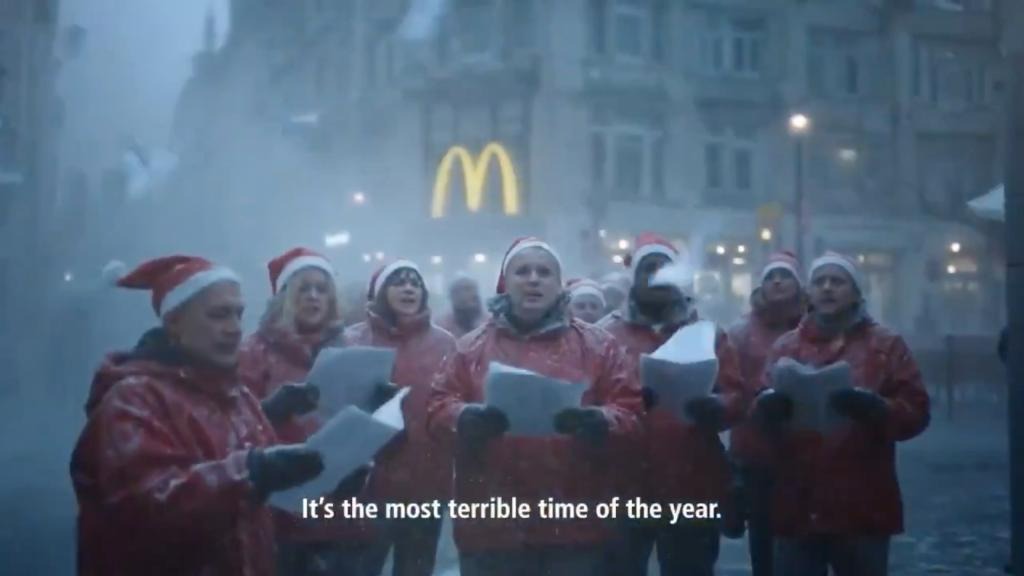
McDonald’s Netherlands just learned that artificial intelligence and authentic Christmas feelings don’t mix. The fast-food giant pulled its AI-generated holiday commercial after viewers savaged the spot as “creepy,” “repulsive,” and painfully fake—setting up a perfect storm where a brand already battling authenticity questions deployed visibly synthetic humans to deliver an anti-Christmas message.
When Fake Meets Fake
The 45-second spot featured AI-generated characters stumbling through holiday disasters while a parody of “It’s the Most Wonderful Time of the Year” declared it the “most terrible time” instead.
The commercial’s synthetic humans—with their telltale uncanny valley stiffness—acted out chaotic family gatherings, shopping frustrations, and burnt cookies before suggesting viewers “hide out in McDonald’s till January.” Social media users immediately connected the dots between artificial visuals and McDonald’s reputation, quipping it was “very fitting for a place that sells fake food to make a fake ad” and wondering if “AI customers eat as many burgers as real ones.”
McDonald’s disabled YouTube comments first, then yanked the entire ad by December 9, just three days after posting.
The Creative Defense Falls Flat
The Gardening Club, the Amsterdam studio behind the ad, defended their work on LinkedIn, but their claims of intensive labor couldn’t save the widely mocked campaign.
The production team insisted ten people worked full-time for five to seven weeks crafting the AI imagery. The studio argued this “man-hours poured into this film were more than a traditional production.” Critics weren’t buying it. One widely-shared response summarized the backlash: “There’s no artistry. No wit. No charm. No warmth. No humanity.”
The defense actually made things worse—if you’re spending more time and money than a live-action shoot to create something that looks obviously artificial, what’s the point?
Part of a Broader AI Advertising Reckoning
McDonald’s joins Coca-Cola and Valentino in facing consumer backlash against artificial content during emotionally charged seasons.
This wasn’t an isolated incident. Coca-Cola’s AI-enhanced “Holidays Are Coming” campaign and Valentino’s AI-driven fashion ads both drew similar criticism. The pattern suggests audiences have particular resistance to artificial content during emotionally charged holidays—especially from brands that already struggle with authenticity perceptions.
McDonald’s told the BBC the ad was meant to “reflect the stressful moments that can occur during the holidays” and called it “an important learning” in AI’s “effective use.” In corporate speak, translation: they discovered that when you’re selling comfort food, comfort can’t be algorithmically generated.
For a chain whose entire value proposition rests on familiar warmth and accessible indulgence, deploying robotic-looking humans to trash Christmas feels like confirmation of every criticism about corporate fast food being soullessly manufactured.