


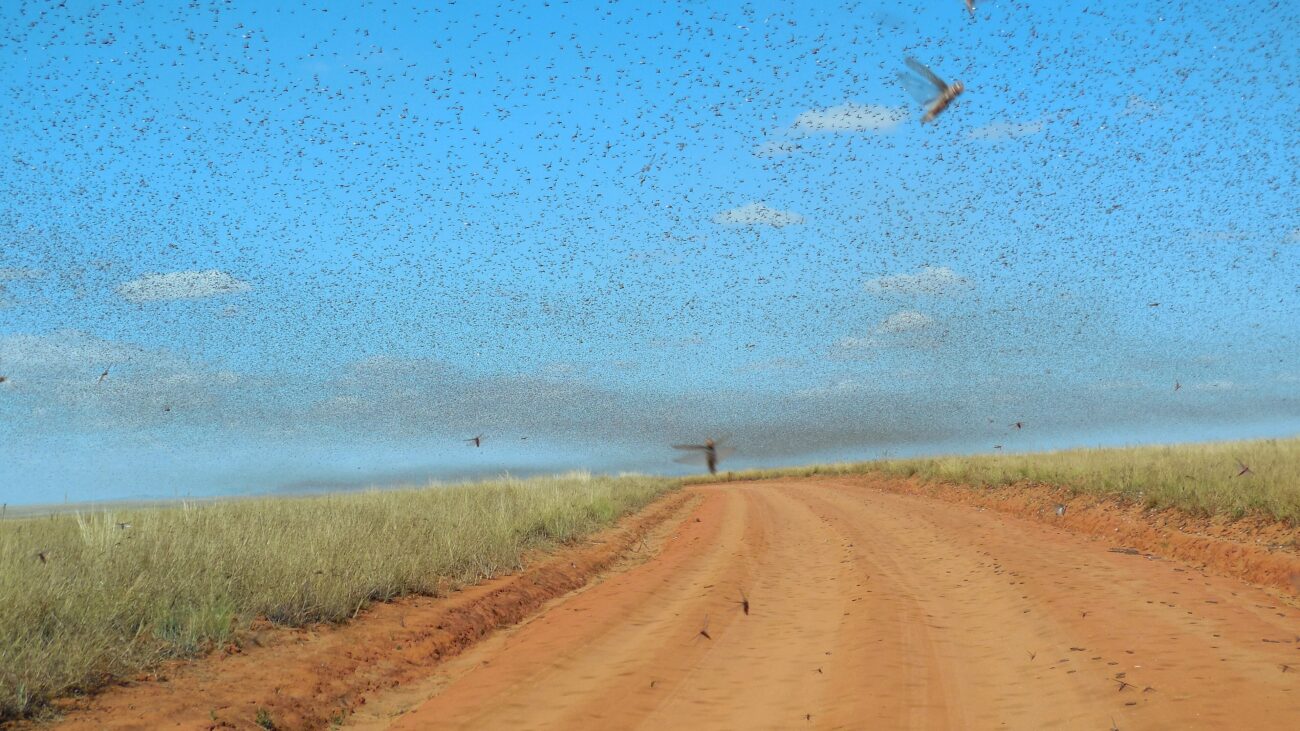
Worried about your upcoming Canary Islands getaway? Local authorities want you to know that massive locust swarms currently buzzing around popular tourist spots pose zero threat to visitors, though they’re keeping a close eye on the region’s prized vineyards and crops.
Desert Visitors Arrive on Saharan Wings
Exhausted locusts from Western Sahara may die naturally within 48 hours.
The swarms descended on Lanzarote, Tenerife, Gran Canaria, and Fuerteventura this week, carried by easterly winds loaded with Saharan dust. Videos show clouds of desert locusts (Schistocerca gregaria) swirling over countryside near tourist hubs like Arrecife, Costa Teguise, and Famara beach.
Francisco Fabelo, Lanzarote’s Head of Environment, explained the critical timeline: “The next two days are key. If they are adult specimens that have arrived exhausted, they will die… If we see copulations, that would mean they are reproducing.”
Environmental teams are monitoring around the clock, but early signs suggest these intercontinental travelers arrived too worn out from their journey to establish breeding colonies. These desert locusts originated from Western Sahara, following recent warm, wet weather conditions that favored their migration.
History Shows Nature Usually Wins
Past swarms resolved naturally, with birds often finishing the job.
The islands have weathered locust visits before. While 1958 brought devastating crop damage requiring aerial fumigation, more recent arrivals in 2004 and the late 1980s fizzled without major agricultural impact.
Theo Hernando from agricultural association ASAGA notes these wind-borne invasions happen regularly with African weather patterns: “It is common… they arrive very weakened… Nature itself takes its course.”
The concern isn’t your beachside paella or mojo sauce supply—it’s the volcanic vineyards that produce the islands’ distinctive Malvasía wines. A single square kilometer of healthy locusts can devour crops equivalent to feeding 35,000 people daily, according to the FAO. But exhausted arrivals typically become easy pickings for local birds before causing serious damage.
Hotels, restaurants, and tourist attractions remain fully operational. Your travel plans should proceed normally, though you might witness an unusual ecological spectacle if you’re exploring Lanzarote’s wine country this week.