

While Hollywood anniversaries typically mean theater re-releases and merchandise drops, Japan creates something more ambitious: edible experiences that transform pop culture into communal dining. J.S. Burgers Cafe’s latest collaboration proves this point perfectly, turning the 40th anniversary of “Back to the Future” into a two-month culinary celebration that runs September 23 through November 24, 2025.
This isn’t just themed food—it’s cultural alchemy. The burger chain has crafted menu items that function as both meal and memory trigger, complete with collectible serving pieces that blur the line between dining and merchandising.
When Nostalgia Meets Japanese Hospitality Innovation
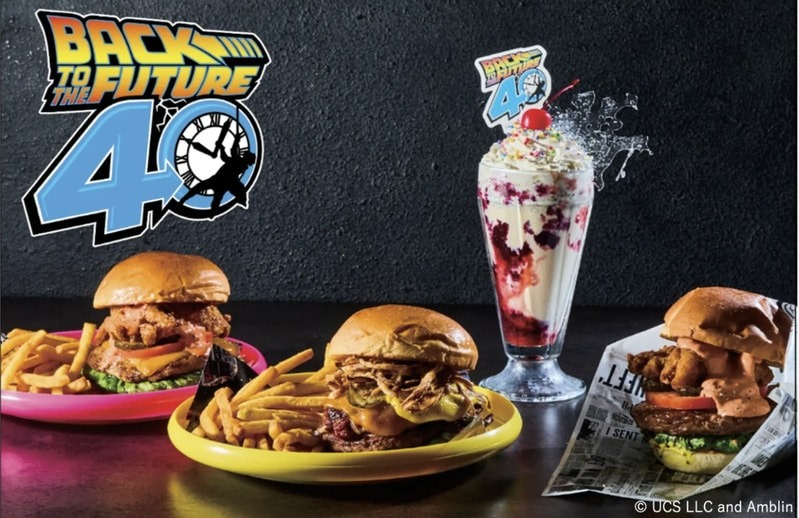
Each dish carries movie DNA in its naming and presentation. The Chicken Cheeseburger “Marty version” and Crushed Beef Burger “Beef version” reference the film’s characters, while the 1.21 Jigowatt Mint Vanilla Shake directly quotes Doc Brown’s famous flux capacitor power requirement. According to Mitsui Shopping Park press releases, diners can upgrade their experience with movie-themed serving pieces: a collectible frisbee plate for an additional ¥1,100 or a stadium cup with a lid for ¥880.
The pricing reflects Japan’s premium approach to themed dining experiences:
- Chicken Cheeseburger “Marty version”: ¥2,035 (including tax)
- Crushed Beef Burger “Beef version”: ¥2,530 (including tax)
- 1.21 Jigowatt Mint Vanilla Shake: ¥990 (including tax)
- Souvenir frisbee serving plate: +¥1,100
- Stadium cup with lid: +¥880
The Broader Cultural Phenomenon
This collaboration continues J.S. Burgers Cafe’s strategy of transforming American pop culture into interactive dining events.
Japan Today reports that this follows the chain’s previous Ghostbusters promotion, suggesting a deliberate approach to mining 1980s American cinema for dining inspiration. The strategy works because it taps into something deeper than simple nostalgia—it creates shared cultural moments around familiar stories, transforming solitary movie memories into communal dining experiences.
These collaborations represent Japan’s unique ability to take foreign pop culture and reimagine it through the lens of omotenashi hospitality, where every detail serves the guest’s emotional journey. Diners aren’t just eating a burger; they’re participating in a cultural ritual that honors both the source material and the Japanese art of experiential dining.