

New Orleans is often called the northernmost Caribbean city, and the food bears that out more clearly than almost anything else about the place. These three restaurants don’t just hint at island influence. They name it directly and build around it, tracing specific lines back to St. Lucia, Haiti, and Trinidad through the dishes on the table.
Compère Lapin
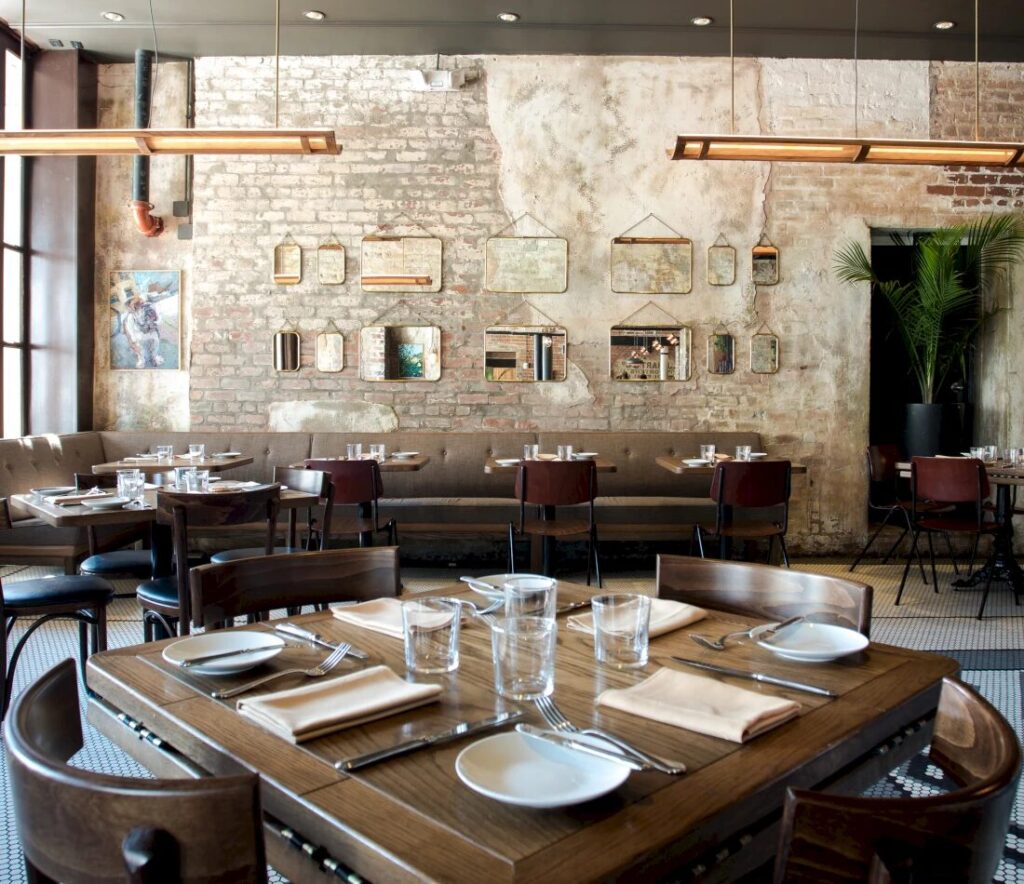
Nina Compton grew up in St. Lucia reading Caribbean folktales about a mischievous rabbit named Compère Lapin, and that character’s spirit of playfulness runs through every dish at her restaurant inside the Old No. 77 Hotel at 535 Tchoupitoulas Street. Compton trained in classical French technique at the Culinary Institute of America, worked under Daniel Boulud in New York and at Scarpetta in Miami, placed second on Top Chef Season 11 filmed in New Orleans, and came back to the city in 2015 to open the restaurant that made her the first Black woman to win the James Beard Award for Best Chef: South in 2018.
The menu is where St. Lucian spice, Gulf seafood, and classical European technique meet, and the combination is not what you’d expect from any of those three traditions individually. The curried goat with sweet plantain gnocchi has been on the menu since day one, and the kitchen goes through 300 pounds of goat a week to keep up with demand. The snapper collar with carrot ginger puree and spicy hot honey uses a cut most kitchens discard. The black-eyed peas with bacon and crispy shallots are Compton’s nod to New Orleans home cooking, served with the same care as everything else. The coco bread, piled with Gulf shrimp or crab, carries the Caribbean lineage most directly.
Compère Lapin is at 535 Tchoupitoulas Street. Reserve at comperelapin.com or call (504) 599-2119.
Fritai

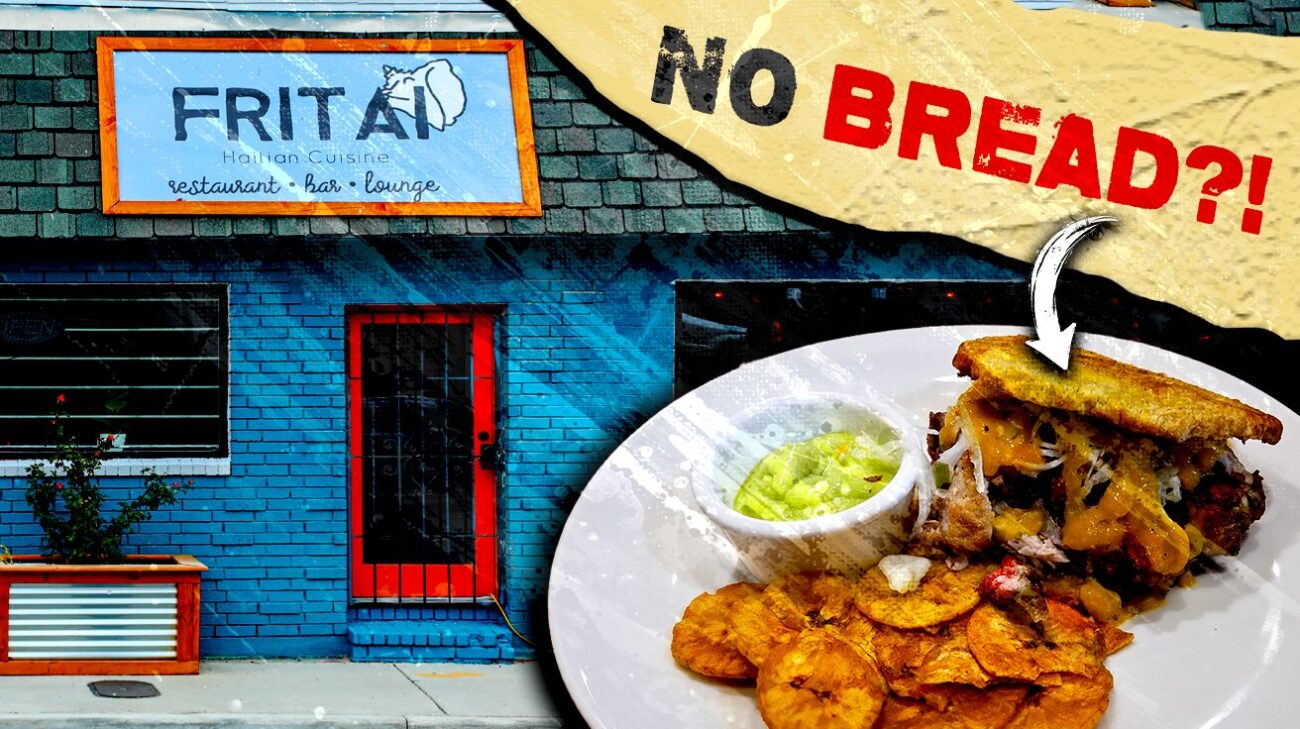
After the Haitian Revolution of 1804, roughly 10,000 Haitian refugees arrived in New Orleans over the following five years and doubled the city’s population. They settled most heavily in the Tremé, which is exactly where Fritai is today, on a corner of Basin Street in a building with worn floors and booths that feel like they’ve absorbed decades of neighborhood life. Chef and owner Charly Pierre, a two-time James Beard Award finalist who competed on Top Chef, grew up between Haiti and New Orleans, and his goal with the restaurant has always been to restore a connection between the two cities that the history books largely dropped.
The menu is built on Haitian street food and home cooking. The kabrit is twice-cooked goat served over rice and beans with fried plantains, the flavors deep and muscular from the braising liquid. The Fritai sandwich, which Pierre sold from a food truck before the brick-and-mortar opened in 2016, is chicken or pork with avocado and spicy mango sauce between two fried green plantains instead of bread. The sos pwa is a seasoned black bean sauce served over rice that maps almost perfectly onto Louisiana’s red beans and rice, a parallel Pierre points to as evidence of the shared roots. The clairin flight is worth ordering: clairin is a raw, unaged sugarcane spirit made only in Haiti, and the restaurant carries a diverse selection of producers.
Beyond the food, Pierre hosts Creole language classes at the restaurant, holds community forums on race and gender equity in the industry, and has organized fundraising benefits for Haiti. Fritai is at 1535 Basin Street in the Tremé, open Monday and Wednesday through Thursday 4 to 9 p.m., Friday and Saturday 4 to 10 p.m., Sunday brunch 11 a.m. to 5 p.m., closed Tuesday. Call (504) 264-7899.
Queen Trini Lisa

Chef Lisa Nelson grew up in Hardbargain, a village in Trinidad she simply calls “the bush,” learning to cook in her mother’s kitchen before moving to New York, then New Jersey, then to New Orleans after her family’s contracting business brought them south following Hurricane Katrina. She started selling Trinidadian food out of a Bywater corner store in 2016, cooking in the back for her kids while running a standard po’boy operation up front. The smells reached the customers. People started knocking on the back door.
The doubles are the reason most people show up first. They’re a Trinidadian street food, two pieces of soft turmeric flatbread folded around curried chickpeas seasoned with coriander and tamarind, bright and warming and unlike anything else in the city. Nelson adds Creole seasoning to hers because she believes in making home where you are, and the result belongs to both New Orleans and Trinidad simultaneously. Order them with all the sauces. The coco bread fish sandwich, the jerk chicken, the oxtail soup, the sorrel drink made from hibiscus, and the pelau, a one-pot rice and meat dish that tracks directly alongside Louisiana’s jambalaya, round out a menu that Nelson built as a deliberate argument about shared culinary ancestry.
Queen Trini Lisa is at 4200 D’Hemecourt Street in Mid-City. Hours are Tuesday through Saturday, noon to 8 p.m. Call (504) 345-2058. Check Instagram at @the_queen_trini for daily specials before you go.