

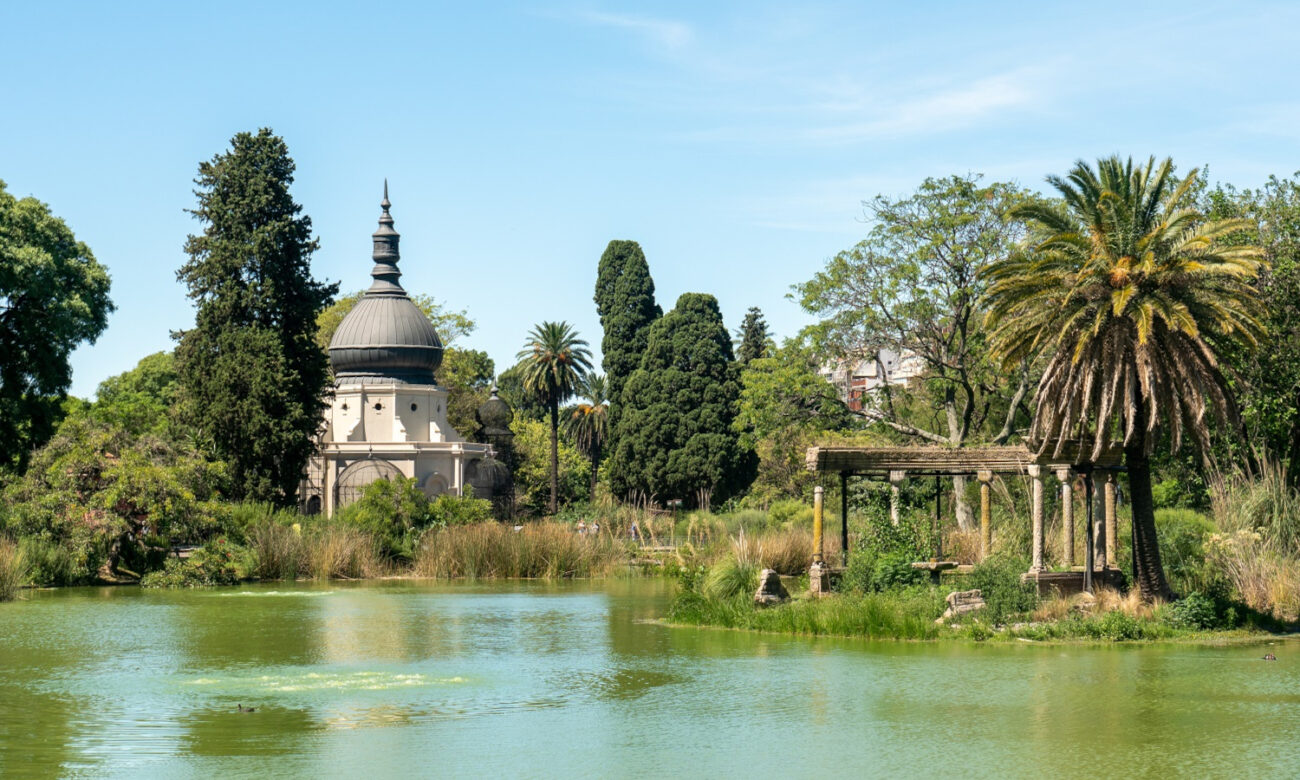
A mara — Argentina’s large, long-legged Patagonian rodent — roams the open grounds of Ecoparque Buenos Aires, the city’s former 19th-century zoo turned wildlife conservation center.
Near the Plaza Italia entrance, a mara crosses the path without urgency. Think long-legged rabbit, built for distance — wandering past century-old pavilions while peacocks drift between the trees. It is an encounter that feels entirely unscripted.
Buenos Aires began converting its historic zoo — open since 1888 — into Ecoparque in 2016, transferring more than 800 animals to sanctuaries, reserves, and educational institutions. According to the city, more than 31,000 residents helped shape the vision: animal welfare, native species, rescue, rehabilitation, education. The entertainment model was replaced with something quieter and more purposeful.
A Zoo Reborn on Its Own Terms
Palermo’s former zoo didn’t disappear — it changed what it was for.
The heritage architecture survived the pivot. So did some of the original residents. Certain older exotic animals remain on-site because age or health makes relocation medically inadvisable — an honest reminder that Ecoparque is an active transformation, not a finished one. Official sources confirm that animals are retained only when welfare or medical considerations require it.
Practical details before you go:
- Location: Adjacent to Plaza Italia, Palermo, at Avenida Sarmiento and Avenida del Libertador
- Hours: Tuesday–Sunday and public holidays, 11 a.m.–6 p.m.
- Animal-care tour: Tuesday–Sunday and public holidays at 11:30 a.m.; approximately one hour; suitable for visitors over age 6
- Wildlife hospital tour: Tuesday–Sunday and public holidays at 2 p.m.; approximately one hour; visitors over age 12
- Feeding animals is prohibited; daily attendance is limited to protect wildlife
In the areas near Plaza Italia, visitors may encounter maras, capybaras, tapirs, guanacos, coipos (South American semiaquatic rodents roughly the size of a small beaver), peacocks, native birds, and butterflies moving through designated open habitats. The distinction matters: these are conservation spaces designed to resemble natural environments, not conventional enclosures — and the animals are not performing on any schedule.
The park’s wildlife hospital is where the conservation mission becomes most tangible. According to Travel + Leisure, Ecoparque has helped more than 3,900 animals from across Argentina. Travel + Leisure also reports that The Guardian has described the park’s biobank as the largest in South America — both figures drawn from their respective publications and not independently verified.
How to Visit Without Getting It Wrong
The guided tours reveal a depth that a casual walk through the grounds alone cannot.
Plan around the 11:30 a.m. animal-care tour or the 2 p.m. hospital visit. Where a passive scroll through wildlife content offers distance, these tours offer the opposite — present, unhurried, and grounded in an actual place. Do not feed the animals. Hours and programming are subject to change; confirm current details at turismo.buenosaires.gob.ar before visiting.
Ecoparque holds an unusual combination: working rehabilitation center, architectural landmark, and urban encounter with native Argentine wildlife — all inside Palermo. Not a zoo anymore. Not a wild landscape either. Something worth an afternoon, and worth understanding on its own terms.