

Every visitor to Whitney Plantation receives a lanyard bearing the name and story of a person enslaved in Louisiana, and that small card sets the purpose of the visit before the tour even starts.
The plantation sits on River Road in Wallace, in St. John the Baptist Parish, about an hour west of New Orleans. The Haydel family, German immigrants, founded it in 1752 as an indigo operation, and it later shifted to sugar, the crop that drove the region’s wealth and the brutal labor behind it. For more than two and a half centuries, the land belonged to the families who owned it. In 2014, it opened to the public as a museum dedicated to the lives of the enslaved people who worked it, the only plantation museum in Louisiana with that focus. National Geographic has called it the plantation every American should visit.
Visitors have two ways to see the grounds. Guided tours, led by trained historical interpreters, run throughout the day on a first-come, first-served basis and last about 90 minutes. They include the upstairs of the Big House, and some are offered in French. The self-guided audio tour covers 14 stops in about 70 minutes through the Whitney app or a handheld device, in six languages, but does not include the upstairs rooms. Either way, the museum recommends at least two hours on site to see the memorials, exhibits, and bookstore.
The memorials carry the weight of the visit. The Wall of Honor lists the names of the people enslaved on this property. The Allées Gwendolyn Midlo Hall, named for the historian who built a landmark database of enslaved Louisianans, records the names of tens of thousands more across the state. The Field of Angels honors the enslaved children who died in St. John the Baptist Parish, a number in the thousands. A separate memorial marks the 1811 German Coast Uprising, the largest slave revolt in United States history, which began just miles from here.
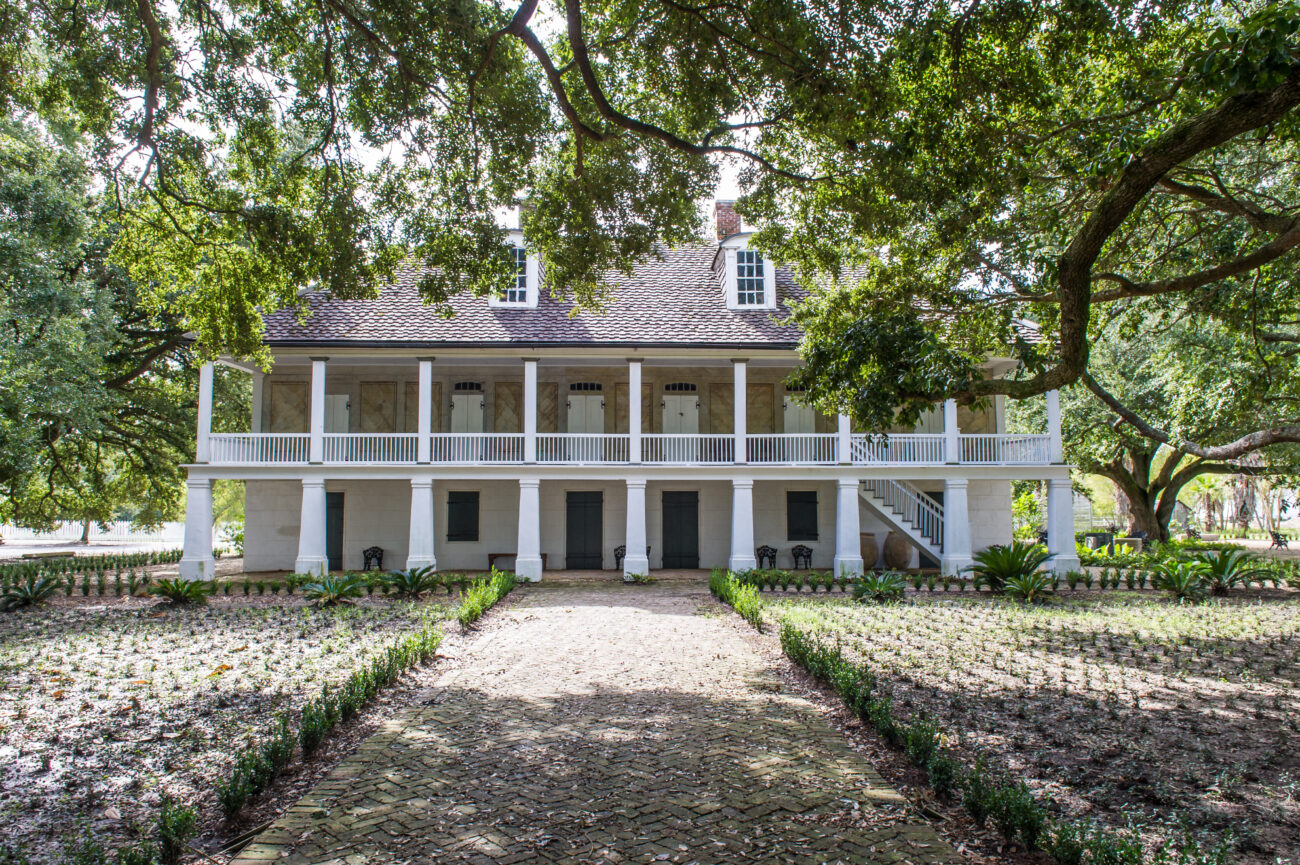
The buildings add physical proof to the names. Original slave cabins still stand, along with the overseer’s house, the kitchen, the mule barn, and the plantation store. The Big House is one of the finest surviving examples of Spanish Creole architecture in Louisiana. Antioch Baptist Church, built by freed people after the Civil War, was moved to the property and now stands as part of the tour. Throughout the grounds, first-person narratives gathered by the Federal Writers’ Project in the 1930s let formerly enslaved people describe their lives in their own words.
The subject matter is heavy, including frank discussion of violence and the deaths of children, and visitors should plan for that.
The plantation opens from 9:30 a.m. to 4:30 p.m., with last entry at 3 p.m. It closes Tuesdays and on several major holidays. Recent listings put adult admission at $25 for the self-guided tour and $32 for the guided tour, with lower prices for ages 6 to 18. Children under 6 and residents of St. John and St. James parishes enter free. Check the museum’s website for current rates before booking.
The address is 5099 Louisiana Highway 18 in Wallace, though GPS may list it as Edgard because of postal designations. Rideshare services rarely serve this rural stretch of River Road, so drive, rent a car, or book a tour package with round-trip transportation from New Orleans.