

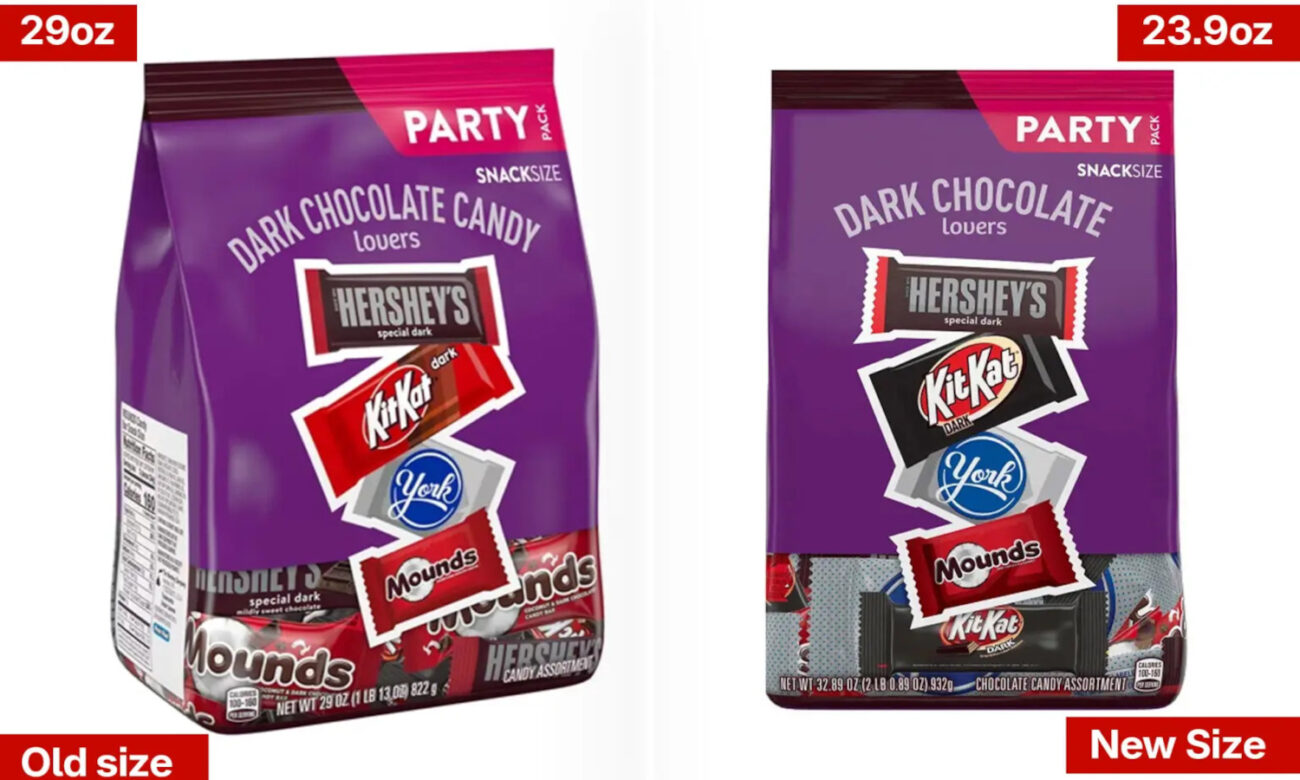
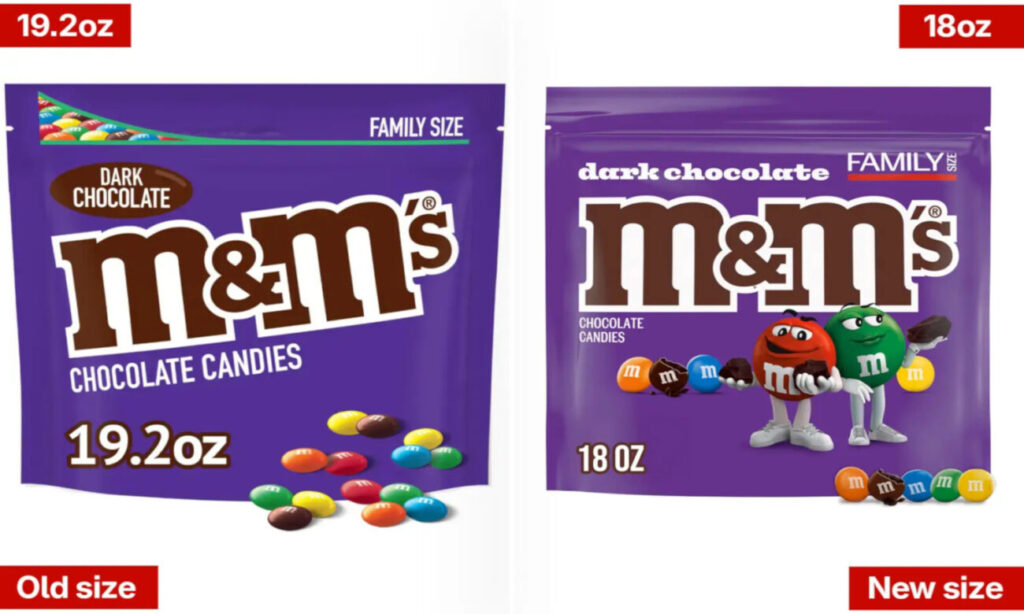
That Hershey’s Dark Chocolate Assortment party bag reportedly went from 29 ounces in 2019 to 23.9 ounces today, a reduction of more than 17%, while the cited price held at $19.99. That example spans several major brands, alongside broader confectionery cost pressures that have been building for years. The U.S. Producer Price Index for confectionery materials rose 87.6% between December 2019 and November 2024, according to the Bureau of Labor Statistics. Prices for U.S.-made products containing cacao climbed 143.9% over the same period. If you find yourself mourning beloved treats that have shrunk beyond recognition, the numbers back up that feeling.
The Incredible Shrinking Candy Aisle
Cocoa and sugar costs have surged, and candy bags across major brands are quietly paying the price.
The BLS data points to cocoa-related input costs as a headline driver, though manufacturers also face rising expenses for sugar, corn sweeteners, transportation, labor, packaging, and energy. Mars Wrigley acknowledged the pressure directly, telling Which? that it tries to absorb rising costs wherever possible but has made carefully considered changes because of continuing pressures, including higher cocoa costs — and that retailers, not manufacturers, set final prices.
What Actually Disappeared From Your Bag
Cited comparisons from New York Post and LendingTree analysis show these popular party packs lost serious weight since 2019 — with prices moving sharply in the opposite direction.
Prices vary by retailer, and the figures below reflect reported comparisons rather than independently archived product listings:
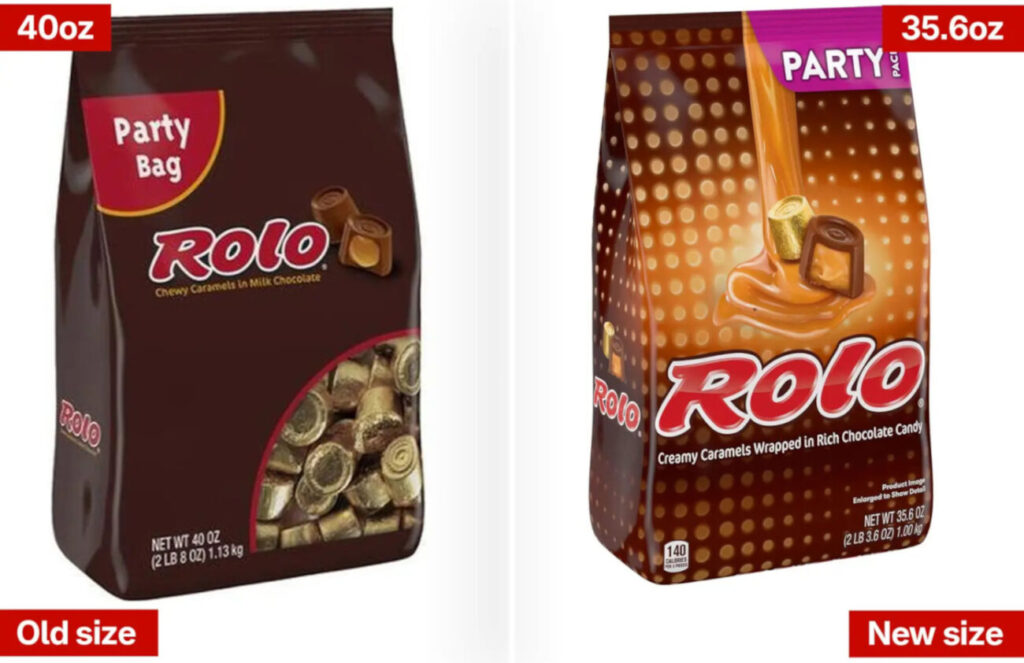
- Rolo Party Packs: 40 oz at $8.98 in 2019; reportedly 35.6 oz at $14.84 at Walmart today — a roughly 65% price increase for less candy.
- M&M’s Milk Chocolate Party Size: reportedly dropped from 42 oz to 38 oz while the cited Walmart price rose from $8.98 to $14.84.
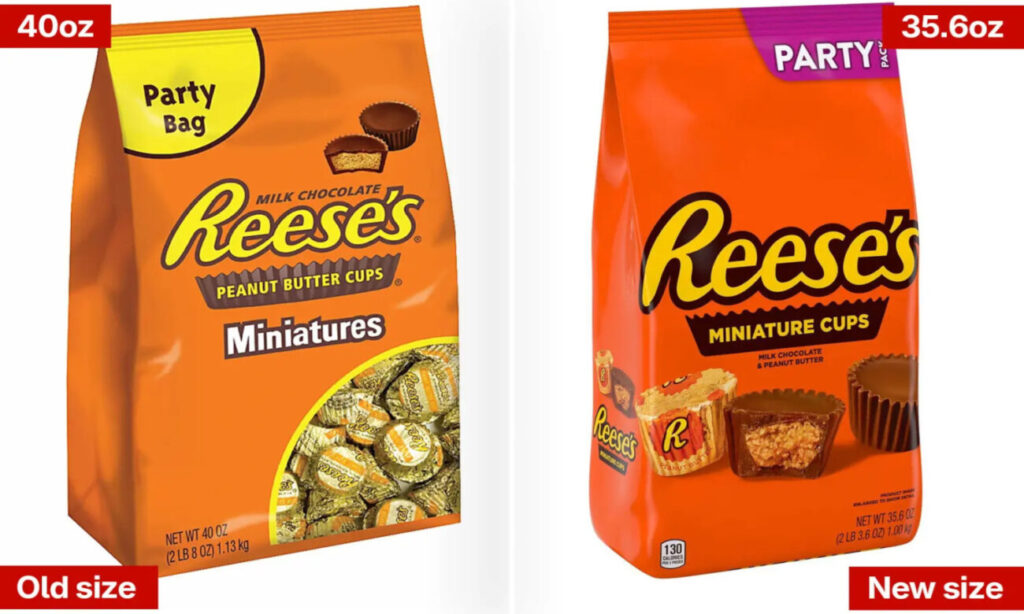
- Reese’s Miniatures Party Pack: down from approximately 40 oz to 35.6 oz — nearly 11% lighter, with current retail prices that can exceed $13 depending on the retailer.
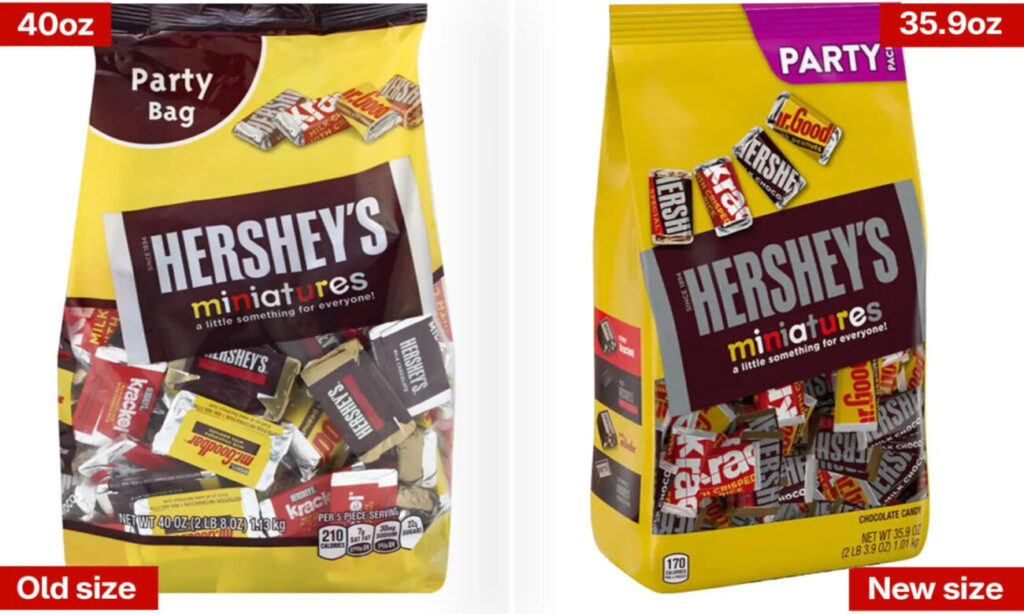
- Hershey’s Miniatures Assortment: 40 oz in 2019–2020 versus 35.9 oz on Hershey’s current product listing — a reduction of roughly 10%.
The Trick Hiding in Plain Sight
“Party-size” is a marketing descriptor; price per ounce is an actual measurement — and the gap between them is where value disappears.
This pattern extends well beyond Halloween. Which? reported that a Galaxy extra-large Easter egg at Asda moved from £4.98 for 252 grams in 2025 to £5.97 for 210 grams in 2026 — a 44% increase in price per gram. A Maltesers Easter egg at Tesco shrank from 231 grams to 194 grams while rising from £6 to £7, pushing price-per-gram up 39%. Though these are U.K. seasonal examples, the mechanism is identical: smaller product, higher unit cost, same familiar packaging.
As Mars Wrigley put it to Which?, the company has made “carefully considered changes because of continuing pressures, including higher cocoa costs” — while noting that retailers retain control over final shelf prices. Separately, studies have found that some convenience chains routinely overcharge customers, compounding the value gap consumers already face from shrinkflation.
The language on the bag deserves scrutiny. “Party-size,” “family-size,” and “big bag” are descriptors, not guarantees of volume or value. Shoppers who remember these assortments genuinely outlasting a full neighborhood of trick-or-treaters may find the current reality a little haunting. Comparing price per ounce — listed on most U.S. retail shelf labels — offers a far more reliable picture than bag dimensions alone.
How to Actually Get What You Pay For
A few straightforward checks before checkout can make a meaningful difference in what lands in the candy bowl.
Start with net weight printed on the package itself, not the bag’s physical footprint. Use the shelf label’s price-per-ounce figure to compare across brands — and compare piece counts only when the individual pieces are similar in size. Finally, check multiple retailers before committing: manufacturers do not set final prices, and Sam’s Club, Walmart, and direct brand sites may show meaningfully different unit pricing for comparable products. Curious about what can you buy for the same money in other markets — the international picture can sharpen your sense of just how far a dollar stretches.
The documented examples span multiple major brands and two continents’ worth of seasonal confectionery. A $15 bag in 2025 delivers measurably less than its 2019 counterpart, and the only reliable defense is checking net weight and price-per-ounce before reaching the checkout. The candy exists — just in diminished form.