

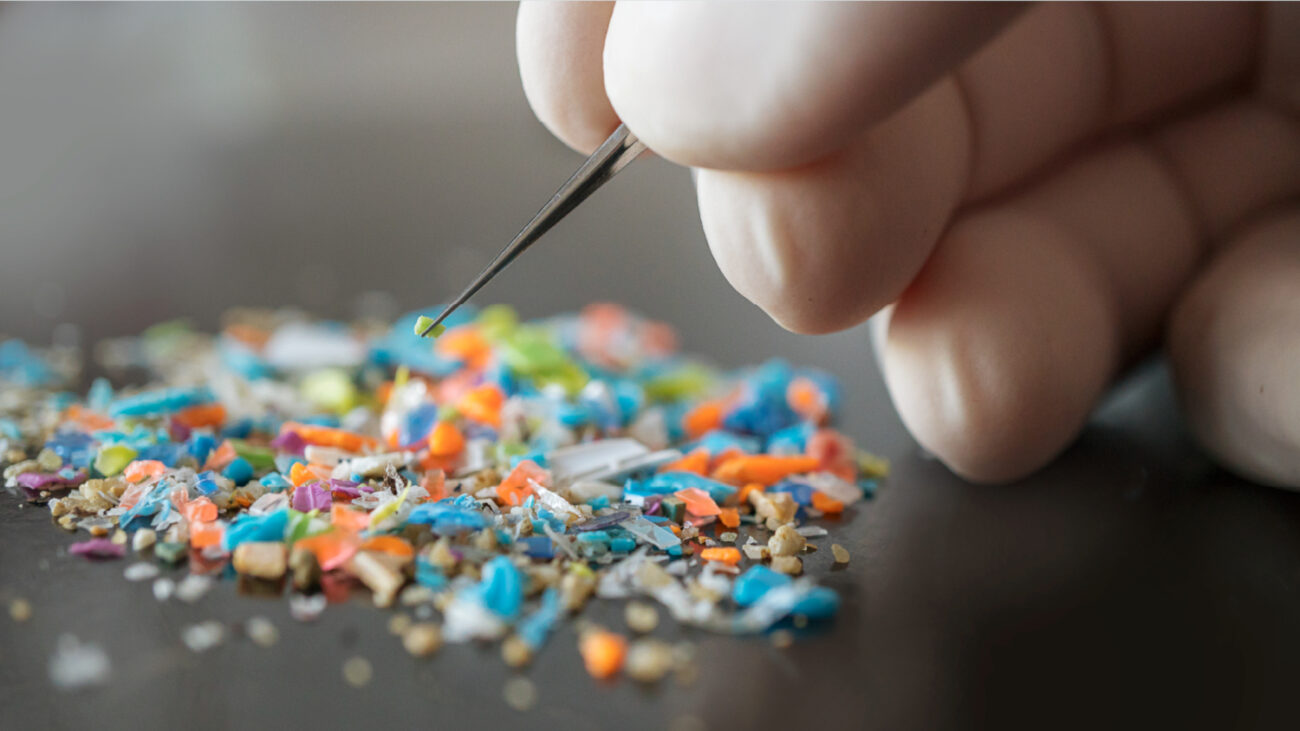
Tea is one of the most widely consumed beverages on earth, and for most drinkers, the bag goes in and the question of what else enters the cup never arises. A recent study suggests that answer, for plastic tea bags, is somewhere between 555 and 2,498 microplastic particles per cup after a three-minute steep in 95°C water. Loose-leaf tea brewed under identical conditions released just 0.3 to 2.4 particles per cup. That contrast is stark enough to deserve a straight read — not a health risk panic spiral.
The Numbers Behind the Warning
Researchers identified the source of those particles and detected additional chemical compounds in some plastic-bag infusions.
The larger particles from plastic-bag samples were identified as polyamide fibers, consistent with the bag construction material. Particles detected in loose-leaf tea were attributed more generally to environmental contamination or processing. Some plastic-bag infusions also contained BPA and phthalate esters. Reported amounts fell within existing safety limits, though researchers argued those thresholds — particularly for BPA — may not fully capture long-term risk.
A few other facts worth keeping straight:
- Particle counts ranged 555–2,498 per cup for plastic bags versus 0.3–2.4 for loose-leaf, under the same brewing conditions
- Polyamide fibers were identified in plastic-bag samples, consistent with bag construction materials
- BPA and phthalate esters were detected but reported within current safety thresholds
- Study samples came primarily from Turkey and cannot be applied universally to every brand
- Earlier high-count microplastic studies have faced independent methodological challenges over sample preparation and particle identification
What the Science Can, and Cannot Say
Laboratory detection of particles is not the same as confirmed harm — and the FDA’s position reflects that distinction clearly.
“Current scientific evidence does not demonstrate that the levels of microplastics or nanoplastics detected in foods pose a risk to human health,” according to the FDA — though the agency acknowledges significant uncertainties remain and that standardized measurement methods are still being developed. Associations between microplastics and cardiovascular or endocrine effects come from separate laboratory, animal, and observational research, not from this tea study specifically. This comparison is a controlled brewing experiment, not a clinical trial tracking illness in tea drinkers. A laboratory finding does not equal confirmed harm in humans — a concern that mirrors debates over clean beauty products and the chemicals they may contain.
How to Make a Smarter Cup
Practical choices exist for reducing direct contact between hot water and plastic — without giving up tea entirely.
- Loose-leaf tea brewed in a stainless-steel or glass infuser offers a practical way to reduce that contact, based on the study’s measured particle counts, though no established health benefit has been confirmed.
- If bags are non-negotiable, look for explicit “plastic-free” labeling — a paper-colored bag is not automatically plastic-free.
- When bag material is not disclosed on the packaging, contacting the manufacturer is a reasonable next step.
- Don’t quit tea over this study. Anyone with specific health concerns should consult a qualified health professional rather than simply swap a brewing method — and may also find value in exploring broader dietary choices for vibrant senior years.
The science on microplastics is genuinely unsettled — that’s not spin, that’s where the research stands. Switching to loose-leaf reduces a measurable exposure under the conditions this study tested. That’s a reasonable precaution. It is not a cure, and it does not resolve the broader uncertainty that scientists and regulators are still working through — one careful cup at a time.