

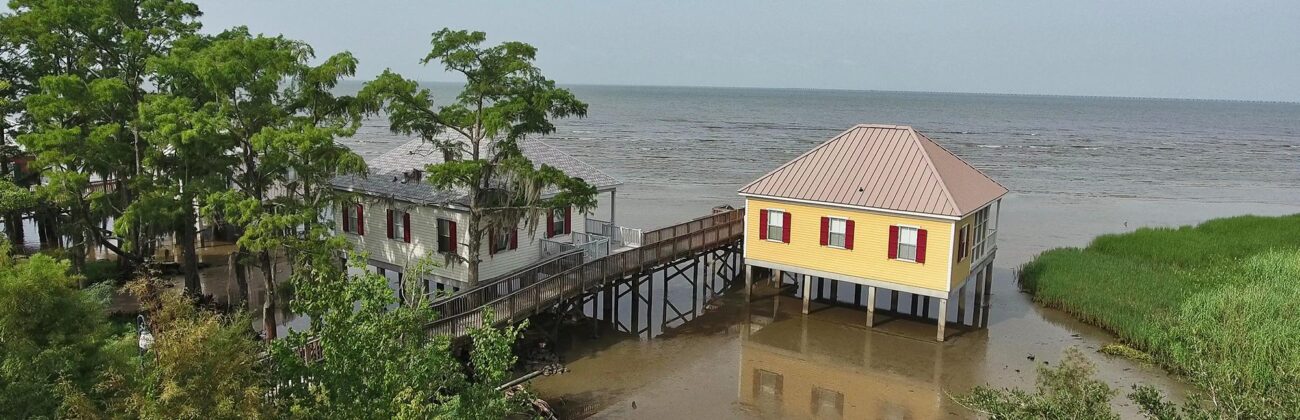
Fontainebleau State Park covers 2,800 acres on the north shore of Lake Pontchartrain, and the walk from the parking lot to the sand passes under live oaks hung heavy with Spanish moss.
The brick ruins near the entrance explain how the land got its name. Bernard de Marigny de Mandeville, the Creole planter who founded the nearby town, built a sugar mill here in 1829 and ran the property as a sugar plantation until 1852. He called it Fontainebleau after the forest outside Paris where French kings once hunted. The mill was worked by enslaved people, and the park marks that history directly with two historic markers, one at the site where the slave cabins stood and another honoring the Native people who lived in the area before European settlement. Research on both is available at the visitor center.
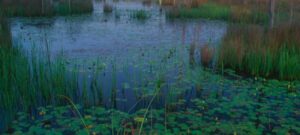
Geography is what makes the place feel bigger than its acreage. Water borders the park on three sides, with Lake Pontchartrain to the south, Bayou Cane to the east, and Bayou Castine to the west. That mix of open lake, brackish marsh, hardwood bottoms, and pine puts more than 400 species of birds and animals inside the boundary. Ospreys, egrets, herons, and horned owls are regulars, and alligators show up in the marsh and the day-use pond often enough that rangers post reminders about them.
Two main trails cover most of it. The 4.8-mile hiking route runs through brackish marsh toward Cane Bayou, flat enough for beginners and quiet enough that deer often step out at dusk. The shorter nature trail runs about a mile and a quarter in a loop, with interpretive signs identifying common trees and a boardwalk that carries walkers over the marsh to the Alligator Marsh viewing area. A section of the paved Tammany Trace rail-trail also cuts through the park, so cyclists can ride out toward Lacombe or west into Mandeville without touching a highway.
Down at the water there’s a sand beach, a pier, changing rooms, and a swimming area open year-round from sunrise to sunset. The park rents kayaks by the block of time, with single boats at $35 for two hours, $50 for four, and $65 for six. Tandems run $50, $65, and $80. Anyone bringing a larger boat can reserve a slip at the nearby JSBB Marina. Dogs are welcome on the trails and in the campground on a leash, though they are not allowed on the beach.
Overnight options run wide. There are 96 premium pull-through campsites with full hookups at $33 to $49.50 a night, plus 37 unimproved sites at $18 to $27. Twelve deluxe cabins go for $175 to $262.50 and sleep up to eight, and three of them are ADA compliant. A larger lodge sleeping ten runs $250 to $375. Reservations go through the state system, and weekends fill early in spring and fall.
Accessibility here is better than at most Louisiana parks. An all-terrain track wheelchair is available at no cost with 48 hours notice, checked out between 8:30 a.m. and 2 p.m. The park also has a 7,300-square-foot all-inclusive playground built with ramps, a tactile roller slide, and a wheelchair-accessible glider. The water playground next to the beach bathhouse runs Tuesday through Sunday from 8 a.m. to 8 p.m. and closes Mondays for cleaning.
Admission is $3 per person, free for anyone 62 and older and for children 3 and under. Gates open at 7 a.m. and close at 9 p.m., and the entrance station staffs from 8 a.m. to 5 p.m. Sunday through Thursday and until 8 p.m. on Friday and Saturday. A few tourism listings still show a 6 a.m. opening, so call ahead at (985) 624-4443 if an early start matters.
The park sits at 62883 Highway 1089 in Mandeville, about an hour from the French Quarter and worth the causeway toll.