

What makes a Cajun accordion sound different from any other squeezebox in the world?
The answer lives in backyard workshops across south Louisiana. These aren’t factory floors. They’re small shops where craftsmen spend decades perfecting an instrument that defines the sound of Cajun and zydeco music.
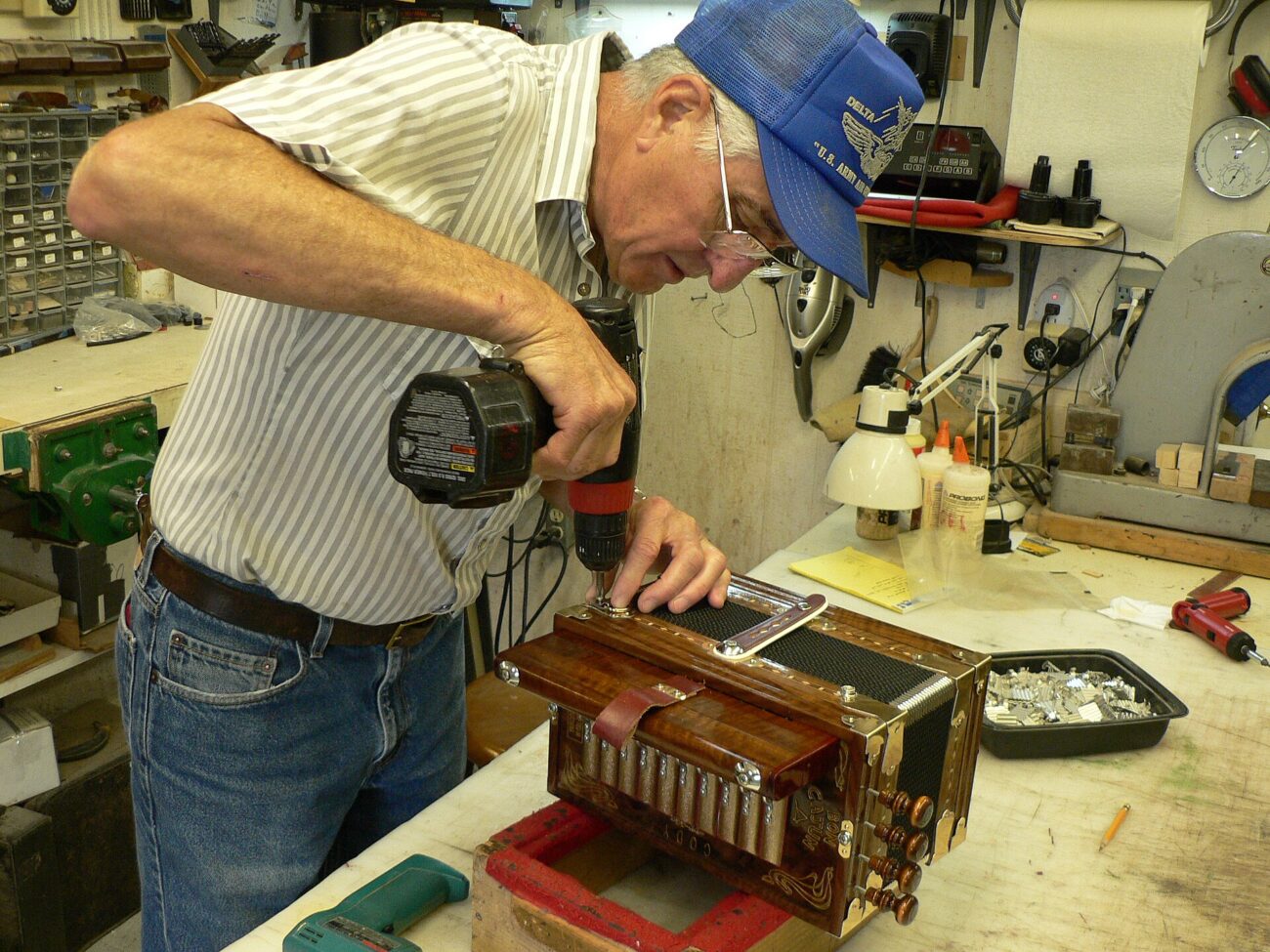
Larry Miller works out of a workshop in Iota surrounded by rice fields and crawfish farms. He’s 85 years old and has built more than 1,250 accordions over four decades. His brand is called Bon Cajun Accordions.
Miller didn’t start playing until his 40s. His father played accordion at house dances when Miller was a baby. He’d fall asleep to the music at fais do dos. But it took years before he picked up the instrument himself. When he finally decided to buy his first accordion, he asked the maker if he could borrow a few parts to try building one on his own.
“He said just bring ’em back,” Miller said.
Miller taught himself by visiting other builders and picking up what he could. For ten years he built accordions as a hobby while working as a teacher and school principal. Then he gave up everything else to build full-time.
A fire destroyed his shop a few years ago. Instead of retiring, Miller built a bigger workshop. He did it because two of his grandsons want to learn the craft. The walls of the new shop are made from the old dance floor of the Iota town pavilion. Names of original sponsors are carved into the wood. Miller tells people they used to dance on his walls.
He still works about four hours a day. He wants to make sure all his children, grandchildren, and great-grandchildren have one of his accordions. That’s 14 more instruments to go.
About an hour away in Eunice, Marc Savoy has been building accordions even longer. He started in 1960. He opened Savoy Music Center in 1966 in the middle of a cotton field. He’s still there today.
Savoy grew up on a rice farm. His grandfather was a fiddler who played with accordion legend Dennis McGee. At 12 years old, Savoy made his first accordion from household items. He used his grandmother’s tablecloth to line cardboard bellows and toilet float rods for the levers.
His father bought him a real accordion from the Sears catalog for $27.50. By the time it arrived, Savoy felt like he already knew how to play. The music had soaked into him from all those afternoons listening to the old men gather at his grandparents’ house.
Savoy earned a degree in chemical engineering. A major company in the Northeast wanted to hire him. He turned them down. He didn’t want to leave Louisiana and he wanted to build accordions more than anything else.
His Acadian brand accordions became the standard. Professional musicians and beginners wanted them because they sounded better. The bellows were designed for the long, drawn-out notes of Cajun music instead of the short, staccato notes German accordions were built for.
Savoy Music Center became more than a shop. Every Saturday morning, musicians show up for jam sessions. Locals and tourists pack the place. Savoy’s wife Ann plays guitar and writes books about Cajun music. Their children all play instruments and speak French. The whole family performs together.
Savoy opened his book “Made in Louisiana: The Story of the Acadian Accordion” by saying he wanted his music center to preserve the culture he loved. He wanted to show visitors what’s natural and organic about Acadiana.
That’s what these accordion makers do. They don’t just build instruments. They keep a sound alive. Every reed plate, every bellows fold, every inlaid piece of wood carries decades of tradition. German accordions came to Louisiana in the 1890s. Cajun musicians made them their own. When World War II destroyed the German factories, Louisiana builders like Sidney Brown started making their own.
Now there are dozens of accordion makers across south Louisiana. They work in small shops with apprentices learning beside them. They use salvaged wood from old buildings. They tune by ear. They build instruments that will outlive them.
Miller’s workshop has the dance floor on the walls. Savoy’s shop has Saturday jam sessions. Both men spent their lives chasing the perfect Cajun accordion sound. They’re still chasing it.
You can visit these shops. You can watch them work. You can hear the difference between a factory accordion and one built by hand in Louisiana. The sound is richer. The notes hold longer. The instrument breathes with the music.
That’s what happens when someone spends 40 or 60 years building the same thing over and over. They’re preserving a culture one squeezebox at a time.