

The hand-sewn suits worn by Black Masking Indians take a year to build and get worn a handful of times before the maker starts over. Three small museums in New Orleans keep the finished work where people can see it, and none of them operates like a conventional institution.
1. Backstreet Cultural Museum, Tremé
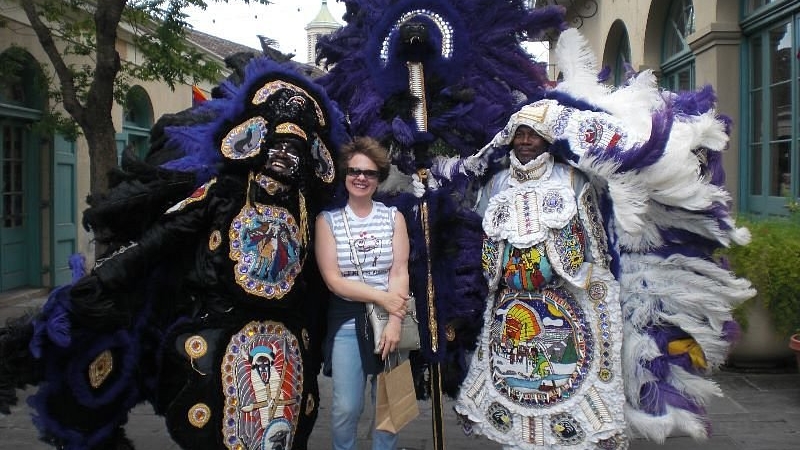
Sylvester Francis marched with the Gentlemen of Leisure Social Aid & Pleasure Club and started displaying photographs and memorabilia in his two-car garage in 1988. Indian tribes began donating suits. Tour groups started showing up. The museum opened formally in 1999 and holds one of the largest collections of these suits anywhere, alongside material on jazz funerals, second lines, and the North Side Skull & Bone Gang.
Location has changed, and old listings have not caught up. Hurricane Ida damaged the former funeral home on Henriette Delille Street in 2021, and the museum reopened at 1531 St. Philip Street in July 2022. Anyone navigating to the old address will find a building that no longer houses it.
The museum functions as more than a display case. Second lines begin and end there. Indians and the Skull & Bone Gang gather there on Mardi Gras morning. Neighborhood schoolchildren find relatives in the photographs on the walls. Hours run 10 a.m. to 4 p.m. Tuesday through Saturday, closed Sunday and Monday. Admission sources vary between a $10 adult ticket and a $20 donation, so bring cash and ask. Photography is allowed, video is not.
2. House of Dance & Feathers, Lower Ninth Ward
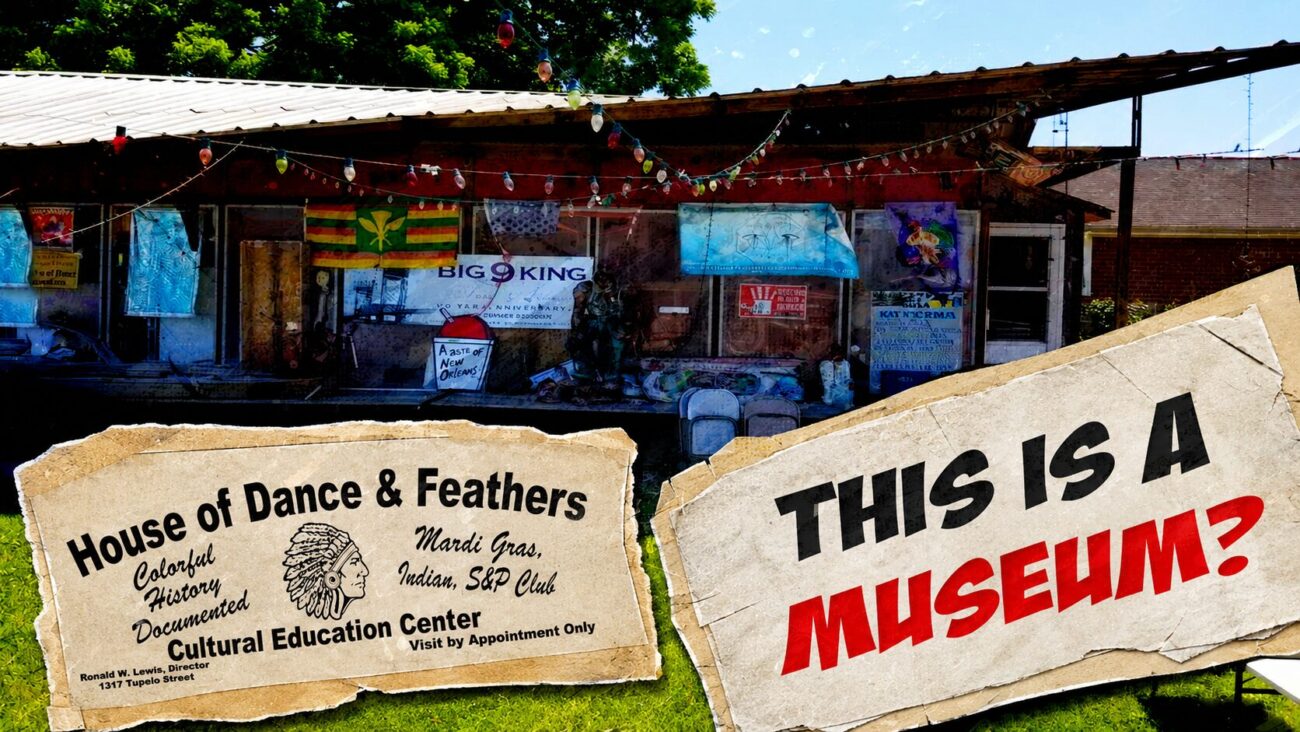
This one sits in a backyard. Ronald W. Lewis started it in 2000 as a shed where he taught neighborhood children about the culture, after his wife told him the feathers and memorabilia had taken over the house. It has operated on Tupelo Street since 2003.
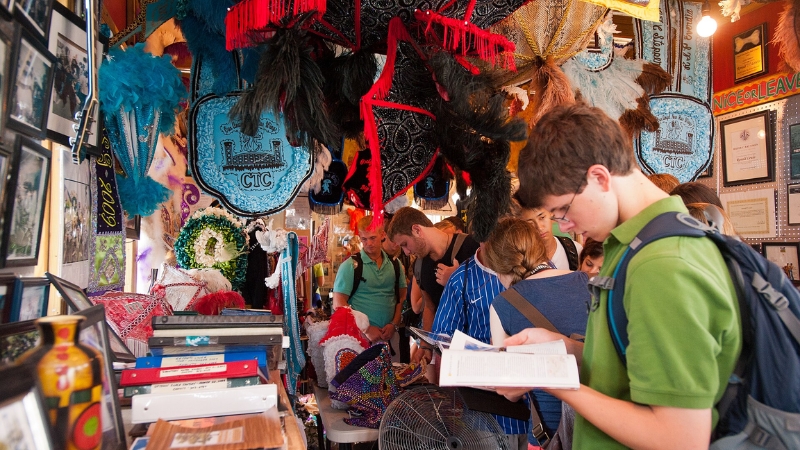
Lewis was president of the Big Nine Social Aid & Pleasure Club, former Council Chief of the Choctaw Hunters, a Mardi Gras Indian Hall of Fame inductee, and a central figure in Dan Baum’s book Nine Lives. When Katrina hit, he evacuated the collection and brought it back to rebuild. Beaded panels, fans, and plumes hang from the rafters of the small building, with photographs covering nearly every inch of wall.
Lewis died in 2020. His wife, known as Ms. Minnie, runs the museum now and gives the tours herself. Visits are by appointment at 1317 Tupelo Street, and there is no admission charge, though the organization is a registered charity and donations help. One practical warning from recent visitors: the website and social media are out of date, and the number listed on several sites belonged to Mr. Lewis and no longer works. Call ahead and expect to reach Ms. Minnie directly.
3. Mardi Gras Museum of Costumes & Culture
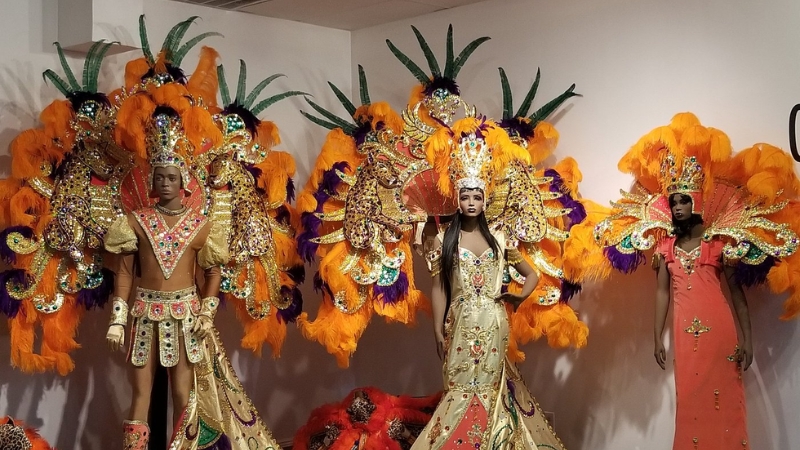
This is the broadest of the three and the one where Indian suits share space with everything else. The collection belongs to Carl Mack, a costumer and performer, and covers krewe royalty regalia, tableau ball costumes, Cajun Mardi Gras riders, walking clubs, buskers, and Social Aid and Pleasure Clubs alongside the beaded and feathered Indian suits.
The format leans interactive. A 45-minute guided tour walks through Carnival history from ancient Rome forward, and a costume closet lets visitors dress up for photos. Mask-making activities run for kids. The museum also rents as an event venue.
Details need verification before a visit. The address shows as 318 N. Rampart Street on current listings, though older sources say 1010 Conti Street. Hours conflict badly across sources, with the museum’s own site listing Saturdays from 11:30 a.m. with tours at noon and 2 p.m., and other listings showing five days a week from noon to 4 p.m. Tickets run around $15. Call (504) 218-4872 and confirm before walking over.