

Most hotel lobbies are a place to wait. In three New Orleans properties, the lobby is the reason people come through the door, and none of them require a room key to walk in.
The Roosevelt New Orleans — Central Business District
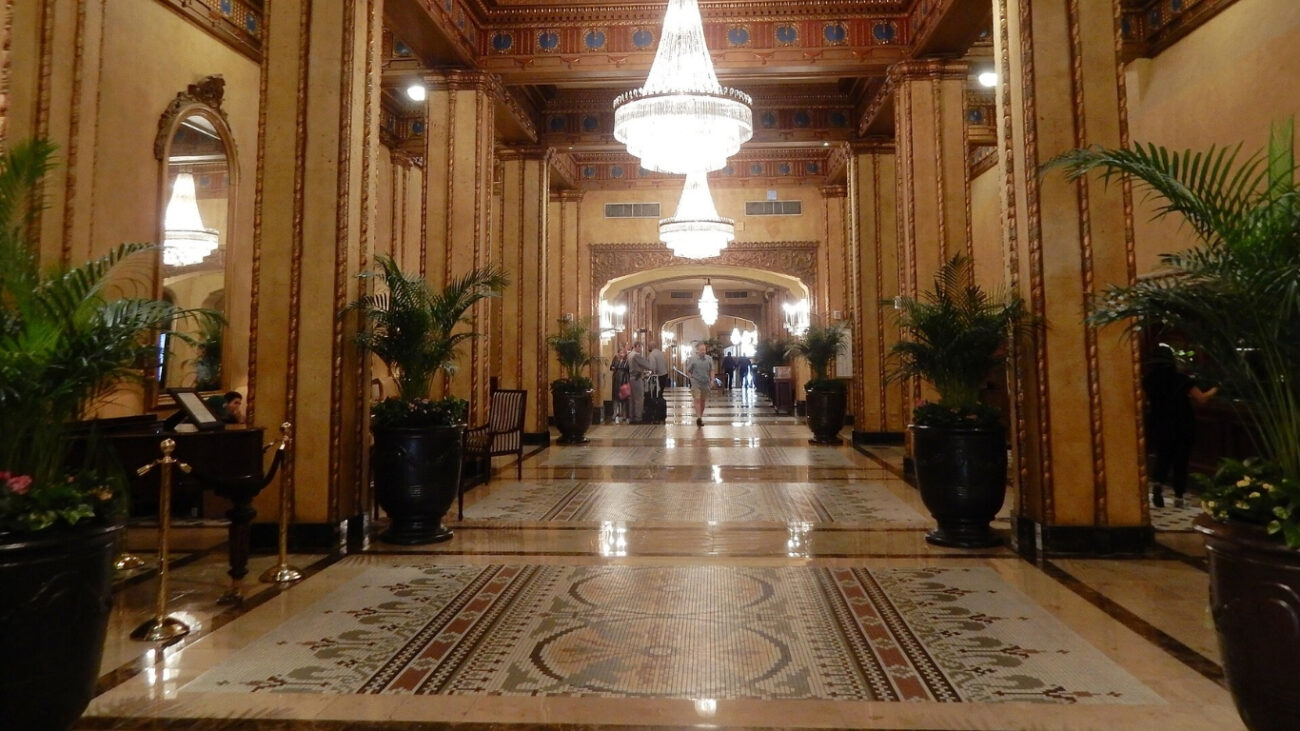
The lobby runs a full city block, lined with gilded columns and chandeliers, and it has been a local institution since the hotel opened in 1893 as the Grunewald. Grand pianos sit around the space carrying plaques that list the famous hands that have played them. A statuette near the center turns out to be a clock from the Paris Exhibition, one of the oldest objects in the building.
The holiday decoration is the ritual that defines the place. Locals ask visitors whether they have seen the Roosevelt lobby the way they ask whether you have eaten at Galatoire’s. Birch branches, dozens of trees, and tens of thousands of lights fill the block from late November through the new year. The Sazerac Bar opens off the lobby with Paul Ninas WPA murals from 1939, Teddy’s Café handles café au lait and beignets, and the Fountain Lounge sits in the same space. None of it requires a reservation to walk through.
Hotel Monteleone — French Quarter
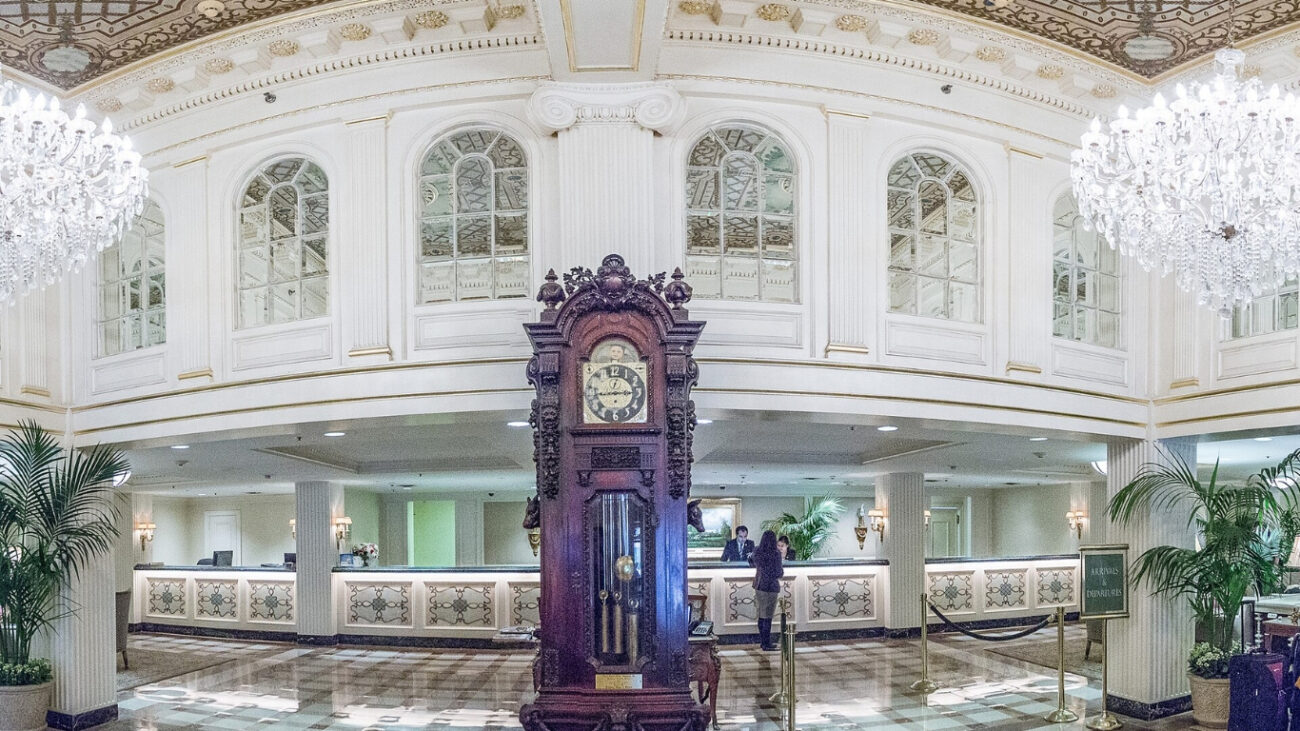
The oldest hotel in the French Quarter has been run by the same family since 1886, and the lobby carries polished marble, chandeliers, and brass. The hand-carved mahogany grandfather clock debuted in 1909, made by an employee in the hotel’s own furniture shop, and it still chimes at the top of every hour.
The Carousel Bar sits just off that lobby and does the heavy lifting. Installed in 1949 and past its 75th anniversary, the 25-seat revolving bar turns on 2,000 steel rollers at one revolution every fifteen minutes, under a full carousel top with circus animals hand-painted on the chairs. The Vieux Carré was invented here. A Friends of Libraries plaque marks the hotel as a National Literary Landmark, one of only three in the country, earned by Hemingway, Faulkner, Capote, and Anne Rice all working here. The Swan Room next door hosted Liberace and Louis Prima through the 1950s and 60s.
The Ritz-Carlton New Orleans — Canal Street
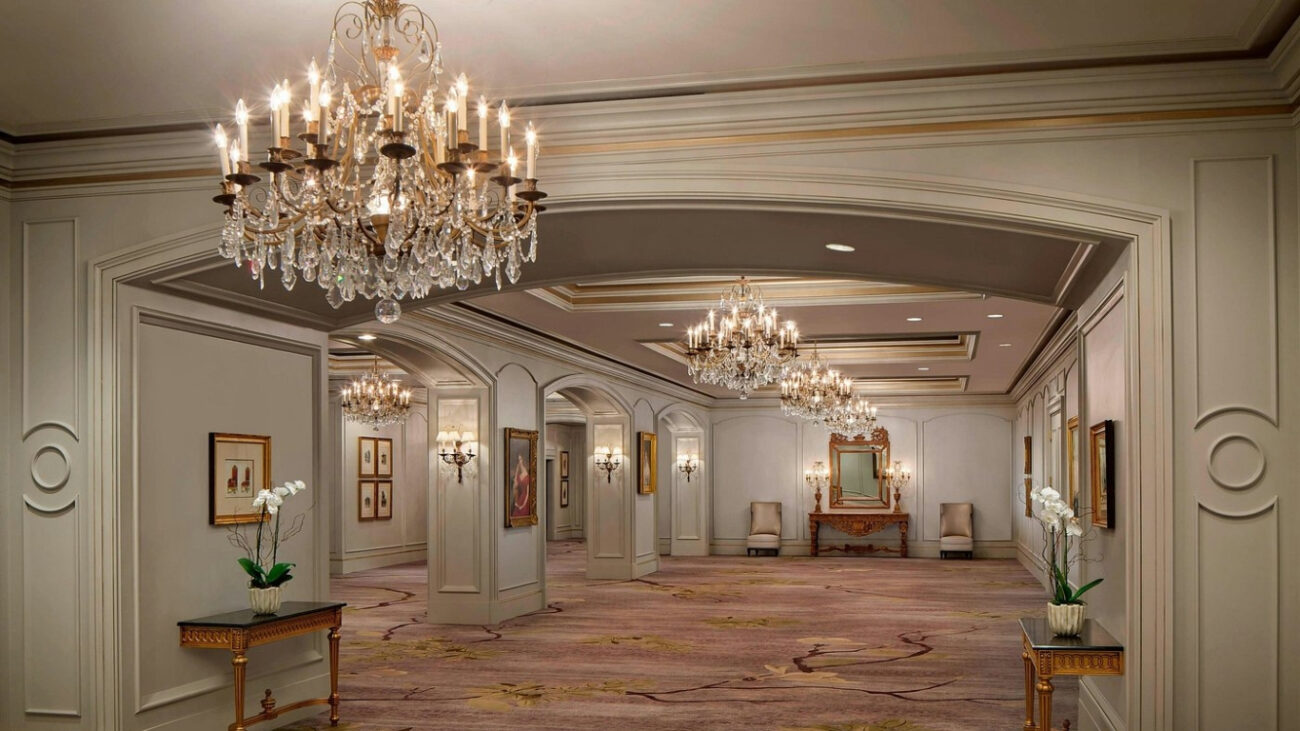
The lobby is on the third floor, which catches first-time visitors every time. The building opened in 1908 as the Maison Blanche department store, so the ground floor was retail and the grand public space went upstairs, a layout the hotel kept when it converted in 2000.
Walking in brings the scent of Southern magnolia, the property’s signature, through a Beaux Arts space that opens onto a courtyard. Afternoon tea runs Saturday and Sunday in the Davenport Lounge on the same floor, with a harpist. Jeremy Davenport and his ensemble play the lounge Wednesday and Thursday evenings and later on weekends. At the holidays the lobby fills with Santa’s Toy Shop, a gingerbread streetcar carrying famous New Orleanians as passengers, and lights strung across the ceiling.