

Most people walk right past it. There are no entrance gates, no rangers in wide-brimmed hats waving you toward a trailhead, no dramatic geology to photograph.
New Orleans Jazz National Historical Park is a different kind of park entirely, spread across multiple sites in the French Quarter and the Treme, held together not by geography but by an idea: that jazz is worth protecting the same way a canyon or a coastline is.
Congress established the park in 1994 as the only unit in the National Park Service devoted to a musical art form.
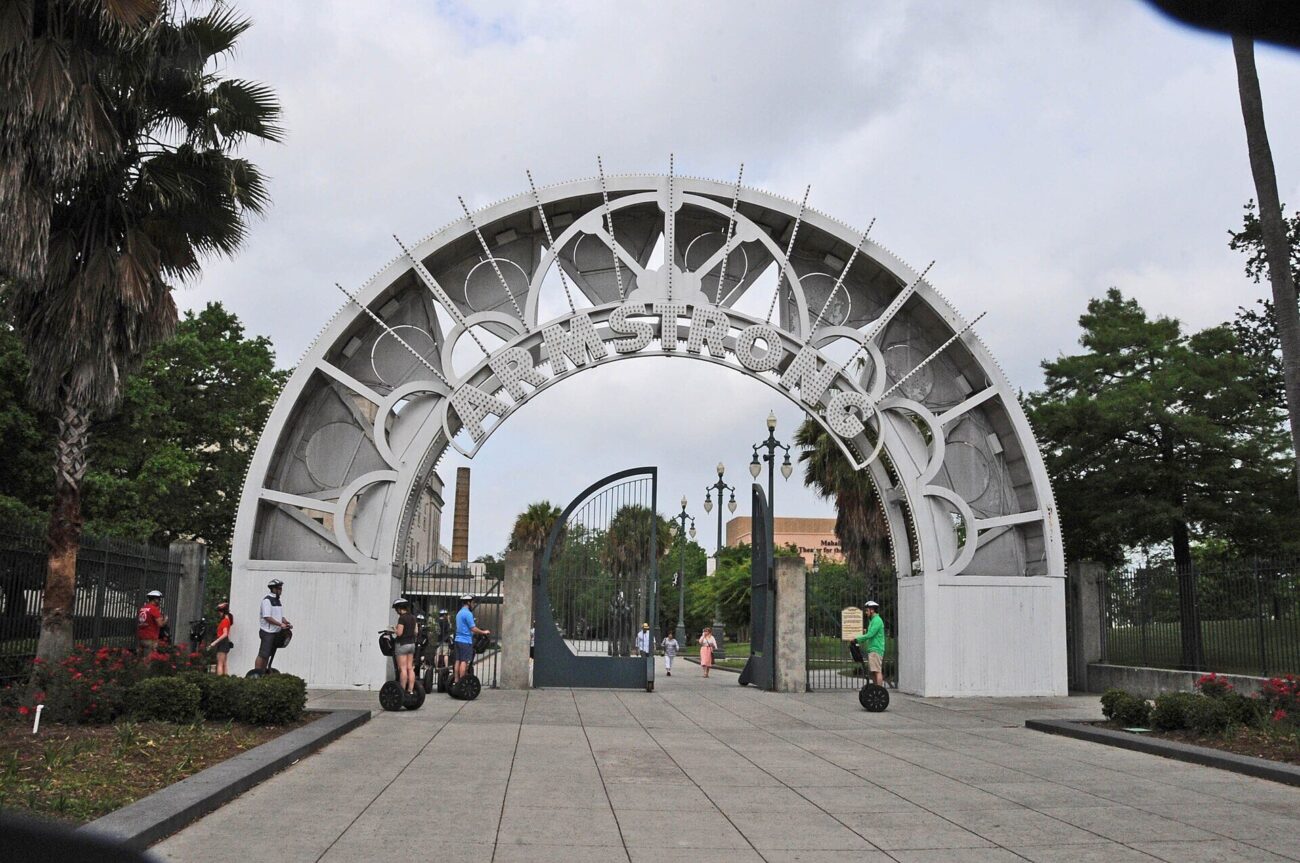
The bulk of the park’s land, about four acres, sits inside Louis Armstrong Park in the Treme, one of the oldest African American neighborhoods in the country and the ground zero of jazz’s actual origin.
At the center of that land stands Perseverance Hall No. 4, a Masonic Lodge built between 1819 and 1820 and the oldest such temple in Louisiana. Creoles of Color gathered here, musicians played dances on the first floor while lodge members used the upper rooms, and Sidney Bechet and George “Pops” Foster were among those who performed inside these walls.
Congo Square, where enslaved people and free people of color gathered on Sundays to trade, drum, and dance, and where African rhythmic patterns began flowing into what would become jazz, sits just across the lagoon.
The park’s programming runs across several sites. Park headquarters at 419 Decatur Street is open Tuesday through Saturday and functions as the primary visitor center, where rangers field questions and run educational programs.
The Old U.S. Mint at 400 Esplanade Avenue, a National Historic Landmark at the intersection of the French Quarter and the Frenchmen Street corridor, houses the New Orleans Jazz Museum on its upper floors alongside a concert venue where ranger-led performances and talks run throughout the week. The museum holds one of the most significant jazz instrument collections anywhere, including Louis Armstrong’s first cornet and Sidney Bechet’s soprano saxophone.
Rangers lead live performances and educational programs five days a week, and every bit of it is free. The programming covers the African, Caribbean, European, and American threads that wove together to produce jazz in this specific city at the turn of the 20th century.
It’s the kind of context that makes the music you’ll hear later that night on Frenchmen Street land differently. Special programming clusters around Jazz Appreciation Month in April, Satchmo SummerFest in August, and Christmas New Orleans Style in December.
Admission to New Orleans Jazz National Historical Park is free.
Check the NPS website for current program schedules before you go, as performance times and locations shift seasonally.