

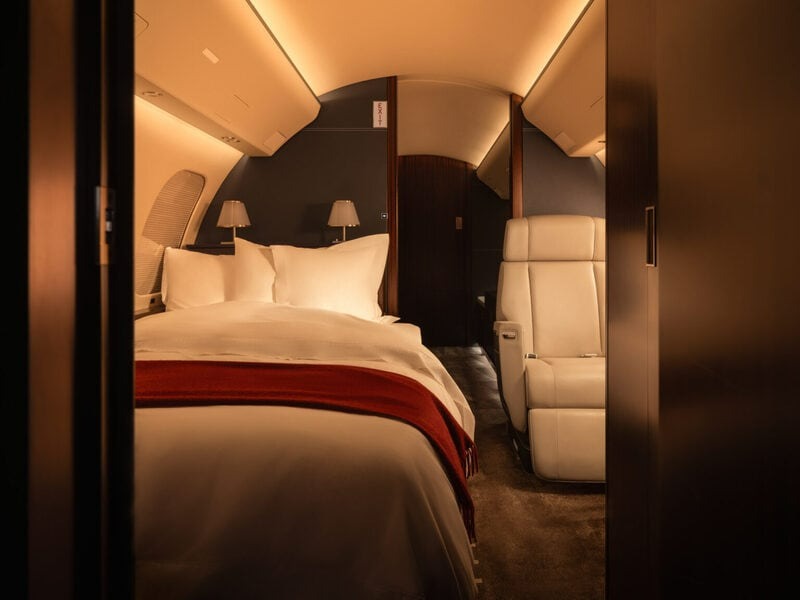
VistaJet’s Sleep Program transforms cabin environments using science-backed protocols developed with longevity expert Dr. Peter Attia.
Executive jet lag isn’t just inconvenience—it’s productivity poison. McKinsey research reveals two-thirds of executives are dissatisfied with sleep quantity, while 55% struggle with quality. Enter VistaJet’s Sleep Program, launched in November 2025 with longevity expert Dr. Peter Attia.
This isn’t another wellness gimmick wrapped in luxury marketing. With 58% of VistaJet flights crossing multiple time zones annually, the company recognized that turning travel time into recovery time could be a genuine competitive advantage for global business travelers. The program operates through three scientifically orchestrated stages that treat your cabin like a mobile sleep laboratory.
Science Meets Service at 40,000 Feet
Specialized training transforms cabin crew into sleep optimization specialists who orchestrate every environmental detail.
Pre-Sleep protocols begin before takeoff. Cabin Hosts—now trained in sleep science—adjust temperature, lighting, and sound based on each passenger’s schedule and destination time zone. Caffeine-free beverages replace traditional service, while meal timing aligns with your target sleep window rather than departure times.
Even the bedding gets upgraded to hypoallergenic materials designed for altitude conditions. During Sleep phase maintains optimal cabin temperature while you rest undisturbed. Staff monitor environmental conditions, ensuring deep recovery for everyone aboard—including accommodations for families and pets traveling together.
Post-Sleep activation uses gradual lighting adjustments that simulate natural dawn. This follows with hydrating drinks and nutrient-dense meals crafted by in-house nutritionists. The goal isn’t just waking up, but arriving cognitively sharp and circadian-aligned.
Key Program Features:
- Three-stage sleep optimization (Pre, During, Post-Sleep)
- Environmental controls for temperature, lighting, and sound
- Meal timing synchronized with destination time zones
- Specialized Cabin Host training in sleep science
- Personalized accommodations for families and pets
Dr. Attia’s involvement signals this program’s grounding in actual sleep physiology rather than spa-adjacent amenities. The timing makes sense—luxury travel increasingly competes on wellness outcomes, not just thread count and champagne selection.
For frequent flyers crossing oceans, transforming dead travel time into restorative sleep could justify private aviation costs beyond convenience alone. When your next board meeting depends on mental clarity, not just punctual arrival, science-backed approach becomes more than luxury—it becomes strategy.