

New Orleans doesn’t separate its architecture from its history. Every building on this list has a story that goes deeper than its facade, and staying in one means sleeping inside a chapter of the city’s long, complicated social evolution.
The Dew Drop Inn
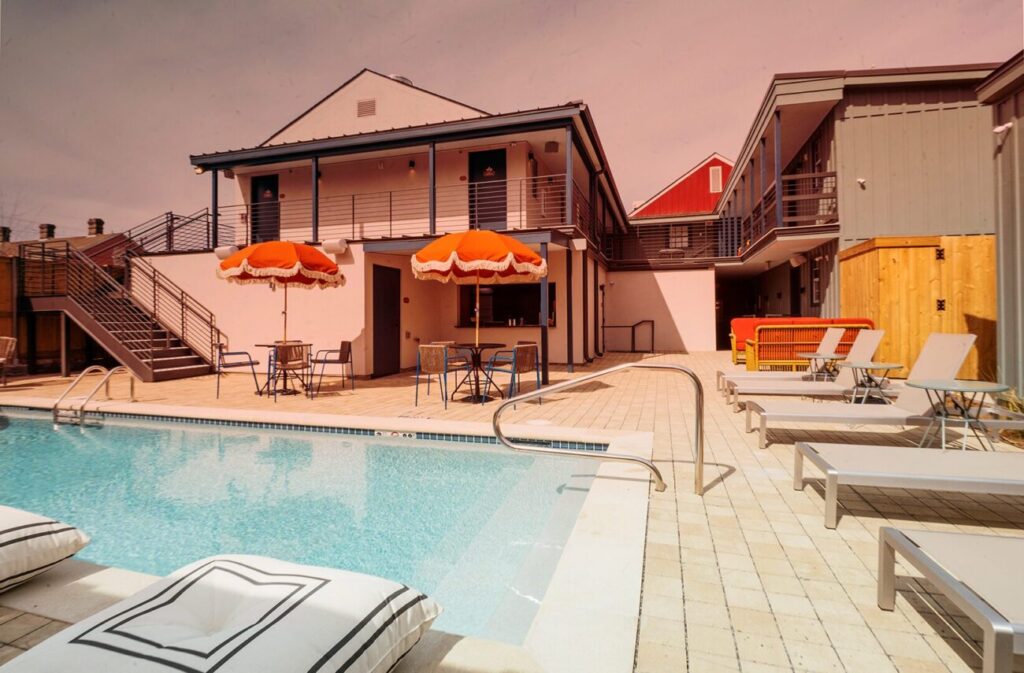
Frank Painia started with a barbershop on LaSalle Street in Central City in 1939. Within a decade, he had built one of the most culturally significant venues in American music history, a hotel, restaurant, nightclub, and barbershop rolled into one, listed in the Negro Motorist Green Book as a safe haven for Black travelers during Jim Crow. Ray Charles slept here. Little Richard improvised the first version of “Tutti Frutti” on the stage. Irma Thomas, James Brown, Etta James, and Marvin Gaye all played here, too. Painia sued the city of New Orleans in 1964 after police repeatedly raided the Dew Drop for allowing white patrons through the door, and he won.
Hurricane Katrina gutted the building in 2005, and it sat vacant until developer Curtis Doucette Jr. acquired it in 2021 and spent three years and nearly $11 million bringing it back. The Dew Drop reopened in March 2024 with a 410-person music venue, 17 hotel rooms each named for a figure from the inn’s history, and a museum built into the former barbershop space that traces Painia’s life and legacy chronologically. It is at 2836 LaSalle Street in Central City.
The Degas House
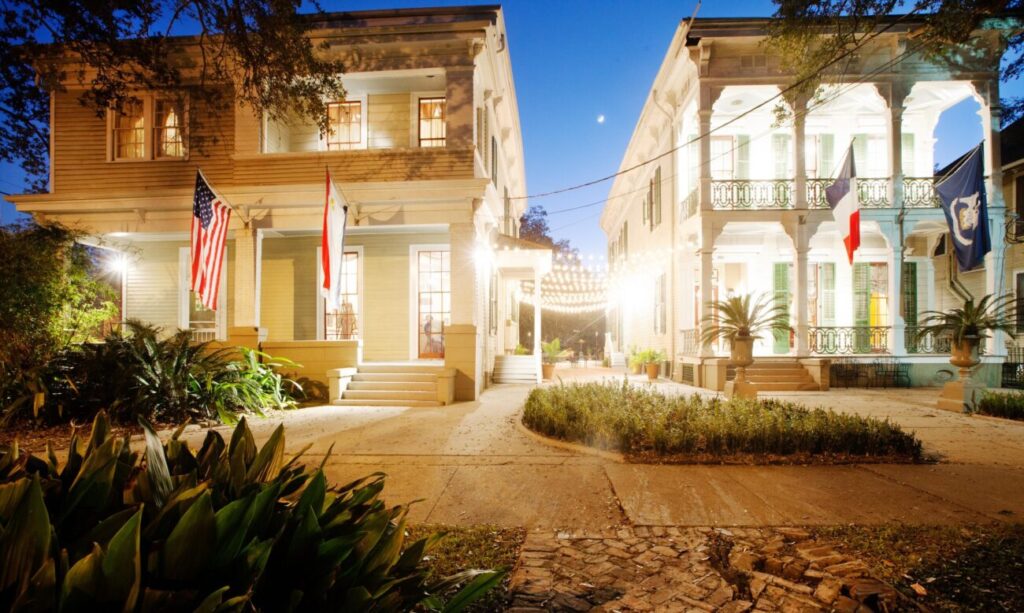
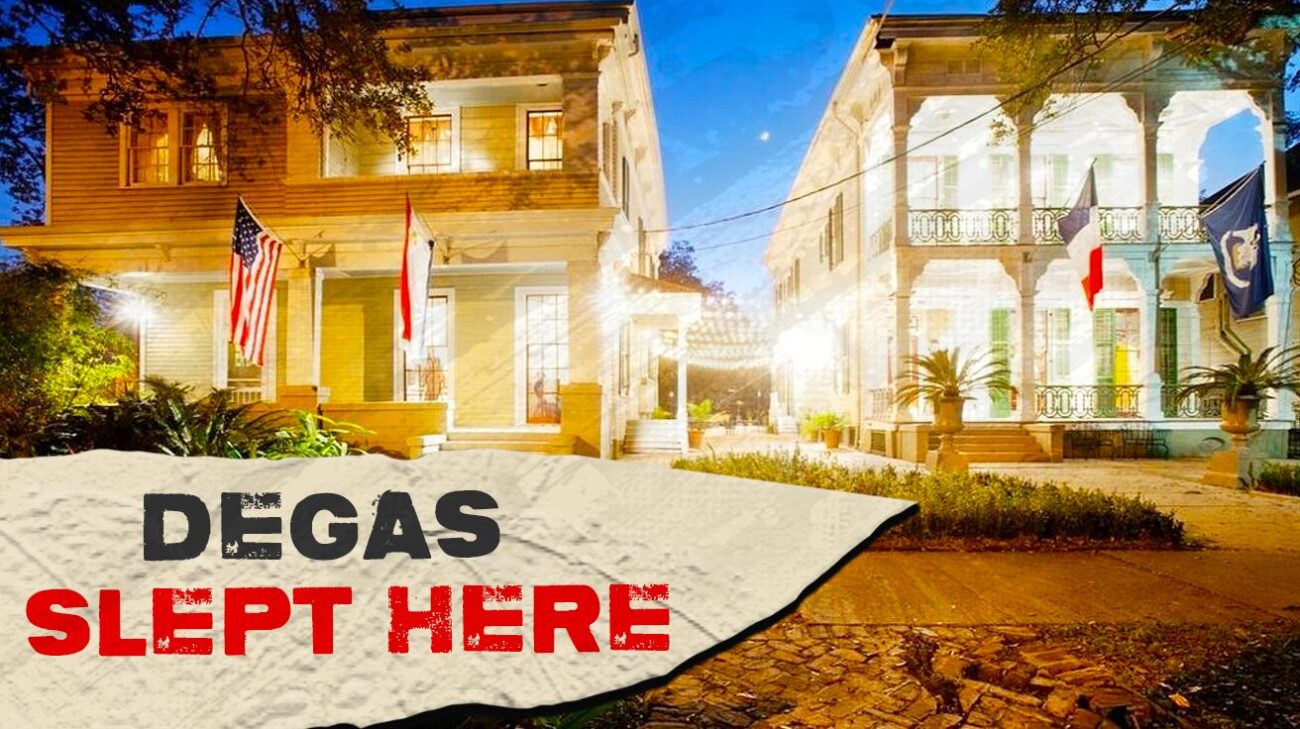
In the fall of 1872, French painter Edgar Degas arrived in New Orleans to stay with his mother’s Creole family, the Mussons, at their home on Esplanade Avenue. He stayed five months and completed 18 paintings, including what would become his most famous American work, a portrait of his uncle’s cotton exchange on Carondelet Street. He left in the spring of 1873 with a renewed sense of direction that helped give birth to the First Impressionist Exhibition the following year.
The Degas House at 2306 Esplanade Avenue is the only home or studio of Edgar Degas open to the public anywhere in the world, recognized by the French Ministry of Culture through the National Order of Arts and Letters. It operates today as a bed and breakfast with nine guest rooms and suites, each named for a member of the Musson-Degas family. Daily tours are led by Degas’ own great-grandnieces. Every stay includes a gourmet Creole breakfast and a guided walk through the rooms where the paintings were made. Call (504) 821-5009 or book at degashouse.com.
Hotel Saint Vincent
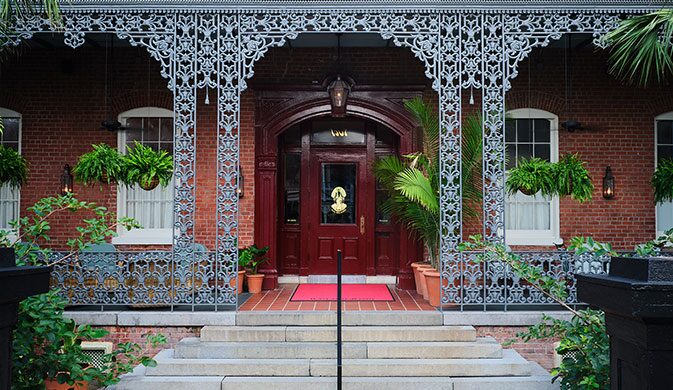
Margaret Haughery arrived in New Orleans from Ireland in 1835, became a successful baker and businesswoman, and spent her life pouring what she earned back into the city’s most vulnerable residents. In 1861, she funded the construction of St. Vincent’s Infant Asylum on Magazine Street, a refuge built in response to the yellow fever epidemic that was leaving thousands of children without parents. The Daughters of Charity ran it as an orphanage for over a century. A marble header above the Magazine Street entrance still reads “St. Vincent’s Infant Asylum.” The gargoyle on the clock tower is original. So is the Virgin Mary grotto in the courtyard.
$22.5 million restoration completed in 2021 converted the five-building campus into Hotel Saint Vincent, a 75-room boutique hotel in the Lower Garden District with interiors by Lambert McGuire Design that layer 1960s and 70s Italian decadence over the 19th-century bones of the building. The Chapel Club, built inside the original orphanage chapel, has stained glass windows, a marble bar with a fuchsia velvet base, and original doors restored to their pre-renovation condition. San Lorenzo serves coastal Italian with Creole touches. Elizabeth Street Cafe handles breakfast and Vietnamese fare in the adjacent courtyard building. The hotel is at 1507 Magazine Street.
Rathbone Mansions

The two antebellum mansions at 1227 and 1244 Esplanade Avenue sit at the exact point where the French Quarter, Faubourg Marigny, and the Treme Historical District converge, which means they sit at one of the most historically charged intersections in American urban history. Treme is the oldest Black neighborhood in the United States, the place where free people of color owned property and built community during the era of slavery, and the neighborhood where jazz was born.
Louis Armstrong Park, a few blocks away, sits on the site of Congo Square, where enslaved people gathered to sing and maintain African musical traditions that fed directly into what became jazz. Rathbone Mansions operates as a low-key boutique guesthouse across both properties, with 26 rooms ranging from standard queens to two-bedroom suites with kitchenettes.
The 1227 building is Greek Revival, built in 1850 and purchased by banker Henry Rathbone, one of the few Americans fully accepted into Creole social circles. Rooms have antique furnishings, sleigh beds, and hardwood floors that sometimes squeak. A shared pool and hot tub sit on the 1244 side. Frenchmen Street is a ten-minute walk. The streetcar stops two blocks away. Book at rathbonemansions.com.