

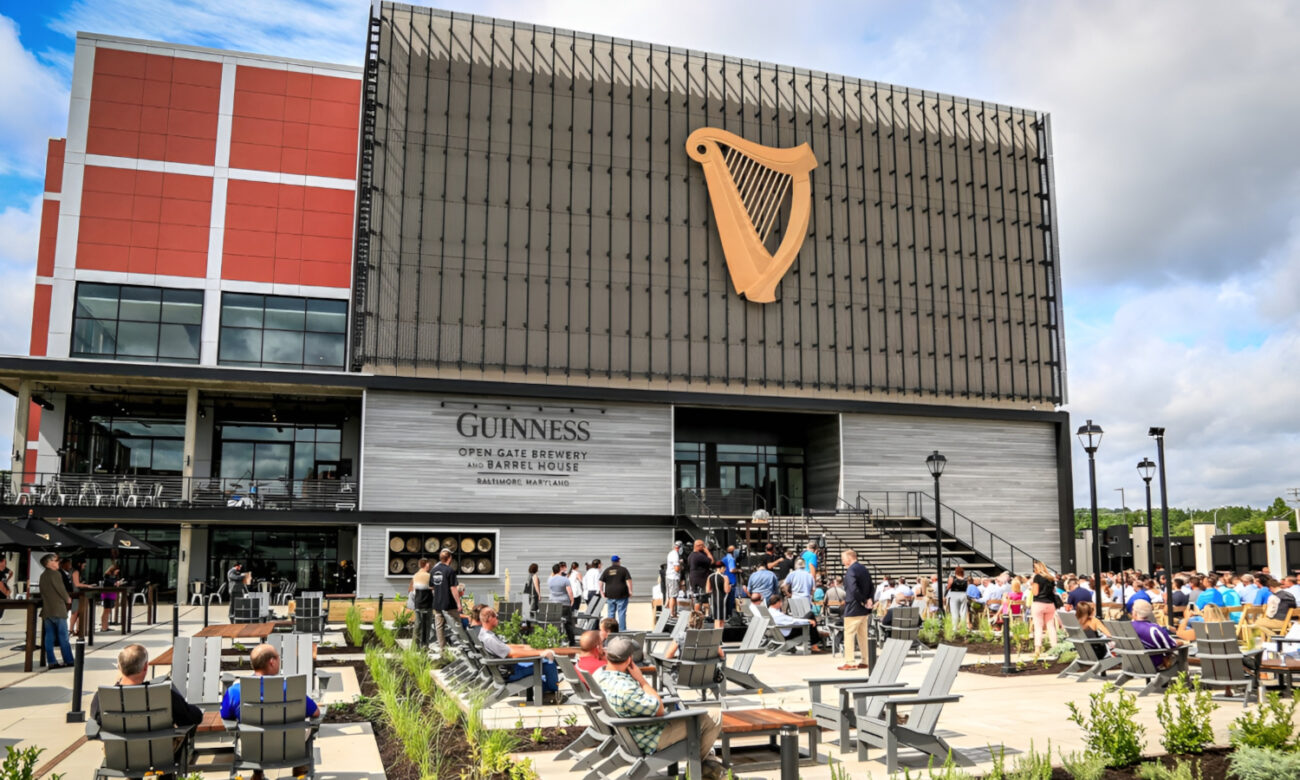
More than two million visitors walked through the doors. Brewers developed more than 700 different beers, according to Guinness. For more than eight years, a global stout brand became a genuine local destination in Halethorpe, Maryland. Nov. 1 is the last day Guinness Open Gate Brewery serves the public — and by year’s end, the whole operation goes dark.
More Than a Brand Activation
What made Open Gate worth the visit was something no standard taproom could replicate.
This wasn’t a gift shop with taps. When Open Gate launched in 2018 — marking Guinness’ first U.S. brewing operation since the company’s original New York brewery closed in 1954 — it arrived as something genuinely unusual: a hospitality-first brewery where experimental batches, a full restaurant, a beer garden, festivals, and tastings coexisted under one roof. Culinary travelers made the trip specifically for it. Locals claimed it as their own. For Baltimore County, it functioned as real tourism infrastructure, not a brand activation.
Closure facts at a glance:
- Final public day: Nov. 1, 2026; full shutdown expected by year’s end
- 174 Aramark employees face layoffs effective Nov. 1; Aramark says it is seeking placement opportunities elsewhere in the organization
- More than 2 million visitors welcomed since 2018
- 700-plus different beers developed on-site, per Guinness
- Chicago’s Open Gate Brewery, opened in 2023, becomes Guinness’ only remaining U.S. location
Growth Brand, Closed Brewery
Diageo’s own words frame the decision carefully — the broader financial context frames it differently.
Diageo said the closure “follows a careful review of our operations and long-term business priorities” and is “not a reflection of the passion, talent or dedication” of the team or the Baltimore community’s support. The company also describes Guinness as a major growth brand. At the same time, Reuters has reported that Diageo is pursuing roughly $1 billion in cost reductions over three years, with some teams across the company facing staffing reductions of around 20 to 30 percent — much like how 900 Jobs at Starbucks were cut through corporate cost-cutting measures — though available reporting does not establish a direct causal link between that restructuring plan and the Baltimore closure specifically. Growth brands, it turns out, still get closed when the parent needs to hit a number.
What Baltimore Actually Loses
Real tourism infrastructure doesn’t replace itself quietly — and 174 jobs make that concrete.
A venue that drew more than two million visitors generates measurable economic activity for surrounding businesses and the broader hospitality ecosystem. Aramark has said it is working to identify other roles for affected employees within its organization, but the scale of the impact — 174 workers, documented in a WARN filing with the Maryland Department of Labor — underscores how much employment the brewery anchored.
Since 2018. More than two million visitors sharing something cold and genuinely interesting. More than 700 beers that existed nowhere else on the menu — like so many treats that disappeared before anyone was ready to say goodbye. Whatever Diageo’s review concluded, that’s a real thing ending — and Baltimore County feels it first.