

Most people drive right past St. Bernard Parish without stopping. That’s their loss.
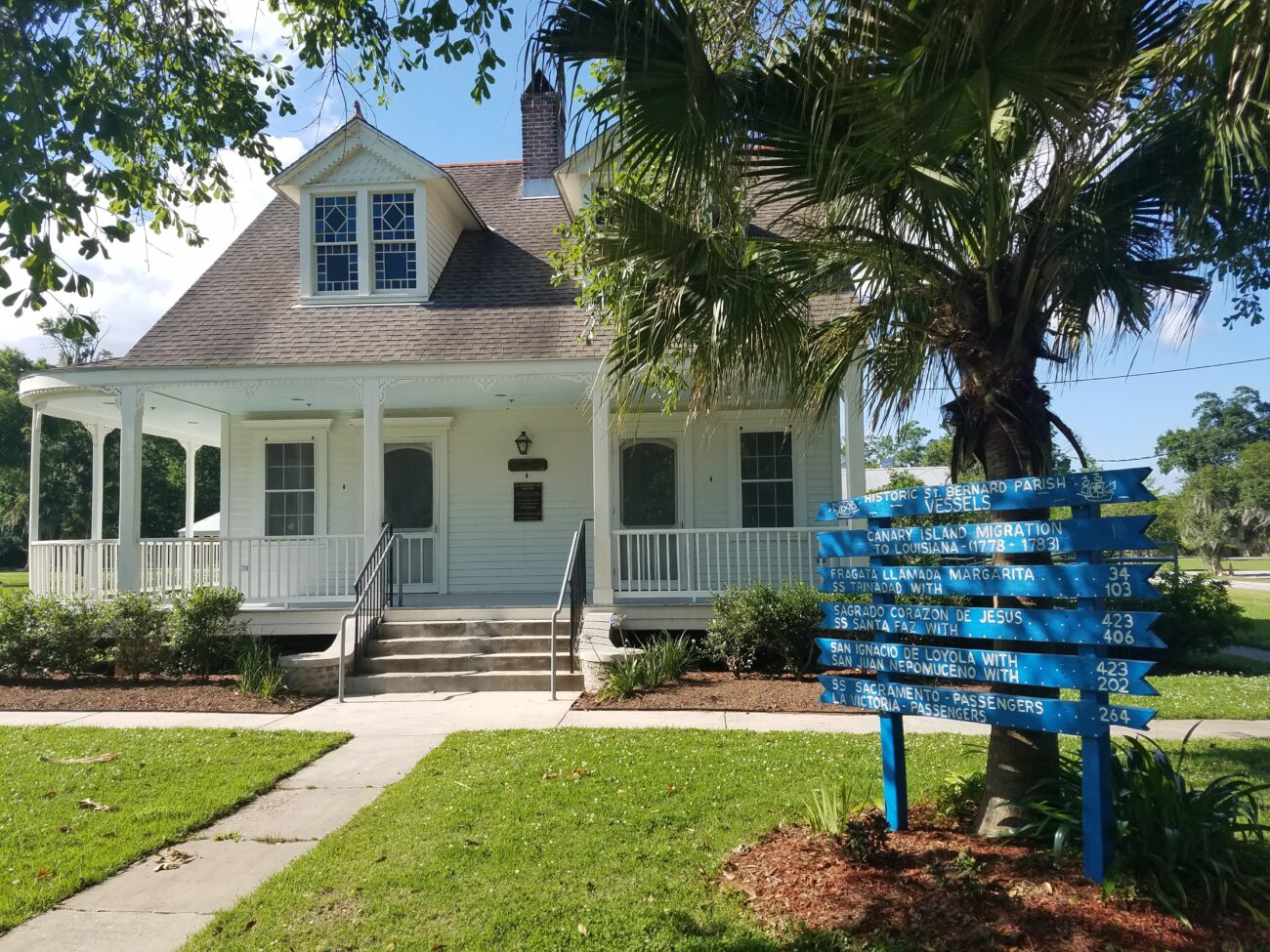
About 17 miles downriver from the French Quarter, tucked along Bayou Terre-aux-Boeufs off Highway 46, sits one of the most quietly remarkable cultural sites in the entire New Orleans region. Los Isleños Museum Complex preserves the history of the Canary Islanders, a group of Spanish colonists who arrived in Louisiana between 1778 and 1783 and never really left. Their descendants still live here. Some elderly community members grew up speaking Spanish as a first language. The story of how that happened is worth the drive.
Spain recruited the Canary Islanders with a specific purpose: to populate Louisiana, provide loyal settlers, and push back against British expansion west of the Mississippi River. Around 2,000 people took the offer, crossing the Atlantic from islands like Tenerife and Gran Canaria. They were sent to four settlements, and only the one here, San Bernardo, held on with any real cultural continuity.
The French absorbed the others within a generation. St. Bernard Parish became a different kind of place entirely, one with its own dialect, its own folk songs, and its own way of working the land and water. The 64parishes.org entry on Isleños calls this community the last living vestige of Spanish Colonial Louisiana, and that description holds up.
The complex itself spreads across 22 acres with nine historic structures. The oldest is the Estopinal House, a mud-and-moss construction built by the Spanish Government around 1790, its walls filled with bousillage, the same insulating technique the Isleños learned from local Native Americans. The Coconut Island Barroom, a 1920 cypress board-and-batten structure, was moved to the grounds to keep it from disappearing entirely.
There’s also a research library with nearly 1,000 volumes on Isleño history and a Houma Native American interpretive area, because the story of who settled this parish is layered in ways that a single exhibit can’t fully capture. Bilingual Spanish-English signage runs throughout, a small but pointed reminder that this place kept a language alive that most of the country never knew existed here.
Among the best-preserved traditions are the décimas, satirical folksongs sung a cappella in Spanish, composed in improvised couplets about fishing exploits, local feuds, and everyday life. The most famous singer was Irván “Puco” Pérez, and recordings of his work survive.
The food traditions are equally distinct: caldo, a hearty soup built on pickled pork and vegetables, traces directly back to the Canary Islands, and you can still find it served at the annual Fiesta de los Isleños each March on the museum grounds.The grounds are free and open seven days a week.
Guided tours run Wednesday through Sunday, cost $5 per person, and last about 45 minutes, though the full site can take closer to two hours. Tours are by appointment, so email losislenos2011@gmail.com at least 36 hours ahead or call 504-277-4681.
The museum is at 1345 Bayou Road, St. Bernard. Pair it with a drive along the Great River Road and you’ll understand something about this region that most visitors never get close to.