


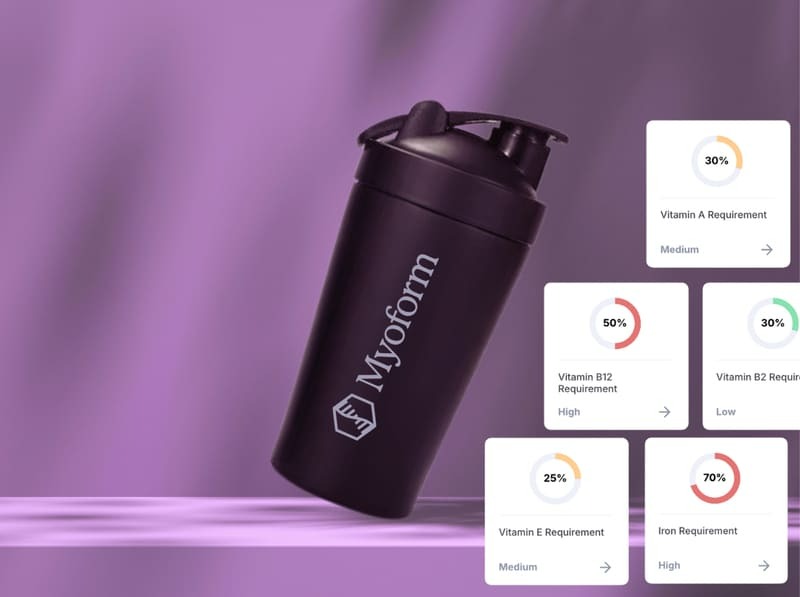
Generic supplements work about as well as a one-size-fits-all workout plan—which is to say, they often miss the mark. While athletes invest heavily in protein powders and vitamins, London-based Myoform is betting that your genetic code holds better answers. Their beta testing with 500 athletes showed performance improvements up to 23.5% across strength, endurance, and recovery metrics. Some endurance gains hit 43.5%, according to company data.
The Science Behind Personalized Powder
Whole-genome sequencing meets AI algorithms to create custom supplement formulas.
Here’s how it works: You submit an at-home DNA test or connect existing genetic data. Myoform’s proprietary AI analyzes your genetic blueprint alongside biometric profiling to identify specific nutritional gaps. The algorithm determines whether you metabolize caffeine quickly or slowly, if your body absorbs iron efficiently, and how your muscles respond to different recovery nutrients.
Optional blood biomarker testing further refines the formula. The result is a personalized powder blend delivered monthly, with ingredients ranging from basic vitamins to performance compounds like creatine—all dosed for your unique genetic profile.
Key Features and Early Results
- Premium positioning: Costs around $70 monthly versus $12 for generic supplements
- Clinical-grade sourcing: NSF/Informed Sport certified ingredients in powder form for maximum bioavailability
- Performance tracking: Companion app provides genetic reports and real-time training insights
- User feedback: Professional athletes report noticeable improvements in recovery speed and ability to handle double training sessions
- Beta results: Participants showed significant gains in standardized tests like the All Out Run Test after three months
The catch? These impressive numbers come from Myoform’s own pre-launch trials, not independent, peer-reviewed studies. While nutrigenomics represents legitimate emerging science, the company’s evidence base remains preliminary.
Promise Meets Proof Gap
Early results look compelling, but large-scale clinical validation is still missing.
Myoform positions itself as precision health’s answer to supplement guesswork, transforming the industry from mass-market approaches to targeted interventions. The UK launch targets a pre-registered waitlist of athletes, with US expansion planned.
Yet questions remain about whether genetic prediction justifies the premium pricing without robust clinical trials. The supplement industry has seen plenty of hyped innovations that fizzled under scientific scrutiny. Until independent researchers validate these performance claims, athletes are essentially paying to beta test the future of personalized nutrition.