

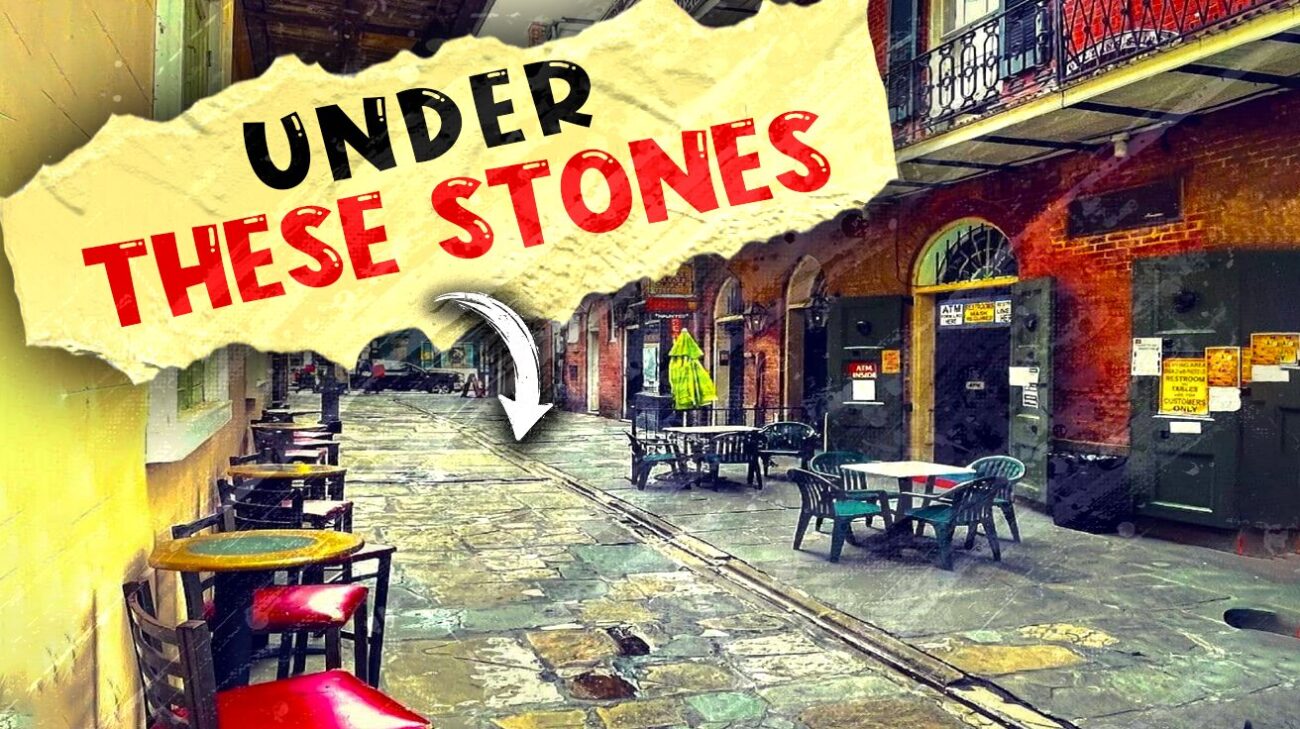
New Orleans’ earliest streets, including the ground these alleys now occupy, were lined with open drainage ditches dug at the order of French colonial engineers, with wooden footbridges built so pedestrians could cross them without stepping in standing water.
Spanish administrators later called these crossings “puentes”. No single surviving gutter or spout is documented as original 18th-century hardware along these four passages specifically, but the drainage logic that shaped the entire Quarter’s narrow alley network is either Spanish and French colonial in origin, and these four alleys are the clearest places left to see how that logic shaped the city’s footprint.
Pirate Alley
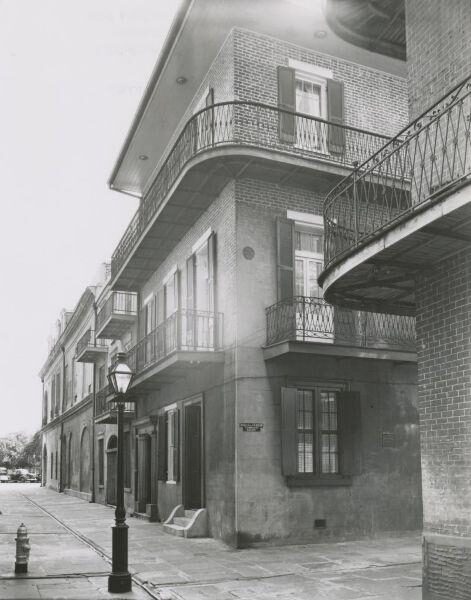
Pirate Alley runs one block between Chartres and Royal streets, flanked by St. Louis Cathedral on one side and the Cabildo on the other. It was officially called Orleans Alley South until 1964, when the city renamed it to match its popular nickname, tied to legends that Jean Lafitte and his Baratarian crew once conducted business along its length. Most historians consider that story more romantic than accurate, since the alley’s real historical weight comes from what stood behind the Cabildo: the old Spanish Calabozo, a prison that held some of Lafitte’s own men in 1814.
The alley’s cobblestones were added in the 1830s, decades after the passage itself was first cut to connect Chartres and Royal without forcing pedestrians to detour around the cathedral block. William Faulkner lived in a house along the alley in 1925, writing his first novel here, and the bookstore that now occupies the building still carries his name.
Pirate Alley runs between Chartres Street at Jackson Square and Royal Street, alongside St. Louis Cathedral.
Pere Antoine Alley
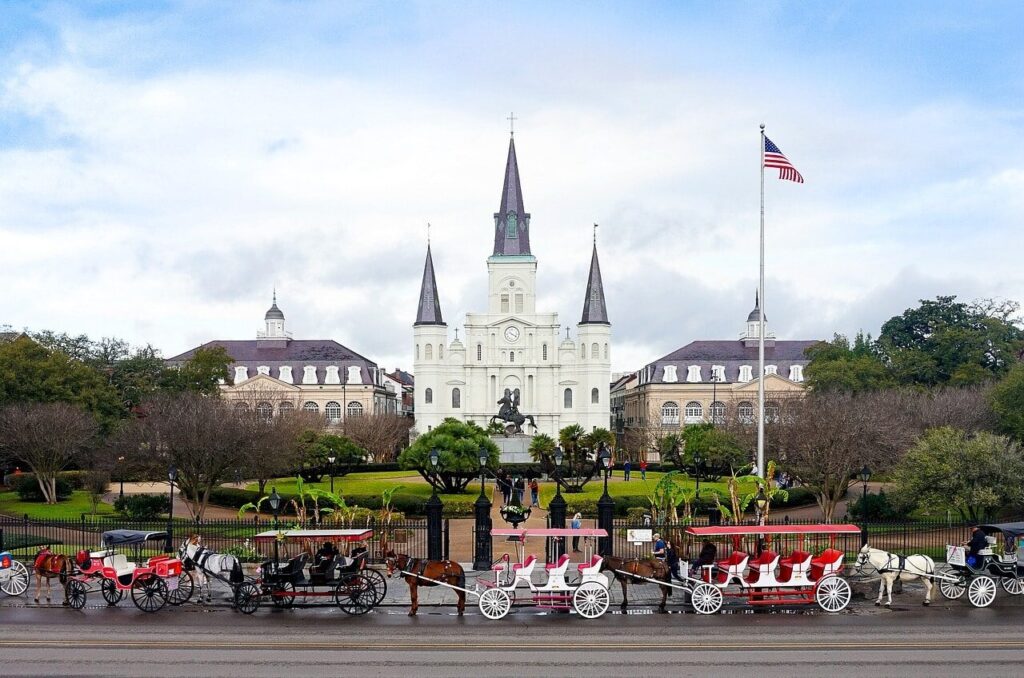
Pere Antoine Alley sits on the cathedral’s opposite flank, running between St. Louis Cathedral and the Presbytère. Like its counterpart, it carried the official name Orleans Alley North until the 1964 renaming, taking its new name from Antonio de Sedella, known popularly as Père Antoine, the Spanish friar who served as the city’s head Catholic priest from 1774 until his death in 1829.
Père Antoine was known for his devotion to the city’s poor, enslaved, and imprisoned residents, and he personally baptized Marie Laveau as a child. The alley named for him runs alongside St. Anthony’s Garden, the walled green space behind the cathedral that once served as a dueling ground in the 18th and 19th centuries, giving this stretch a quieter, more contemplative character than its busier neighbor on the cathedral’s other side.
Pere Antoine Alley runs between Chartres Street and Royal Street, alongside St. Louis Cathedral and St. Anthony’s Garden.
Exchange Alley
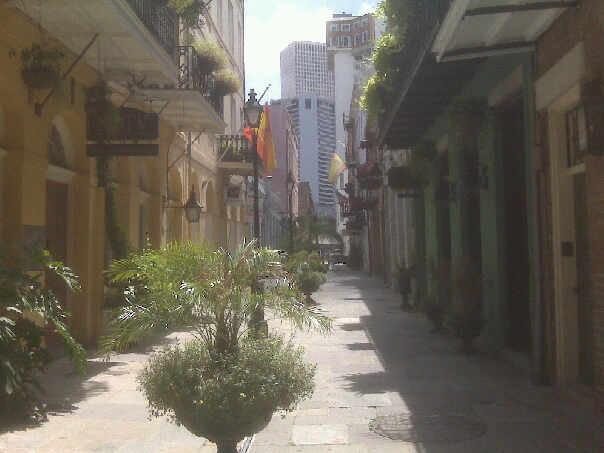
Exchange Alley began life in 1831 as Passage de la Bourse, designed by architect James Gallier Sr. to connect two of the city’s most important antebellum commercial buildings, the Merchants’ Exchange and the St. Louis Exchange. Wealthy young Creole men once gathered here to study fencing under masters like Pepe Lulla before settling their disputes elsewhere, and the alley’s coffeehouses and saloons made it one of the city’s liveliest commercial corridors through the mid-1800s.
The Conti Street segment of the alley met its end when the Louisiana Supreme Court building went up directly on top of its path in 1909, but the alley’s final stretch survives one block further as Cabildo Alley, extending the width of the Cabildo from St. Peter Street toward the original passage’s old route.
Exchange Alley’s surviving Conti Street segment sits between Royal and Chartres streets, just downriver from the modern Louisiana Supreme Court building.
Cabildo Alley
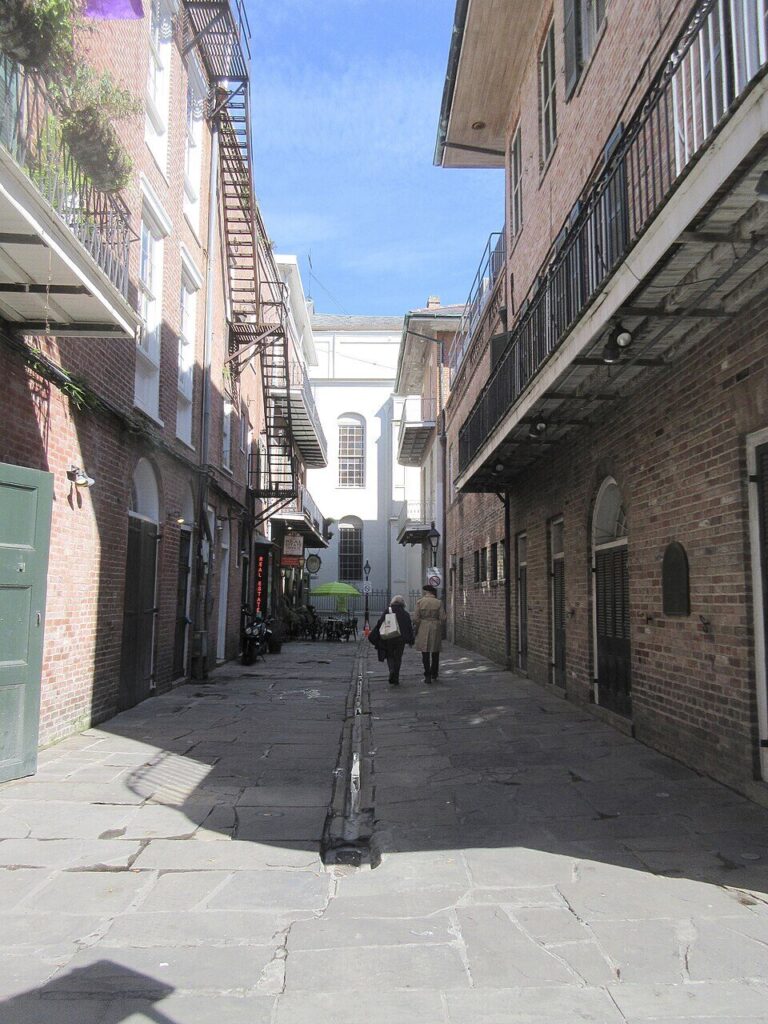
Cabildo Alley is the short cross-passage that intersects Pirate Alley at its midpoint, extending the width of the Cabildo from that intersection through to St. Peter Street. A lamppost marks the spot where the two alleys meet, one of the most photographed and painted fixtures in the French Quarter given how often artists have set up along this exact corner over the decades.
The alley’s narrow footprint reflects the same colonial-era logic that shaped passages like it throughout the Quarter: a tight cut between major buildings, just wide enough for foot traffic, built to move people efficiently around blocks that the original 18th-century street grid never quite accounted for.
Cabildo Alley runs from its intersection with Pirate Alley through to St. Peter Street, alongside the Cabildo building.