

New Orleans architecture reveals itself in details: cast-iron patterns, hidden passageways, decorative fences, and eccentric house designs that exist nowhere else. Four sites showcase the city’s architectural peculiarities best discovered through walking and close observation rather than tour buses.
The Pontalba Buildings, Jackson Square, French Quarter.
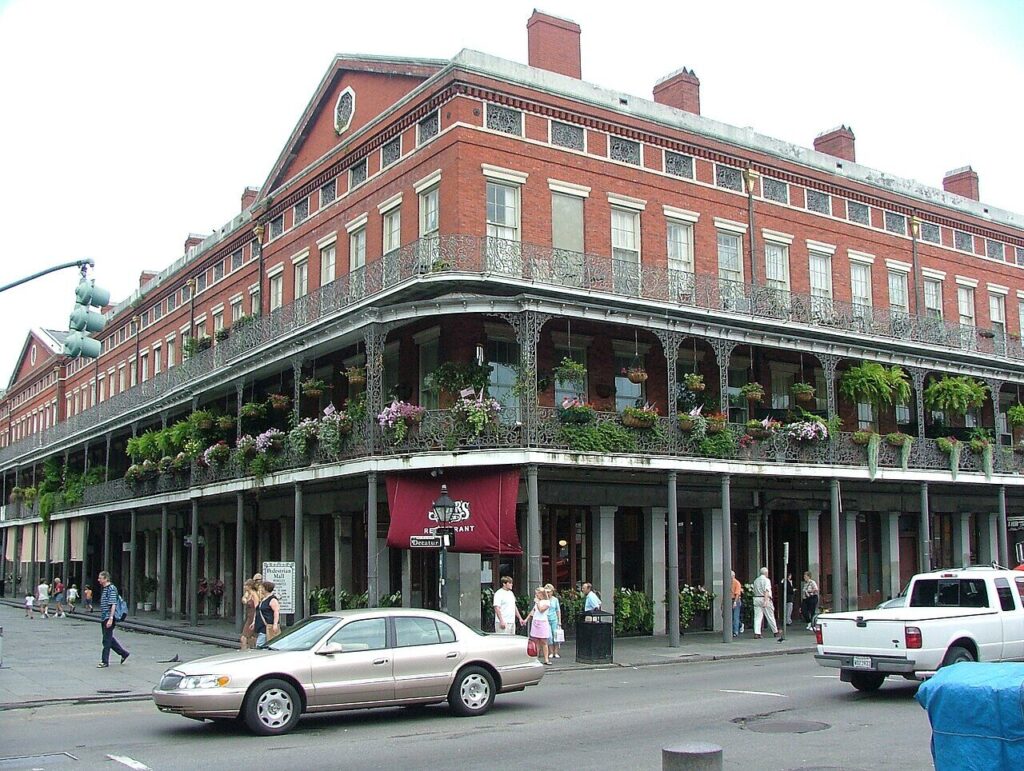
These matching red-brick apartment buildings frame Jackson Square’s upper and lower sides. Built 1849-1851 by Baroness Micaela Pontalba, they were America’s first luxury apartment buildings. The cast-iron balconies feature the initials “AP” (Almonester-Pontalba) woven into elaborate scrollwork with acanthus leaves and floral patterns. Walk the full perimeter examining the ironwork. Each balcony section is identical, cast from the same molds. The buildings still function as apartments and ground-floor retail. The balconies are the architectural detail that defined New Orleans’ French Quarter aesthetic. Free to view from sidewalks.
Exchange Alley, French Quarter.
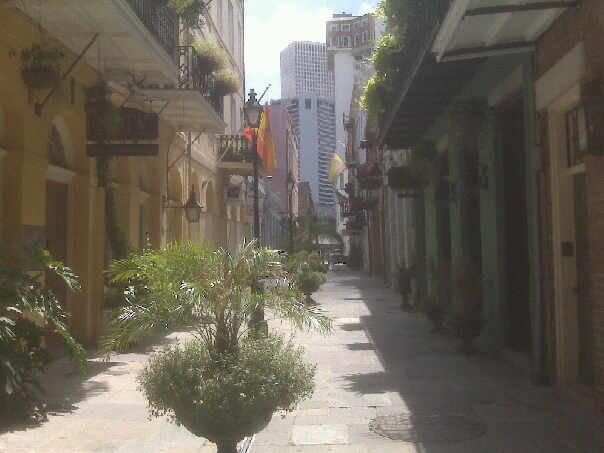
This narrow pedestrian passage runs between Conti and Bienville streets connecting Chartres and Royal. The alley is 8 feet wide with buildings pressing close on both sides. Wrought-iron balconies overhead nearly touch creating a tunnel effect. The passage was commercial corridor in the 1800s when merchants used it to move between banking streets. Now it holds galleries, bars, and shops. Walk through slowly examining the balconies, shutters, and doorways. The compressed space shows French Quarter density and European urban planning. The alley functions as shortcut locals use daily. Free access, public passage.
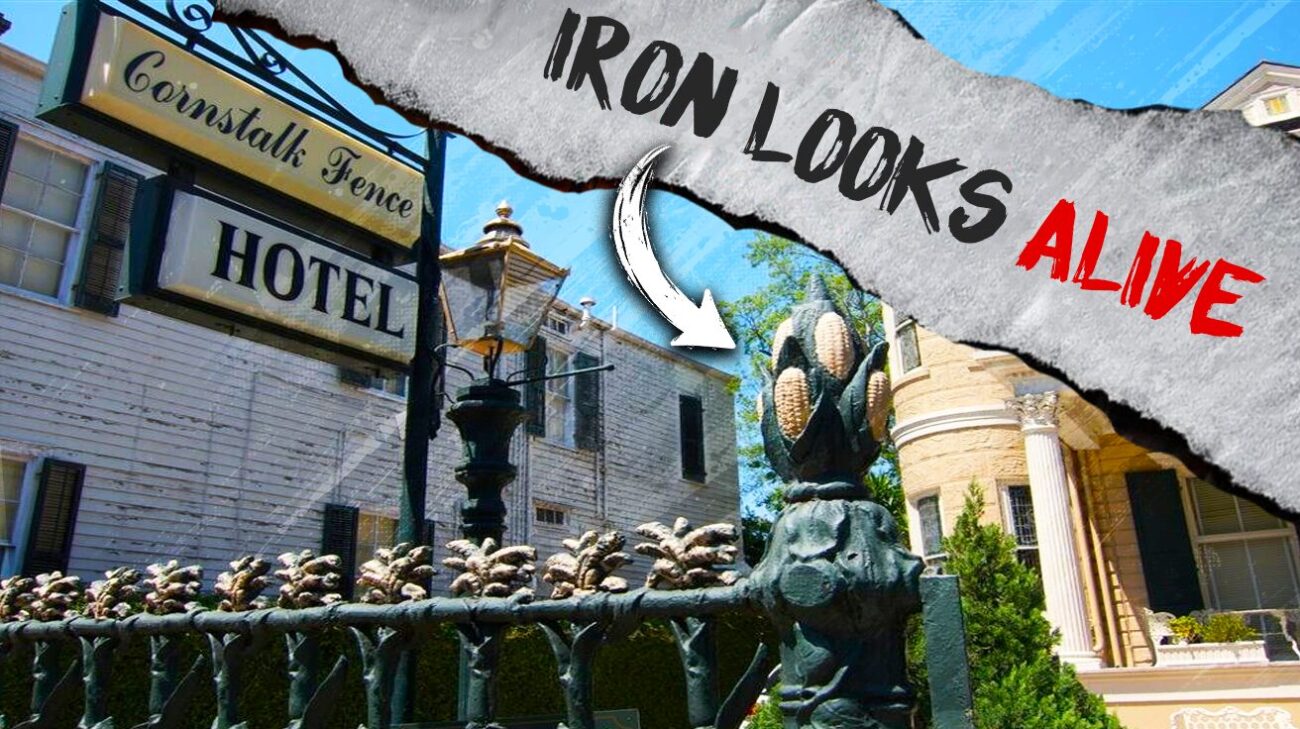
The Cornstalk Fence, 915 Royal Street, French Quarter.
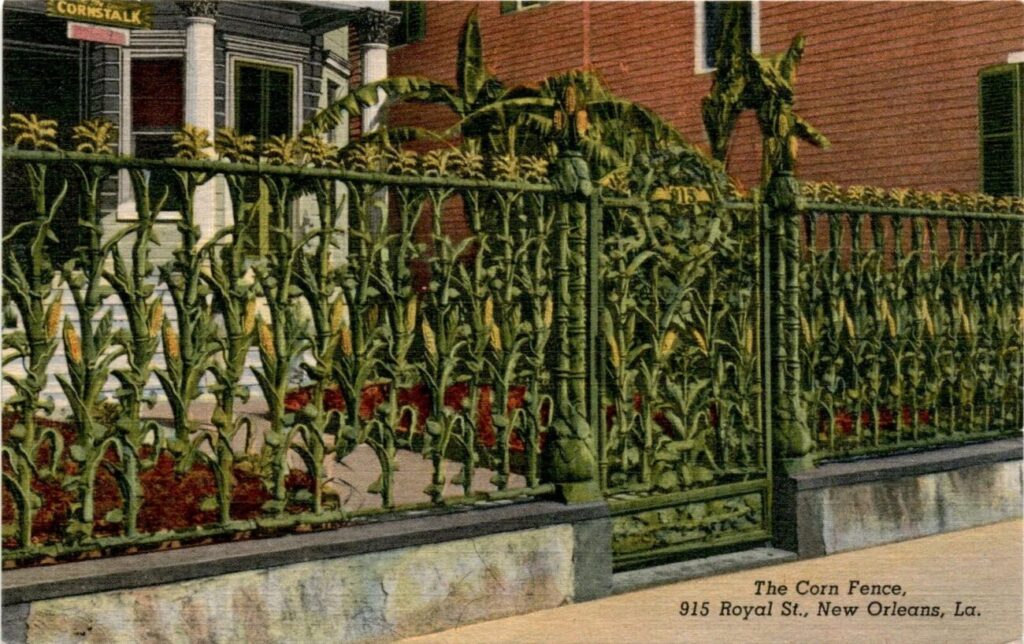
This cast-iron fence from 1859 depicts cornstalks, morning glories, and butterflies in painted detail. The fence wraps around the Cornstalk Hotel property. Each panel shows corn with silk tassels, butterfly wings, and climbing vines. The ironwork is painted green for stalks, yellow for corn, blue for morning glories. This is decorative excess: a fence pretending to be a garden. Several other cornstalk fences exist in New Orleans but this is the most photographed. The fence demonstrates 1850s cast-iron craftsmanship when New Orleans foundries produced elaborate decorative work for wealthy clients. View from sidewalk anytime.
The Doullut Houses, 400-503 Egania Street, Holy Cross Neighborhood.
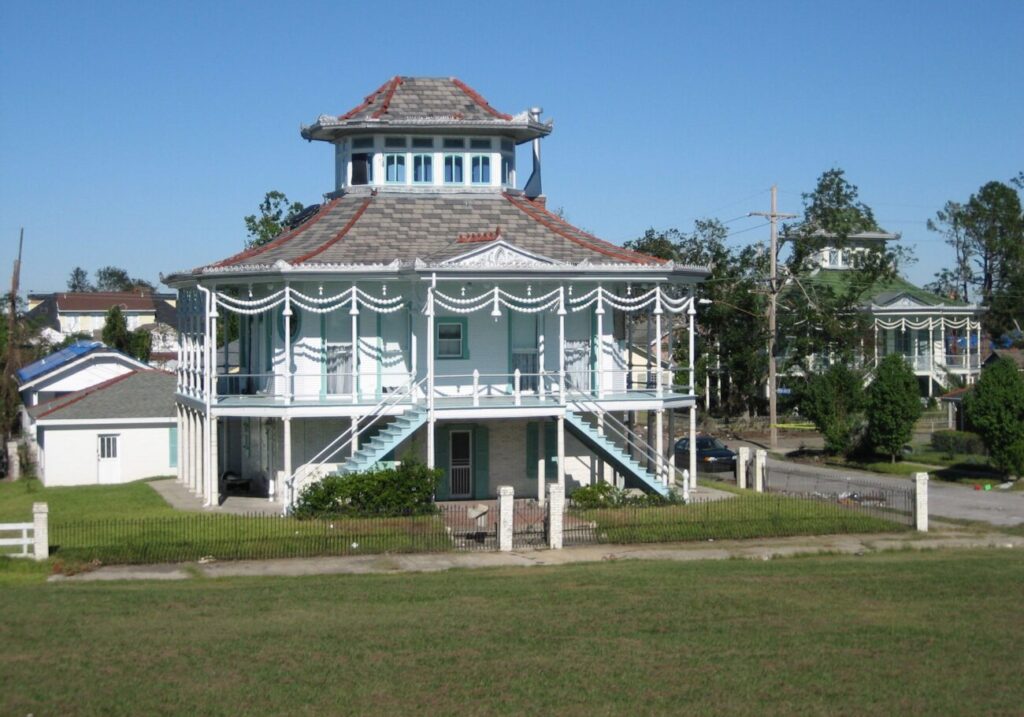
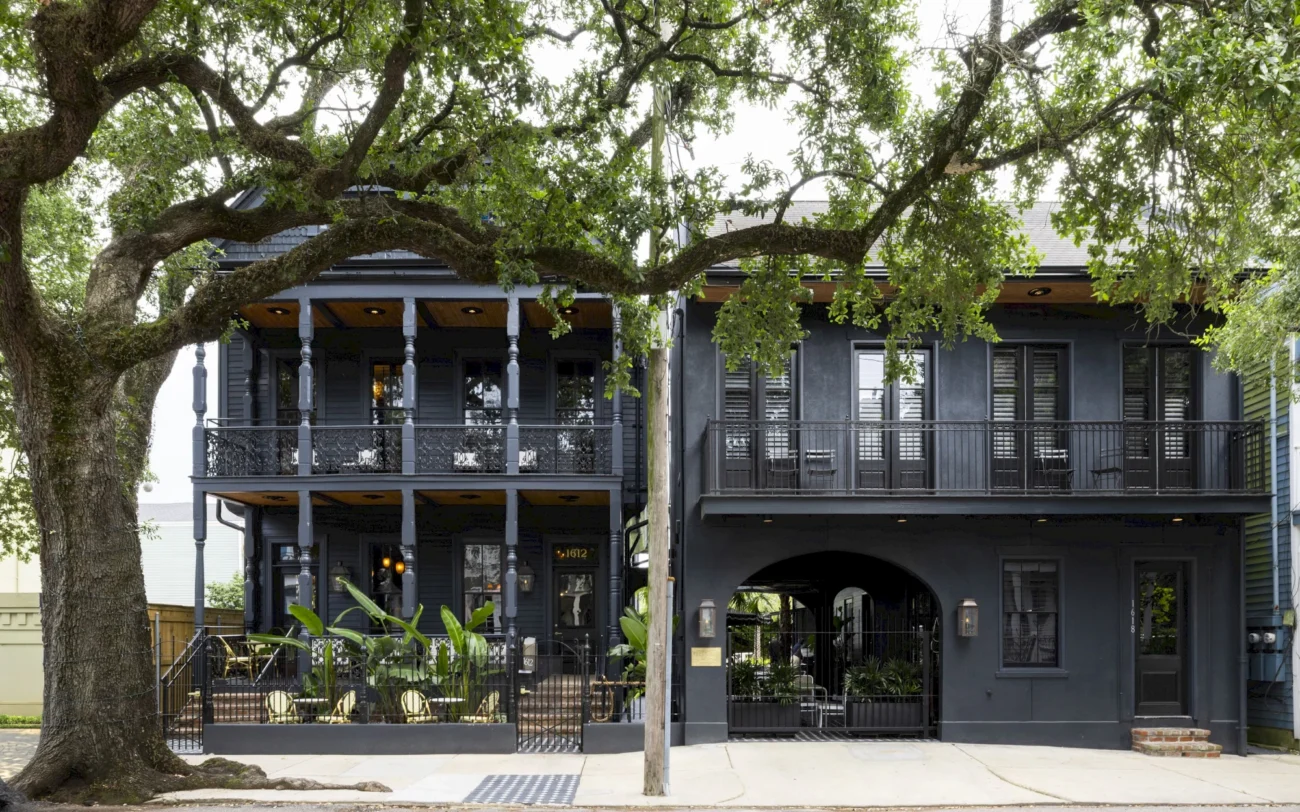
Two houses built 1905-1913 by steamboat captain Milton Doullut designed to look like Mississippi riverboats. The houses have multi-level porches with steamboat railings, pilot house cupolas, and nautical details. Captain Doullut built them for his family modeling the architecture after the riverboats he piloted. The houses sit on the Mississippi River levee in the Holy Cross neighborhood, Lower Ninth Ward. The location is residential, off tourist paths. Drive or bike there. Park on Egania Street, walk to the houses. They’re private residences, view from street only. The houses represent New Orleans architectural eccentricity: building homes that look like boats because you spent your life on boats. Free to view.