

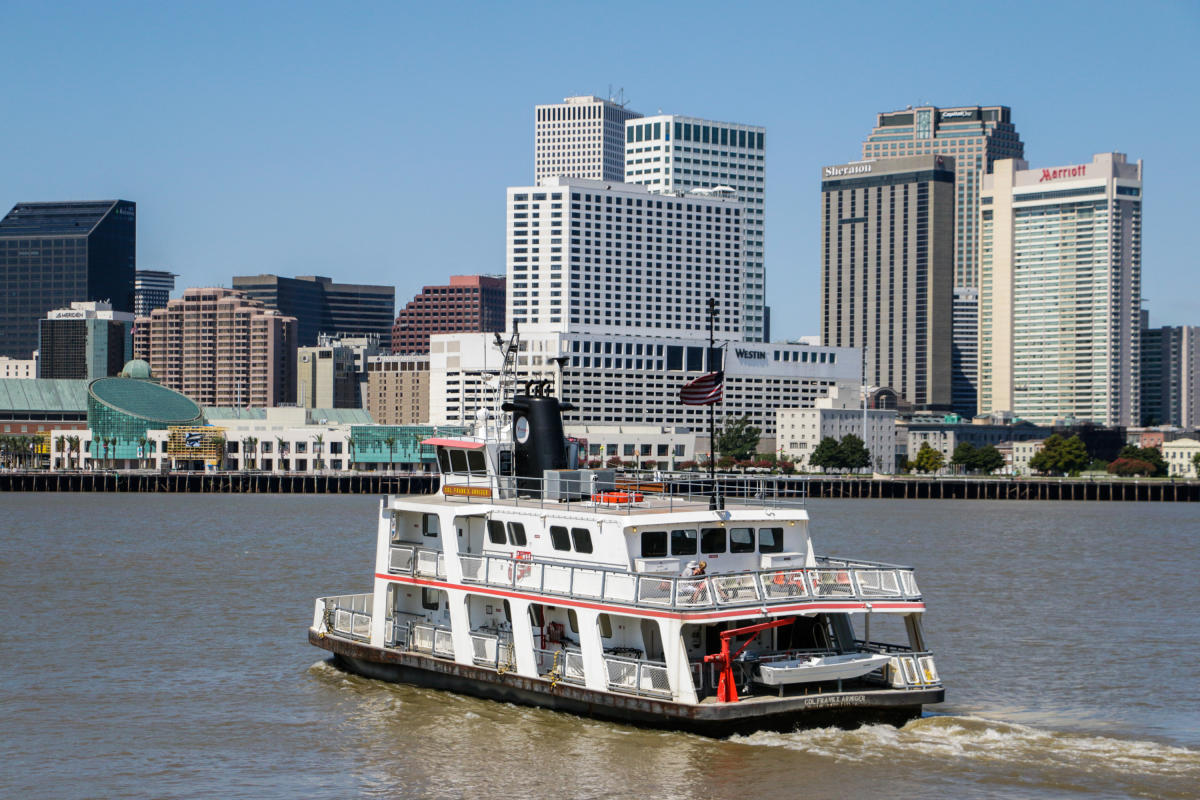
The Canal Street Ferry costs $2 and takes 10 minutes to cross the Mississippi River. Most people ride for the view and return immediately. The actual experience starts when you walk off at Algiers Point and discover a 19th-century neighborhood that feels separated from New Orleans by more than just water.
Algiers Point is the second-oldest neighborhood in New Orleans, predating the French Quarter’s development. French colonists established it in 1719 as a staging area before crossing to the city side. The Point became home to shipyard workers, ferry operators, and families who preferred Westbank living. Hurricane Katrina flooded parts of Algiers, but the Point sits on higher ground and survived with minimal damage.
Walk off the ferry, and you’re on Pelican Avenue facing residential streets lined with Creole cottages, Victorian houses, and shotgun doubles. The houses are colorful, small-scale, and well-maintained. The neighborhood has 5,000 residents who’ve fought developers and gentrification for decades. This is functioning residential New Orleans, not a historic district pretending to be one.
Turn right on Pelican and walk toward the levee. Patterson Road runs along the levee top with views of the Mississippi River and downtown skyline. The levee trail continues for a mile. Sunset from here shows the French Quarter, Canal Street, and downtown from across the river. The perspective reverses what tourists see from Jackson Square. You’re looking at the city from where ships and barges see it.
Old Point Bar sits at 545 Patterson Road at the ferry landing. Operating since 1933, it’s a neighborhood bar with cheap beer, pool tables, and locals who’ve drunk here for decades. No food beyond bar snacks. No pretense. Hours are daily 11 am-2 am. This is where ferry workers, neighborhood residents, and curious visitors drink together. $3 domestics, $5 cocktails.
Walk the residential streets off Pelican Avenue. Olivier Street, Verret Street, and Pelican have the best-preserved houses. The architecture is on a smaller scale than Garden District mansions but equally historic. Houses date from the 1850s to the 1890s with Greek Revival, Italianate, and Victorian styles. Front porches, narrow lots, and high foundations to avoid flooding.
Confetti Park is a small playground and green space at Pelican and Olivier. It has a unique musical-themed playground with xylophones, drums, and bells built into the equipment. Kids make music while playing. The park hosts community events and farmers’ markets seasonally.
The Crown & Anchor English Pub is at 200 Pelican Avenue, serving British pub food and draft beer. Fish and chips, shepherd’s pie, bangers and mash. Full bar. Hours Tuesday-Sunday 11am-late. Phone: (504) 227-1007. This is where Algiers Point residents eat dinner when they don’t cook at home.
The neighborhood is walkable. The entire residential area covers maybe 12 blocks. You can walk from the ferry to the furthest house and back in 30 minutes. Spend an hour if you’re looking at architecture. Spend two hours if you stop at Old Point Bar.
The ferry runs Monday-Friday 6 am-midnight, Saturday-Sunday 10:30 am-8 pm. Service every 30 minutes during the day, less frequently in the early morning and late evening. Check the ferry schedule on the RTA website before planning your trip. Missing the last ferry means a $30 Uber ride across the Crescent City Connection bridge.
Algiers Point works as a day trip from the French Quarter. Take the morning ferry, walk the neighborhood, have lunch at Crown & Anchor, sit at Old Point Bar, catch the afternoon ferry back. The total trip is three hours, and the cost is $4 roundtrip ferry plus whatever you spend eating and drinking.
The Point feels Caribbean because of the isolation, small scale, and slower pace. Houses have tropical colors, front porches for socializing, and corner stores instead of chains. Neighbors know each other. People wave at strangers. The rhythm is different from the city side.
Photography works well here. The houses photograph beautifully. The levee views are postcard material. The neighborhood is photogenic without being touristy. Residents are used to visitors with cameras. Be respectful. Don’t photograph people without asking.
Algiers Point is what the French Quarter looked like before tourism transformed it. Small neighborhood, working people, historic houses used as homes, not museums. The ferry ride isn’t the experience. Walking off the boat is.