

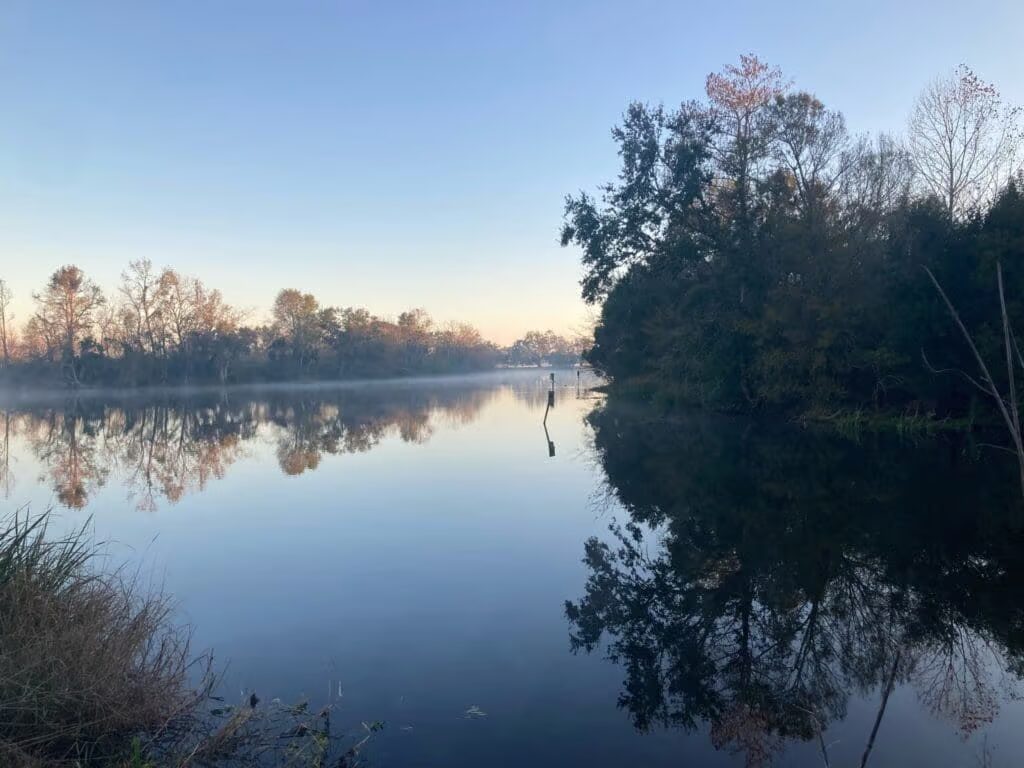
City Park’s most overlooked section hides a 60-acre nature preserve that feels like Louisiana swampland centuries before New Orleans existed. Couturie Forest contains eight distinct ecosystems, Spanish moss-draped live oaks over 300 years old, and Laborde Mountain, the highest natural point in New Orleans at 43 feet elevation.
Most City Park visitors stay near the sculpture garden, Storyland, or the botanical gardens. Couturie Forest sits on the park’s eastern edge past the tennis courts where few tourists wander. The forest operates as a nature conservancy managed to preserve native Louisiana ecosystems. No manicured lawns, no playground equipment, just walking trails through bottomland hardwood forest.
The forest’s live oak trees are the draw. Some measure 10-15 feet in diameter with branches spreading 100 feet. Spanish moss hangs so thick it blocks sunlight. The trees create a canopy tunnel effect where walking underneath feels like being in a cave made of branches. These oaks predate New Orleans’ founding in 1718. They were here when indigenous peoples hunted this land.
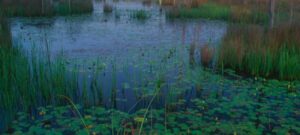
Eight ecosystems exist within 60 acres: live oak forest, bald cypress swamp, bottomland hardwood forest, freshwater marsh, palmetto grove, ridge forest, wet prairie, and open water lagoons. Each supports different plant and bird species. The ecosystem diversity in such a small area is unusual. Most natural areas specialize in one or two habitat types.
Laborde Mountain sits near the forest’s center. At 43 feet above sea level, it’s the highest natural elevation point in New Orleans. The “mountain” is an ancient Indian midden, a shell mound built by indigenous peoples over centuries. They deposited shells, pottery, and refuse that accumulated into a raised platform. Walking to the top gives views of the forest canopy. It’s not dramatic elevation but it matters in a city that’s mostly below sea level.
The forest has three miles of walking trails. Trails are packed dirt and crushed shell, flat except for Laborde Mountain. The main loop takes 45 minutes at casual pace. Side trails extend deeper into wetland areas. Trails occasionally flood after heavy rain. Check conditions before visiting. Bring bug spray year-round. Mosquitoes thrive in the forest’s standing water and shade.
Birdwatching is excellent. The forest attracts 100+ bird species including herons, egrets, woodpeckers, warblers, and occasionally barred owls. Spring and fall migration brings unusual species passing through. Local Audubon Society members bird here regularly. Bring binoculars if you’re serious about birding.
The forest entrance is on Marconi Drive near the tennis courts. No admission fee. Open sunrise to sunset daily. Parking is free in nearby lots. The entrance is marked but easy to miss. Look for a small sign and a break in the tree line.
City Park sprawls across 1,300 acres making it one of America’s largest urban parks. Most visitors concentrate in the western section near the art museum. Couturie Forest sits in the less-developed eastern section where City Park feels more like actual park and less like entertainment venue.
The forest works as a break from New Orleans architecture, music, and crowds. It’s quiet. You hear birds, wind in trees, and water moving through lagoons. On weekday mornings you might have the trails to yourself. Even on weekends the forest stays uncrowded because most park visitors don’t know it exists.
Wildlife includes turtles, snakes, raccoons, possums, nutria, and alligators. Small alligators live in the lagoons. They’re not aggressive but give them space. Don’t approach wildlife. This is their habitat, you’re visiting.
The forest shows what Louisiana looked like before drainage and development. New Orleans was built by draining swamps and bottomland forest. Couturie Forest preserves a small section of that original landscape. Walking here is time travel to pre-colonial Louisiana.
Photography works well. The live oaks are photogenic, especially early morning or late afternoon when light filters through Spanish moss. The forest floor has interesting textures: cypress knees, palmetto fronds, ferns. Wildlife photography requires patience and telephoto lenses.
Combine the forest with other City Park attractions. Visit the art museum, then walk the forest. Eat at Morning Call café, then hike the trails. The forest adds nature component to a park day focused on culture and recreation.
Couturie Forest isn’t wilderness. It’s managed nature preserve inside an urban park. But it provides genuine escape into Louisiana ecosystems without leaving city limits. That’s rare and worth the visit.