

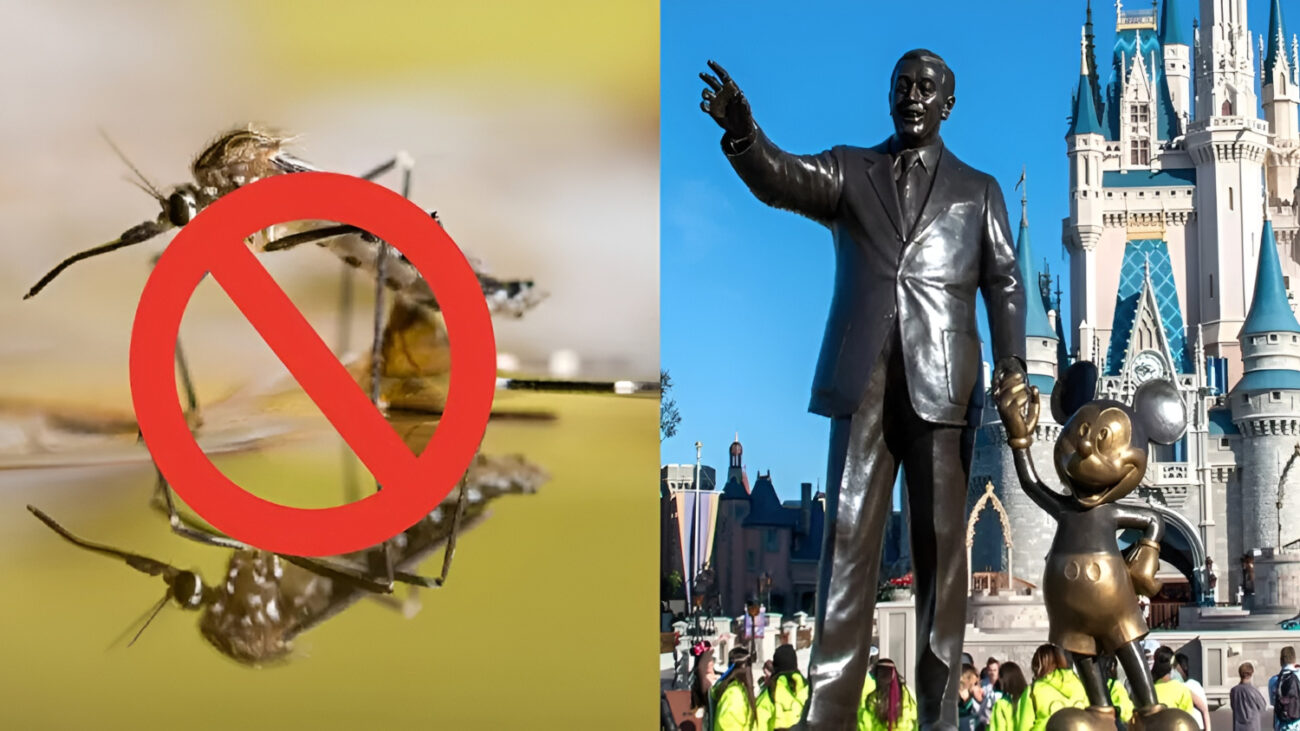
Florida in July is notoriously hot, wet, and thick with mosquitoes. The state contends with them every single summer. Yet step inside Walt Disney World — built on former swampland in the middle of Central Florida — and you’ll barely notice one. That’s not luck. It’s infrastructure, and the man behind it learned mosquito control somewhere far more demanding than Orlando.
The Army Engineer Who Mosquito-Proofed the Happiest Place on Earth
Major General William “Joe” Potter’s Panama Canal experience shaped Disney’s drainage-first approach to pest control long before the first guest arrived.
Potter didn’t come from theme parks. He came from the Panama Canal Zone, where mosquito-borne disease wasn’t a guest-experience problem — it was a life-and-death operational crisis. Secondary reports connect his engineering background directly to Disney’s drainage-first philosophy when the Florida resort was developed in the 1960s.
The principle Potter applied was straightforward and effective: eliminate the habitat before the mosquito becomes a problem. According to secondary reporting, Disney’s property contains roughly:
- 42 miles of canals
- 22 miles of levees
- 24 water-control gates
The drainage and water-control system is engineered to keep water moving. Reducing stagnant water limits key mosquito-breeding habitat — a principle Seminole County’s own mosquito-control guidance describes as standard public health practice.
A Layered System, Not a Single Secret
Disney supplements its core drainage infrastructure with additional reported measures, though the company does not publicly disclose every method it uses.
Drainage is the foundation. Everything else is supplementary. According to secondary reports, Disney reportedly applies diluted garlic-based repellent near park boundaries — enough to deter mosquitoes, not enough for guests to notice the smell. Bat houses reportedly exist near Fort Wilderness as an ecological measure, though local mosquito authorities caution that bats consume many insect types and are not considered a substitute for professional mosquito control.
Walt Disney World’s official FAQ confirms the resort has an extensive mosquito prevention and monitoring program across property, and the resort makes insect repellent available at guest services locations. What it doesn’t do is publish a full operational inventory — so garlic spray and bat houses remain reported practices, not confirmed resort-wide policy.
“No Mosquitoes” Is the Wrong Claim
The more accurate — and genuinely impressive — story is about aggressive suppression of breeding conditions, not total elimination.
Guests near waterways, campgrounds, or docks — especially after rain — can still encounter mosquitoes. Disney makes repellent available for good reason. The defensible claim is that Disney suppresses breeding conditions so aggressively that populations rarely expand to noticeable levels. That’s meaningfully different from elimination, and considerably harder to sustain.
The same core principle applies well beyond the park gates: remove standing water before larvae mature. Disney simply had a Panama Canal veteran and a former Central Florida swamp to prove how far that idea can scale. If a Florida trip is on the calendar, pack repellent anyway.