

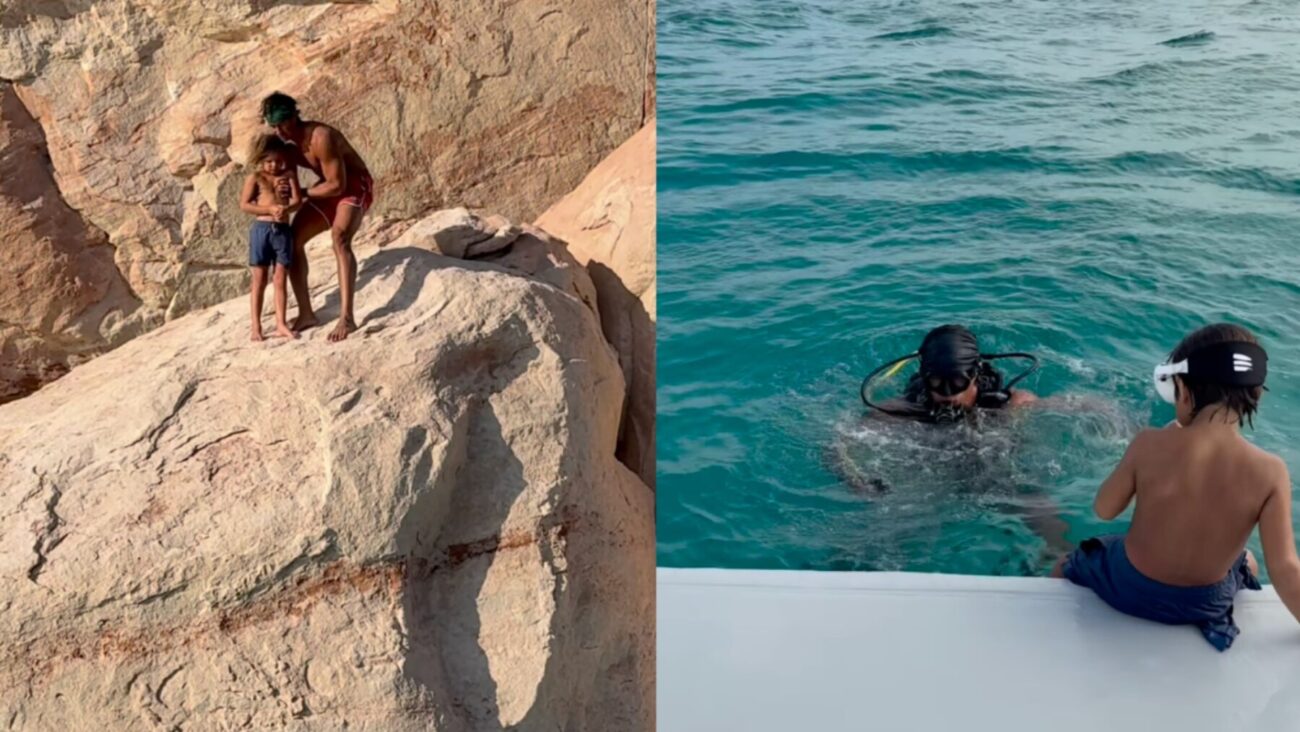
Back-to-back extreme adventures involving the same terrified child tell a story bigger than one family’s choices. Garrett Gee’s July 2025 cliff-throwing video hit 3.5 million views, showing his 7-year-old son Cali screaming as he’s hurled off a Lake Powell cliff.
Days later, the same child appeared in tandem scuba diving footage—despite professional recommendations for age 8 minimum. The Bucket List Family’s rapid escalation from one controversial stunt to another exposes the uncomfortable reality of “performance parenting” in the influencer economy.
When content creation drives family adventures, where exactly do safety lines blur? The concerns echo those found at dangerous theme parks where thrill-seeking intersects with questionable safety protocols.
The Hesitation Paradox
Garrett Gee’s safety logic reveals the tension between protection and content gold.
Gee defended his cliff-tossing technique with calculated reasoning. His son wanted to jump but hesitated at the edge—a position Gee claimed posed greater risk of hitting rocks than being thrown clear into water.
“1st priority is safety. 2nd is learning that YOU CAN DO HARD THINGS,” he captioned, emphasizing his individualized approach to each child’s courage-building. The video captures the aftermath: a child surfacing with a smile after visible terror, greeted by encouraging onlookers.
Yet the sequence—fear, force, manufactured triumph—crystallizes critics’ concerns about children performing bravery for cameras.
Professional Standards Meet Family Content
Diving instructors and parents question safety protocols in the name of adventure.
The follow-up scuba video intensified scrutiny. Most diving professionals recommend age thresholds of eight or higher, citing equipment fit and panic management concerns.
Underwater emergencies require calm decision-making that develops with maturity—not viral-worthy teaching moments. This pattern reveals the core tension: legitimate adventure parenting versus content-driven risk-taking.
The Gees’ millions of followers watch children navigate adult-level challenges, but professional safety standards exist regardless of family philosophy or camera angles. These debates parallel ongoing discussions about helicopter tour safety standards that prioritize protection over profit.
The Performance Parenting Reckoning
Critics and supporters split over resilience-building versus potential trauma in monetized family content.
Online response fractured predictably. Supporters praised unconventional parenting that builds resilient, adventurous children.
Critics questioned whether traumatic experiences disguised as character-building cross ethical lines, particularly when monetized through social media. The broader debate transcends cliff-jumping: Are family influencers prioritizing content over children’s wellbeing? Similar safety concerns have emerged across family travel segments, including recent incidents involving cruise ship crime that affect traveling families.
As performance parenting becomes an economy unto itself, the Gees represent families navigating uncharted territory where childhood experiences double as branded content—and seven-year-olds become unwitting performers in their parents’ adventure narratives.