


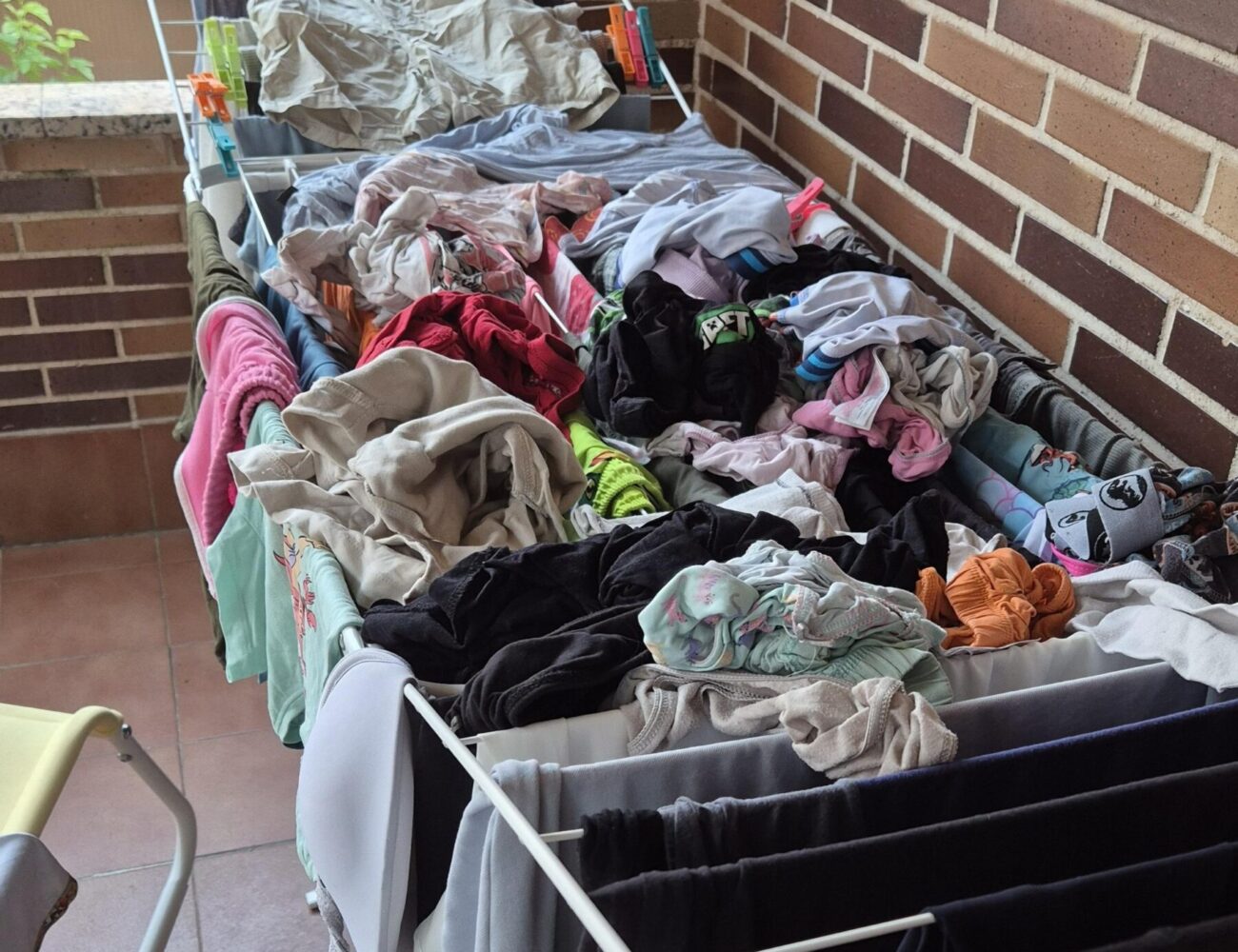
A photo of a laundry rack overflowing with crumpled, soaking-wet clothes recently sparked widespread discussion online—not for its aesthetic appeal, but for what it revealed about household manipulation. The woman who posted it had asked her husband to hang out the laundry. His response when confronted with the soggy mess? “There was no more space on the rack.”
The incident sparked thousands of comments from people sharing eerily similar stories. What looks like simple incompetence actually represents something more calculated: weaponized incompetence, a manipulative tactic where someone deliberately performs tasks poorly to avoid future responsibility.
When “Helping” Becomes Harmful
The pattern destroys trust and shifts household burden unfairly to one partner.
Weaponized incompetence shows up everywhere in domestic life. The partner who burns dinner every time they cook. The spouse who shrinks expensive clothes in the wash. The person who loads the dishwasher so poorly that everything needs rewashing.
According to the Cleveland Clinic, this behavior pattern involves “intentionally performing a task poorly or feigning inability” to escape future duties.
The signs are consistent across households:
- Repeated poor execution of basic tasks they’re clearly capable of doing
- Defensive reactions when asked to improve or learn
- Frequent excuses like “You’re just better at this than I am”
- Requests for constant guidance after receiving previous instruction
The Real Cost Goes Beyond Chores
Children absorb these dynamics, learning unhealthy partnership models for their future relationships.
This manipulation corrodes trust and creates resentment that extends far beyond laundry day. When one partner consistently evades responsibility, the other becomes the default household manager—a role that’s mentally and emotionally exhausting.
Children witnessing these patterns absorb the message that partnership means one person doing the real work while the other coasts on fake helplessness.
Breaking the cycle requires direct communication and firm boundaries. Instead of quietly fixing the bungled task, let the responsible party live with wet clothes in their drawer. Set clear expectations and follow through with consequences.
According to relationship therapists from Cleveland Clinic and other therapy organizations, some situations require professional help to rebuild trust and rebalance shared labor in a toxic relationship.
The next time someone claims “no more space” on a half-empty drying rack, recognize the manipulation for what it is—and respond accordingly.