

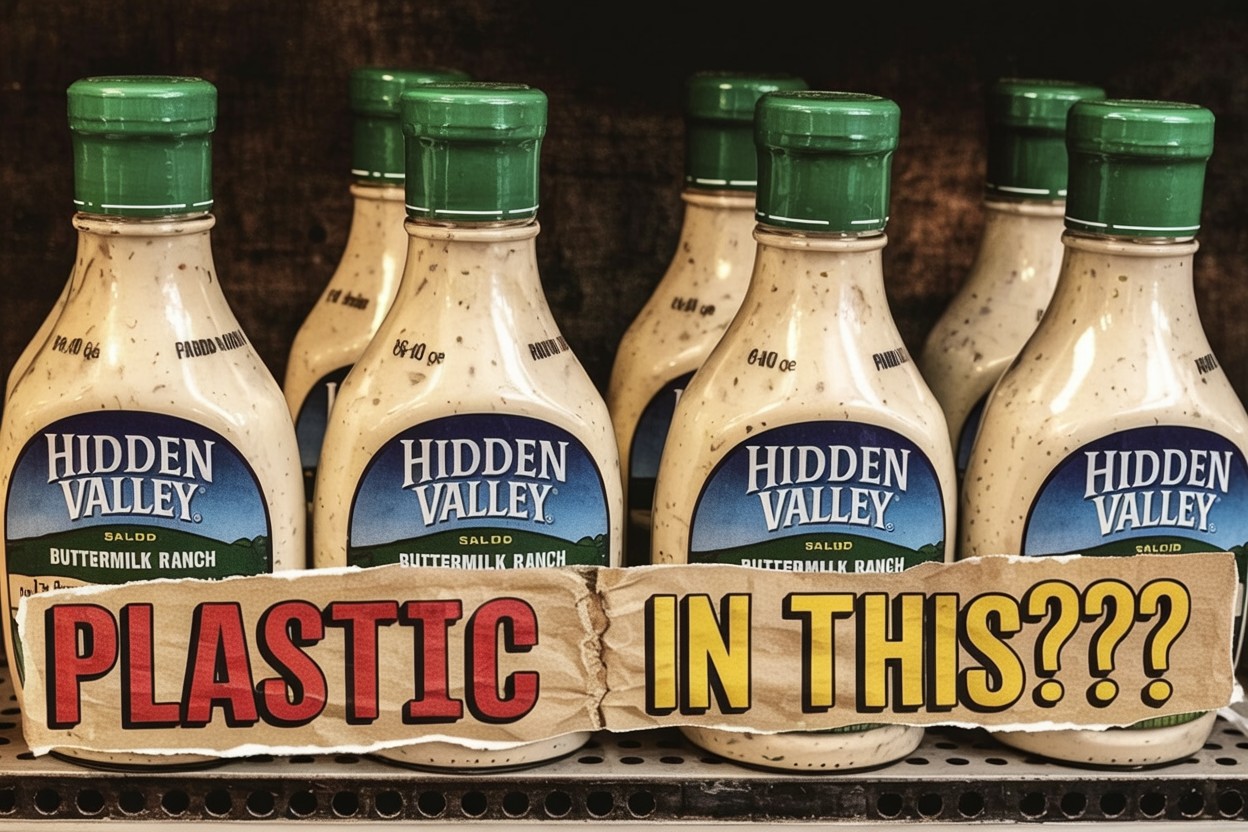
Black plastic contamination affects bulk dressings at Costco food courts and restaurant suppliers, but your grocery store ranch bottle remains safe.
Those “Hidden Valley Ranch recalled!” headlines probably made your heart skip. Before you sprint to your fridge in panic, breathe easy. The ranch bottle in your refrigerator door is fine.
This recall targets bulk food service products—the industrial-sized containers that supply restaurant kitchens, not your familiar squeeze bottles. Ventura Foods discovered black plastic planting material contaminating granulated onion used in several dressing batches. The result: more than 3,500 cases pulled from delis, food courts, and cafeterias across 27 states.
When Your Onion Supply Goes Rogue
The contamination reads like a supply chain nightmare. Black plastic planting material somehow infiltrated granulated onion supplies, spreading foreign objects through multiple dressing formulations. The FDA classified this as a Class II recall—meaning temporary health effects are possible, but serious harm remains unlikely.
Affected products include:
- Costco Service Deli and Food Court Caesar Dressing (multiple lot codes)
- Publix Deli Carolina-Style Mustard BBQ Sauce (Lot Code B28725)
- Sysco Creamy Poblano Avocado Ranch Dressing (Lot Code MFG101625H)
- Pepper Mill Caesar varieties (Lot Codes H29025)
- One professional Hidden Valley Buttermilk Ranch (Lot Code MFG102725H)
The recall launched November 6, gaining FDA Class II status December 4. Distribution hit 42 locations spanning Arkansas through Wisconsin, focusing on institutional buyers rather than grocery chains.
Your Ranch Sanctuary Remains Intact
“No Hidden Valley Ranch products sold in stores to consumers are included in the voluntary recall,” a Hidden Valley spokesperson emphasized. That professional one-gallon container never reached food service locations anyway, according to the company.
Translation: your 40-ounce grocery bottle, restaurant packets, and impulse-buy ranch remain untouched. This recall lives in the institutional food world—supply chains serving cafeterias, delis, and food courts where you might grab a quick Caesar salad.
Food service operators should check SKU numbers and lot codes immediately. Consumers can return to normal ranch consumption without concern.
The bigger lesson? Industrial food production creates vulnerabilities that ripple through unexpected channels, reminding us that our food system’s complexity sometimes creates strange contamination pathways.