

A 100-piece bag of assorted Halloween candy averaged $9.91 in 2021. By 2026, a comparable assortment runs $16.96 — a 71% jump, according to a FinanceBuzz analysis of bulk candy prices at Walmart, Target, Kroger, and Albertsons. National inflation over the same period? Twenty-two percent. With 74% of Americans planning to celebrate Halloween in 2026 and the National Retail Federation projecting $4.1 billion in candy spending alone, that gap lands directly in your grocery cart.
Comparable Halloween candy assortments at major retailers have risen sharply since 2021, outpacing general inflation by a wide margin, according to a FinanceBuzz analysis.
How Candy Prices Got Here
The increase didn’t creep up gradually — it accelerated sharply after 2023.
The average bag rose just $1.70 between 2021 and 2023. Then it jumped $2.45 in a single year, followed by $2.34 the next, per FinanceBuzz. Cocoa supply disruptions and environmental pressures on growing regions may have contributed to chocolate candy costs specifically, while sugar-based products face separate pressures from packaging, transportation, and labor. Still, 96% of Halloween shoppers plan to buy candy anyway, according to the NRF — and that number alone explains why the total bill keeps climbing.
Swap Options Worth Knowing
A few alternatives can stretch the treat budget, though per-unit math varies by product and location.
- Mandarin oranges decorated as jack-o’-lanterns with a marker: roughly 17–23 cents each from a three-pound bag priced around $5–$7, yielding approximately 30 fruits. Verify locally before shopping.
- Honey sticks: a 100-count bag at approximately $20 runs about 20 cents per item — not automatically cheaper than the 17-cent per-piece candy average, but a distinct option. Check beloved treats and allergen and age guidance before distributing.
- Small non-food favors: approximately 300 temporary tattoos for $7 (roughly 2 cents each), 500 glow sticks for $26 (about 5 cents each), and 100 Halloween pencils for $19 (about 19 cents each). All prices are approximate; check current retailer listings.
- Store-brand assortments and weekly sales: the NRF reports 31% of shoppers would compare prices and 26% would seek coupons if candy costs more than expected — both are worth doing before checkout.
The Choice Bowl Deserves More Credit
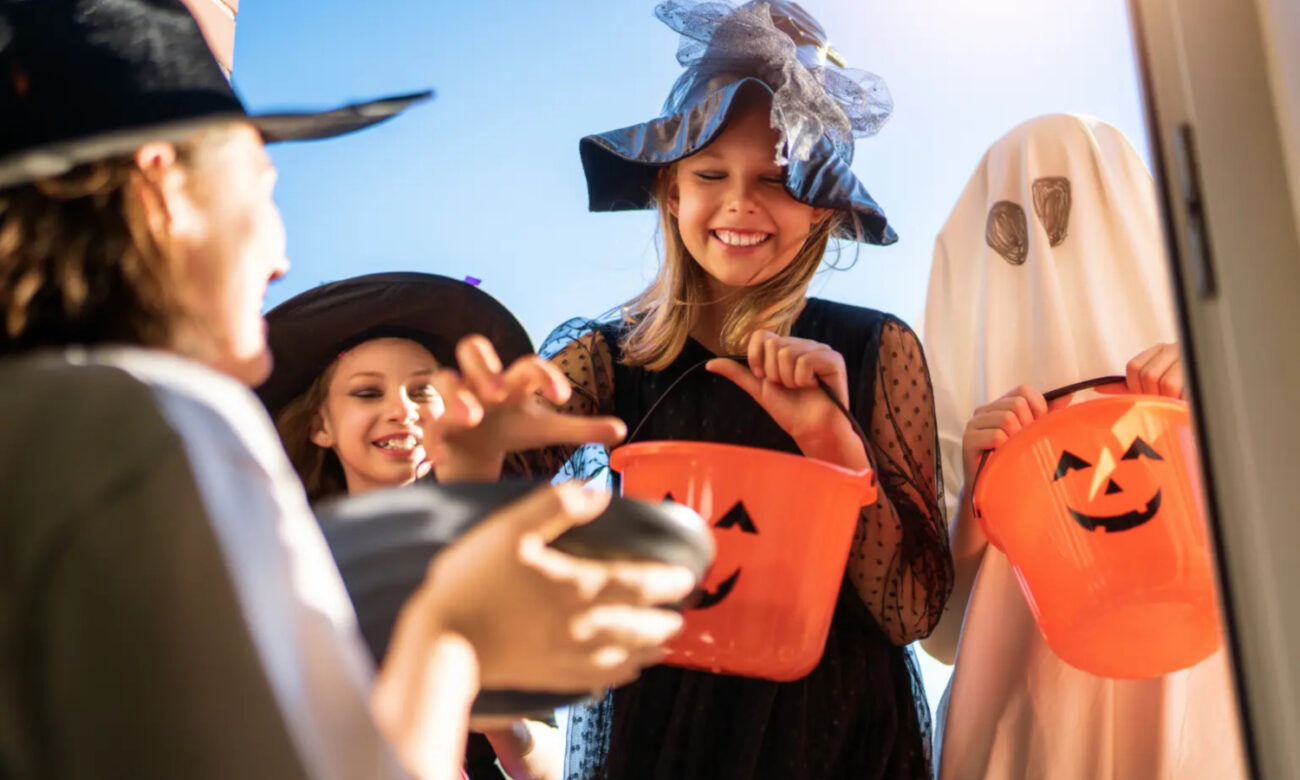
Combining a smaller candy supply with low-cost favors and letting kids choose one item may lower total candy spending without reducing doorstep excitement.
A mixed bowl — part conventional candy, part glow sticks or temporary tattoos — keeps the trick-or-treat experience intact while reducing the volume of chocolate required. It is one of the more practical compromises available this season.
Pretzels are worth noting honestly: a 70-pack at approximately $25 runs about 36 cents per pack, making them a dietary-variety option rather than a guaranteed budget win. One safety note: small toys require age-appropriate selection. Avoid tiny pieces for toddlers, keep allergen-containing candy separate from alternatives, and skip unwrapped homemade items entirely for general distribution, in line with FDA Halloween safety guidance.
Check the Unit Price, Not the Bag Size
“Value,” “jumbo,” and “party-size” labels say nothing without the per-unit math to back them up.
Run the calculation yourself before committing to any bag. Prices at convenience stores and pharmacies — particularly in higher-cost urban markets — can run substantially above national supermarket averages. The FinanceBuzz figures reflect major chain pricing across selected assortments, not every shelf in every zip code. Buy during sales, and check expiration dates before splitting large bags.
The kid reaching into a mixed bowl for a glow stick will not feel shortchanged. And with candy prices still outpacing broader inflation by more than three to one, a little unit-price arithmetic this October may be the smartest treat of the season.