

Remember when packing for trips meant bringing your chunky DSLR, paper maps, and a travel alarm clock? Now, travelers obsess over compact power banks, noise-canceling earbuds, and luggage trackers—yet the most crucial tech addition to your travel arsenal weighs less than your AirPods case and costs about the same as two fancy coffee drinks.
Health professionals call carbon monoxide the “silent killer” with good reason. This invisible, odorless gas operates similarly to a stealthy malware attack on your body’s operating system—it replaces oxygen in your bloodstream without triggering any warning notifications until the damage becomes catastrophic. According to CDC data, it claims over 430 deaths annually, with more than 100,000 people requiring medical intervention for CO poisoning each year.
Safety’s Regulatory Dead Zone
While 27 states and Washington D.C. mandate carbon monoxide detectors in residential settings, the hospitality industry exists in what security experts would call a dangerous “unpatched vulnerability.” Only 14 states require these life-saving devices in hotels and motels, creating a Russian roulette situation for travelers.
That boutique hotel with the perfect lighting for your Instagram stories? That charming centuries-old European inn with original heating systems? Both potentially running outdated “software” with zero safety protocols for carbon monoxide. Many countries outside North America lack comprehensive CO detector regulations—particularly across parts of Europe, Asia and Latin America—leaving travelers vulnerable in the same way using public Wi-Fi without security protections puts your data at risk.
The Ultra-Portable Insurance Policy
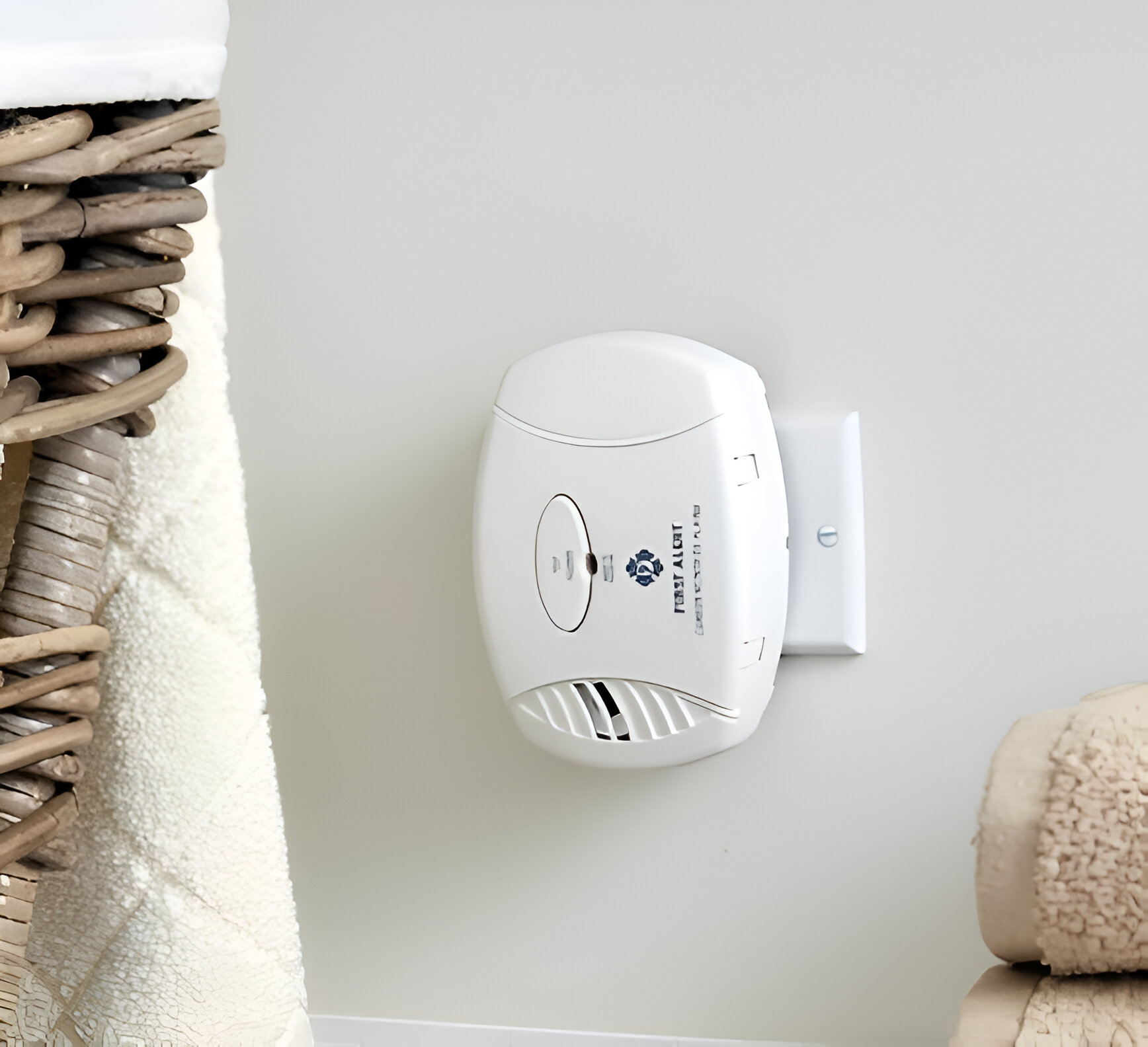
Modern portable CO detectors operate with set-it-and-forget-it simplicity that would make Ron Popeil proud. Most weigh around 3 ounces (lighter than the average smartphone case), run for months on a single battery, and feature plug-and-play operation that requires zero technical know-how.
The First Alert Travel CO Alarm—about the size of a hockey puck but much lighter—exemplifies this category. A single button handles both testing and silencing, while an 85-decibel alarm (about as loud as a blender at close range) ensures you’ll wake even from the deepest jet-lagged sleep.
Many travelers who are looking for incredible travel gadgets before vacation may overlook this essential safety technology. The disconnect resembles investing in expensive equipment while skipping basic protection—the core system may be impressive, but a single vulnerability can lead to serious consequences.
What to Look for in Your Travel CO Guardian:
- Ultralight design: Under 5 oz (lighter than a small power bank)
- Marathon battery: 6+ months between changes
- Certification: UL2034 standards verification
- Wake-the-dead volume: 85+ decibel alarm
- One-tap operation: Simple testing mechanism
Beyond Personal Protection
These portable sentinels don’t just protect individual travelers—they occasionally become the hero in larger narratives. In 2019, the Consumer Product Safety Commission documented a case where a traveler’s detector alerted hotel management to a furnace leak affecting an entire wing of rooms, potentially saving dozens of unprotected guests who didn’t pack as meticulously.
Modern building codes now mandate CO detection in new constructions, much like how newer phones automatically include security features that were once optional add-ons. But that doesn’t help when your accommodation predates these requirements by decades, like trying to run current software on legacy hardware.
While most travelers scrutinize a property’s Wi-Fi speeds and photo aesthetics long before considering safety features, the calculus changes dramatically when understanding the stakes. What begins as “probably just altitude sickness” can escalate to “why is the room spinning?” and ultimately, never posting those vacation photos at all.
The next time you find yourself optimizing packing space—debating between that extra power adapter or another charging cable—remember that the most important tech you bring might be the device you hope never activates.