

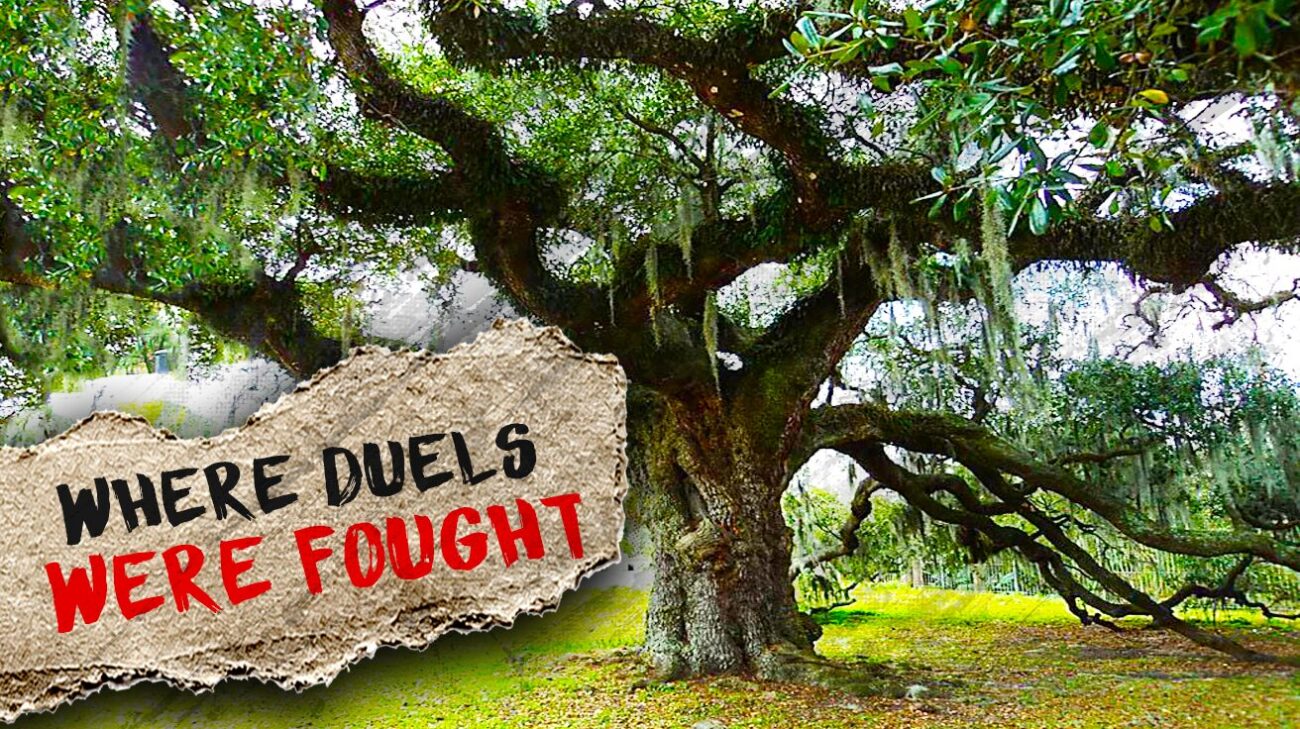
One honest note before this list: only the McDonogh Oak has documented age estimates stretching back centuries, and even those estimates vary widely by source, from roughly 300 to 900 years old. Suicide Oak and Anseman Oak carry equally rich histories, but neither is verified as an ancient tree in its own right. Here’s what’s actually known about each.
The McDonogh Oak Canopy
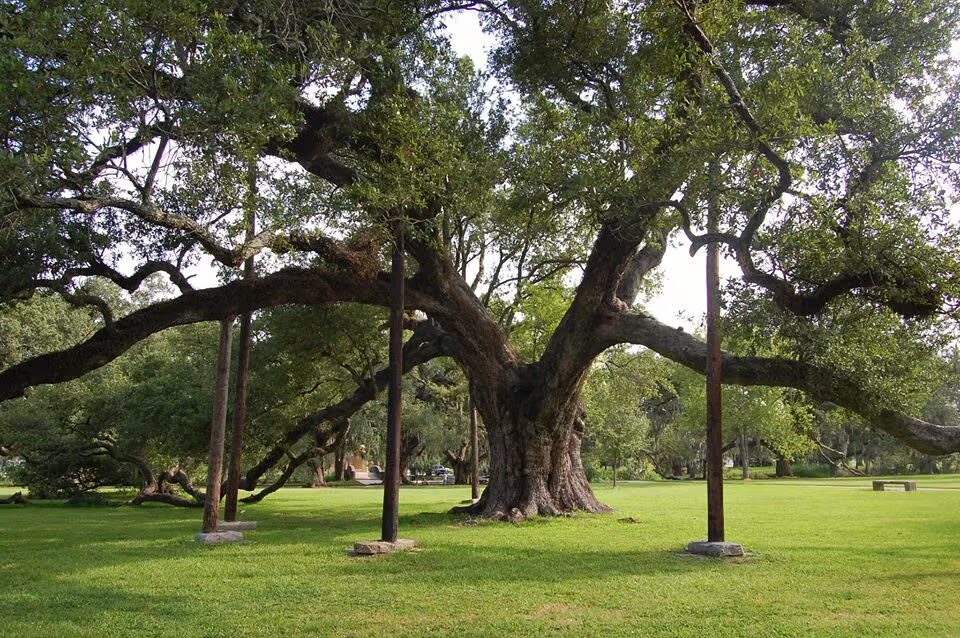
The McDonogh Oak is the largest and oldest live oak in City Park, part of an ancient forest that may have already been standing centuries before brothers Iberville and Bienville scouted this stretch of bayou in 1718 while searching for a water route between the Gulf of Mexico and the Mississippi River. Estimates of its exact age vary by source, with some putting it at 300 years and others at up to 900, but every account agrees it predates the city itself by a wide margin. The tree’s circumference runs over 25 feet, and its crown spreads more than 150 feet, wide enough that the WPA-era National Park and Recreation Convention once hosted a breakfast for over 1,000 attendees underneath it.
The land beneath the oak carries weight beyond the tree’s age. It once sat on the Allard Plantation, where enslaved people were forced to labor before John McDonogh purchased the property in 1845 and later willed it to the city upon his death in 1850. McDonogh built his fortune partly through the buying and selling of enslaved people, a history that complicates the philanthropic donation the park now credits him for. In 1981, the tree lost a major branch in a storm, and the support posts added afterward are still visible today, giving the McDonogh Oak the look of a patient leaning gently on a cane.
The McDonogh Oak stands in the Old Grove between City Park Avenue and Bayou Metairie, accessible by footpath at any hour the park is open.
The Suicide Oak Grove
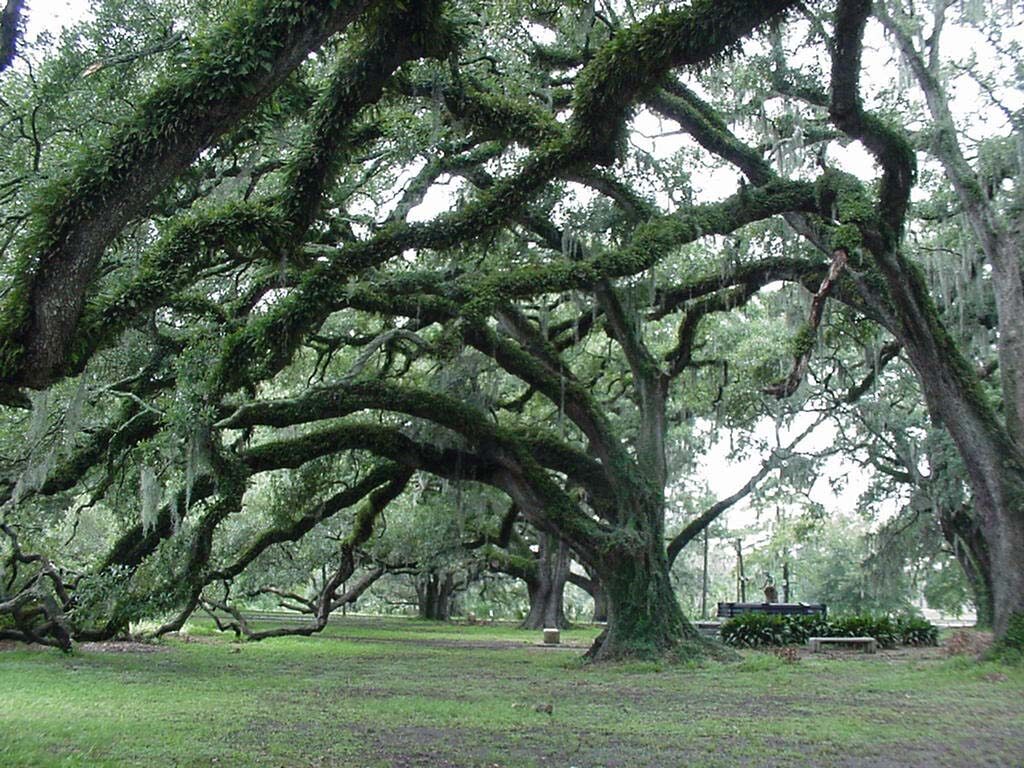
Suicide Oak earned its name from a specific and documented run of tragedy: sixteen men took their own lives beneath its branches over a twelve-year span in the 1890s and early 1900s. The name stuck permanently after that, attached to a tree that sits close to the historic dueling ground near what is now the New Orleans Museum of Art.
The tree itself has weathered real damage. It lost two large limbs in the 1980s, one of which still dangles rather than being fully removed, a visible reminder of the storms the tree has survived since its grim 19th-century reputation took hold. Suicide Oak sits near the remaining Dueling Oak, the lone survivor of a pair that once anchored a dueling ground where, according to an 1892 Times-Democrat account, scarcely a day passed without a duel between 1834 and 1844.
Suicide Oak is located on Victory Avenue near Marconi Drive, within easy walking distance of the New Orleans Museum of Art and the Botanical Garden.
The Anseman Oak Perimeter

The Anseman Oak takes its name from Victor Anseman, the florist who organized the City Park Improvement Association in 1891, the body that guided the park’s development into the 1,300-acre grounds visitors walk today. The tree sits among the park’s collection of historic live oaks along the old Bayou Metairie lagoon system, an area where the oldest oaks regenerated themselves for centuries before the park’s modern landscaping added another generation of planted trees alongside them.
A tree inventory completed in 1983 registered close to 250 oaks with a circumference over ten feet with the national Live Oak Society, formalizing what locals had always understood informally: that this stretch of bayou bank holds one of the densest concentrations of significant live oaks anywhere in the country. The Anseman Oak’s perimeter sits within that registered collection, part of a living record the park has maintained and re-measured for decades.
The Anseman Oak and its surrounding grove sit along the Bayou Metairie lagoon system between City Park Avenue and the park’s central walking paths, accessible by footpath throughout the day.