

New Orleans is a UNESCO City of Literature, and the hotels that understand this city best are the ones that don’t just cite that designation but actually live inside it. These four properties carry decades or centuries of story in their walls.
Hotel Monteleone— 214 Royal Street, French Quarter
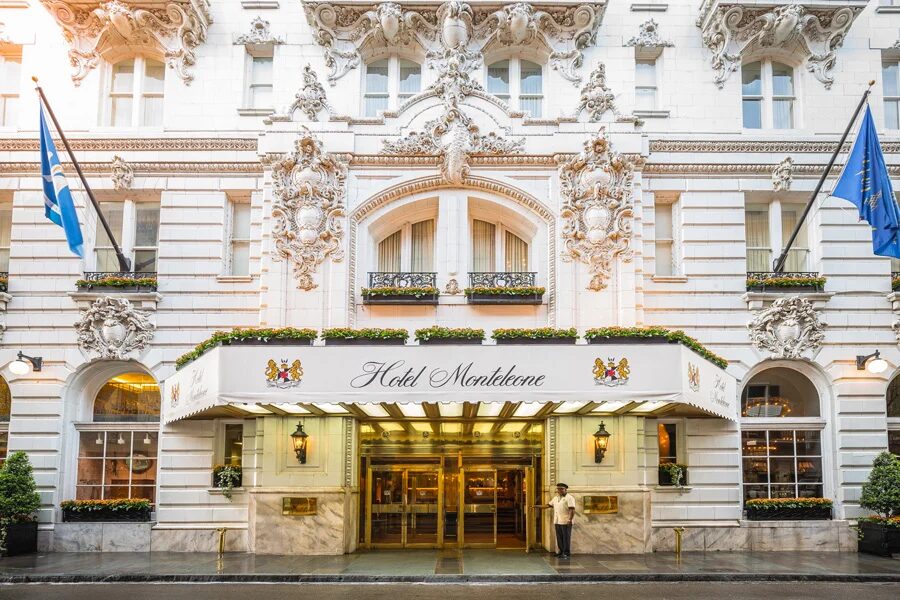
Antonio Monteleone, a Sicilian cobbler, bought a small hotel on Royal Street in 1886 and started a family enterprise that has never changed hands. Nearly 140 years later it remains family-owned, which is extraordinary by any standard. What made it legendary is who kept coming back: Faulkner spent his honeymoon here and wrote portions of The Sound and the Fury during the stay. Tennessee Williams used the hotel as the setting for The Rose Tattoo. Hemingway referenced it in “Night Before Battle.” Truman Capote liked to tell people he was born in the building. He wasn’t, but his mother did go into labor here.
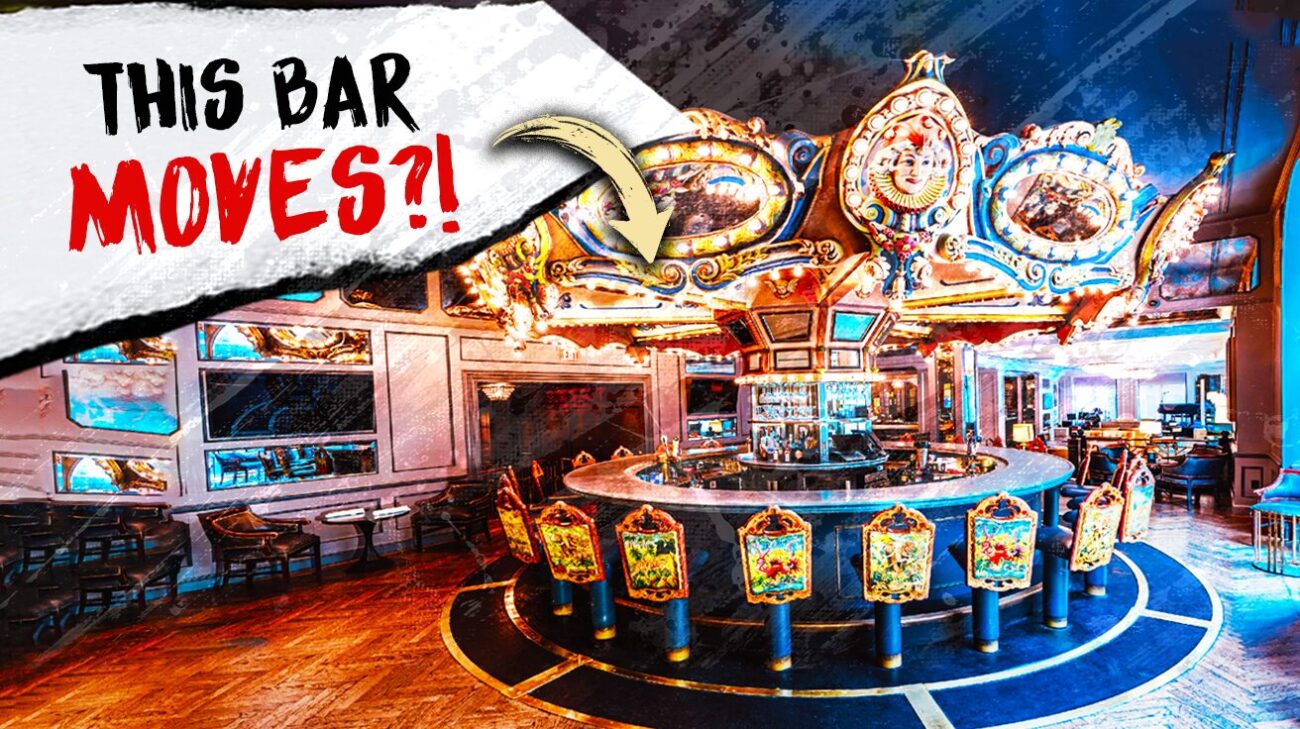
The American Library Association designated it a National Literary Landmark in 1999, one of only three hotels in the country to hold that distinction. Six literary suites are named after their most famous guests. The Carousel Bar, built in 1949, rotates on two thousand rollers beneath a stationary bar, completing one full revolution every fifteen minutes. It is the only revolving bar in New Orleans and one of the most quietly remarkable rooms in the city. Visit for a Vieux Carré cocktail, invented here by bartender Walter Bergeron.
The Roosevelt New Orleans— 130 Roosevelt Way, CBD
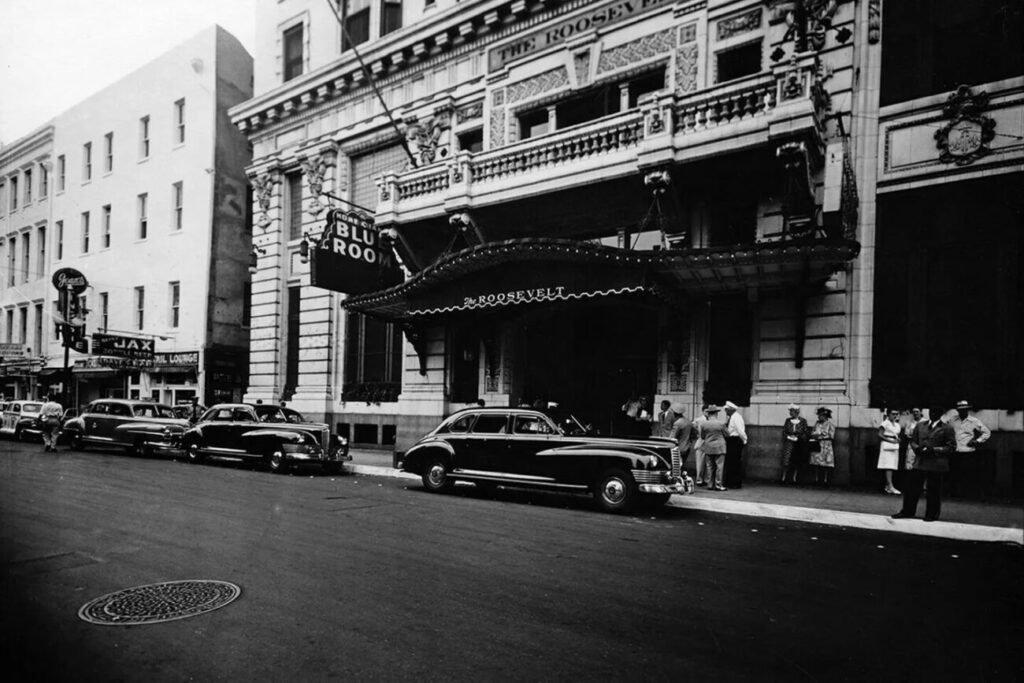
Opened in 1893 as the Hotel Grunewald, this block-long CBD landmark was the site of what some historians consider one of America’s first underground nightclubs, The Cave, a subterranean supper club with waterfalls and stalactites that ran until 1930. Its most famous regular was Huey P. Long, Louisiana’s flamboyant populist governor-turned-senator, who kept a 12th-floor suite as his New Orleans headquarters and reportedly had 80 miles of highway built to Baton Rouge so he could reach his favorite Ramos Gin Fizz at the Sazerac Bar more quickly.
The literary connections run quieter but deeper. Vivien Leigh stayed here in 1950 while filming the exterior scenes for A Streetcar Named Desire. Arthur Hailey reportedly modeled his 1965 novel Hotel on the Roosevelt. The block-long lobby with its coffered ceilings and marble floors remains intact from the Gilded Age, and the Sazerac Bar still serves the cocktail named for what many consider America’s first mixed drink. A $170 million restoration in 2009 returned the building to Waldorf Astoria standards without disturbing what made it worth saving.
The Eliza Jane— 315 Magazine St., CBD
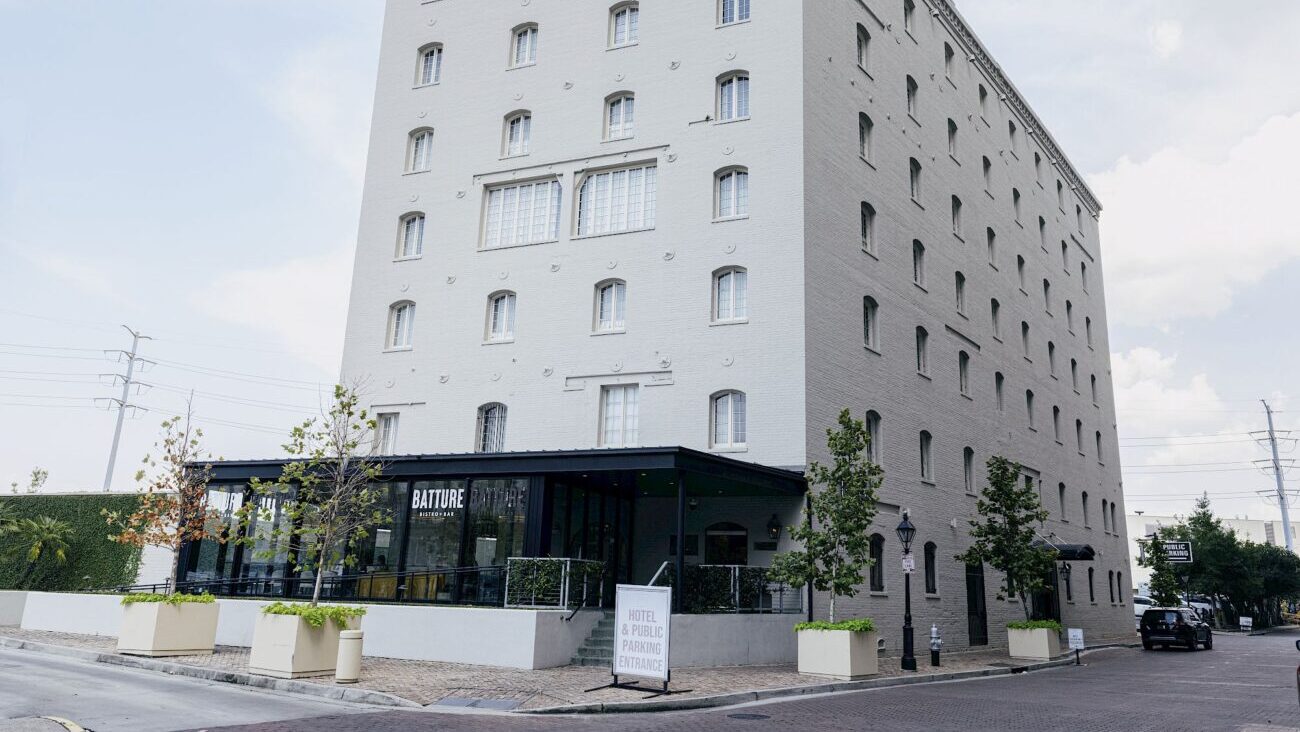
We covered The Eliza Jane in a dedicated close look, but its literary credentials bear repeating here. The hotel occupies the former headquarters of The Daily Picayune and is named for Eliza Jane Nicholson, who inherited the heavily indebted paper after her husband’s death in 1876 and became the first woman to publish a major metropolitan newspaper in the United States. She tripled circulation within two decades by introducing society pages, family columns, and reader-driven journalism that changed how the paper spoke to its city.
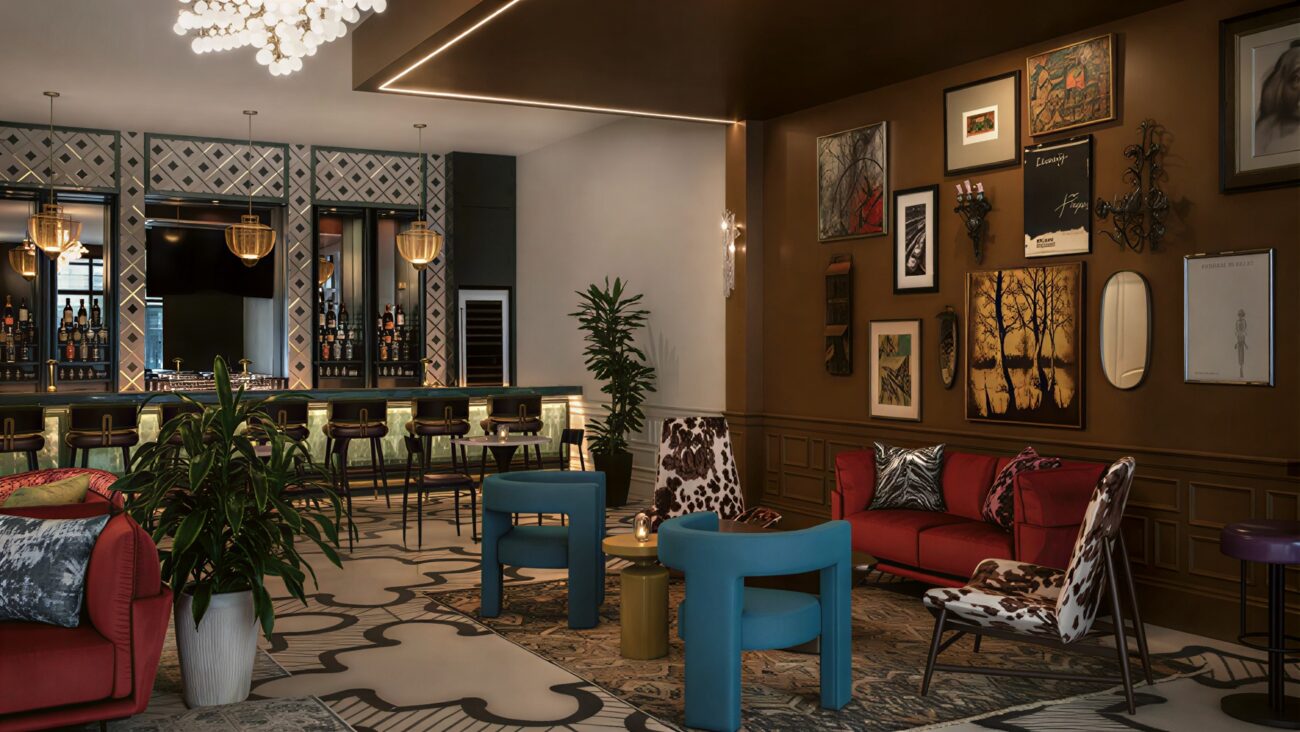
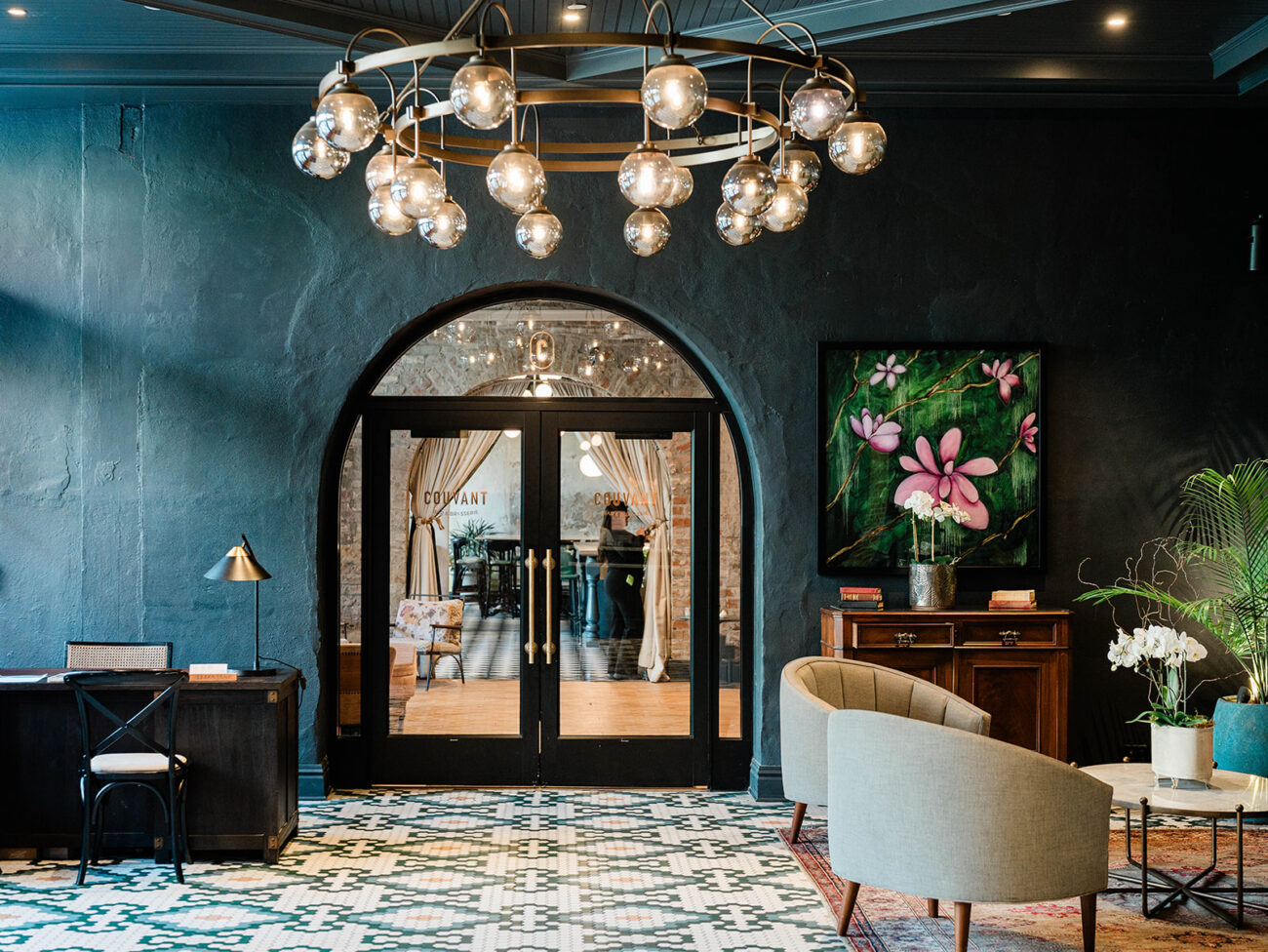
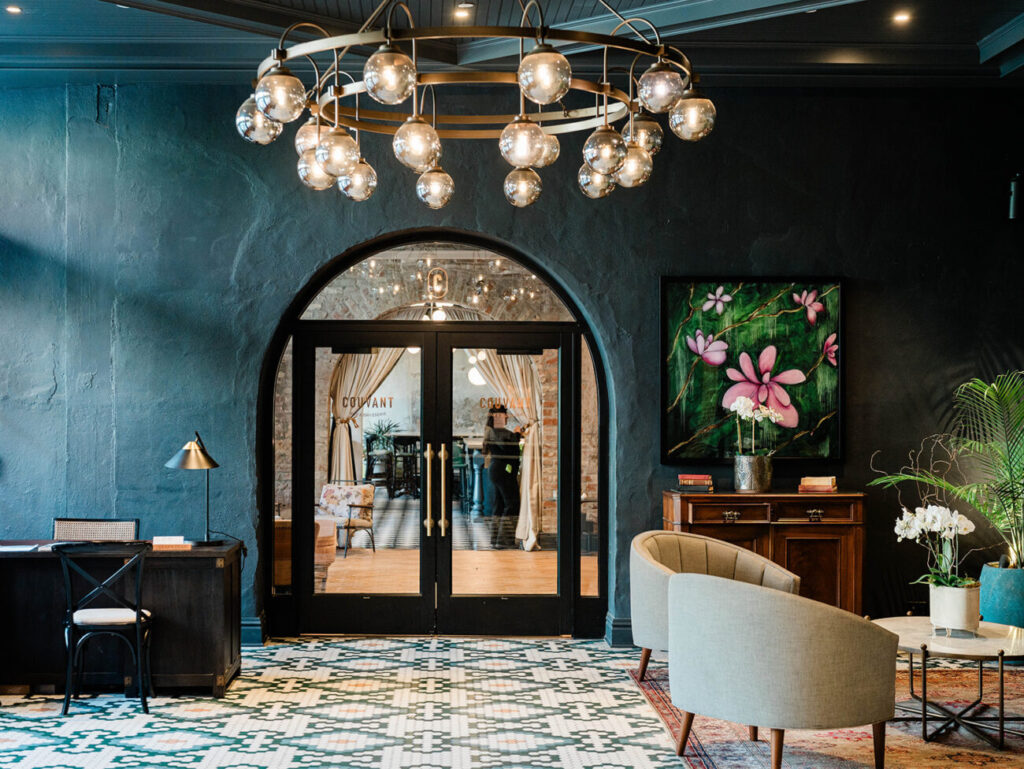
The Press Room lounge is lined with locally sourced vintage typewriters, antique books, and printing-era accessories. Suites carry names like the Editor’s Suite and the Publisher’s Suite. The ink-colored leather headboards in every room are a direct nod to the print trade. The building also housed the Peychaud Cocktail Bitters factory, which now holds the Couvant restaurant. Book via theelizajane.com.
Andrew Jackson Hotel— 919 Royal Street, French Quarter
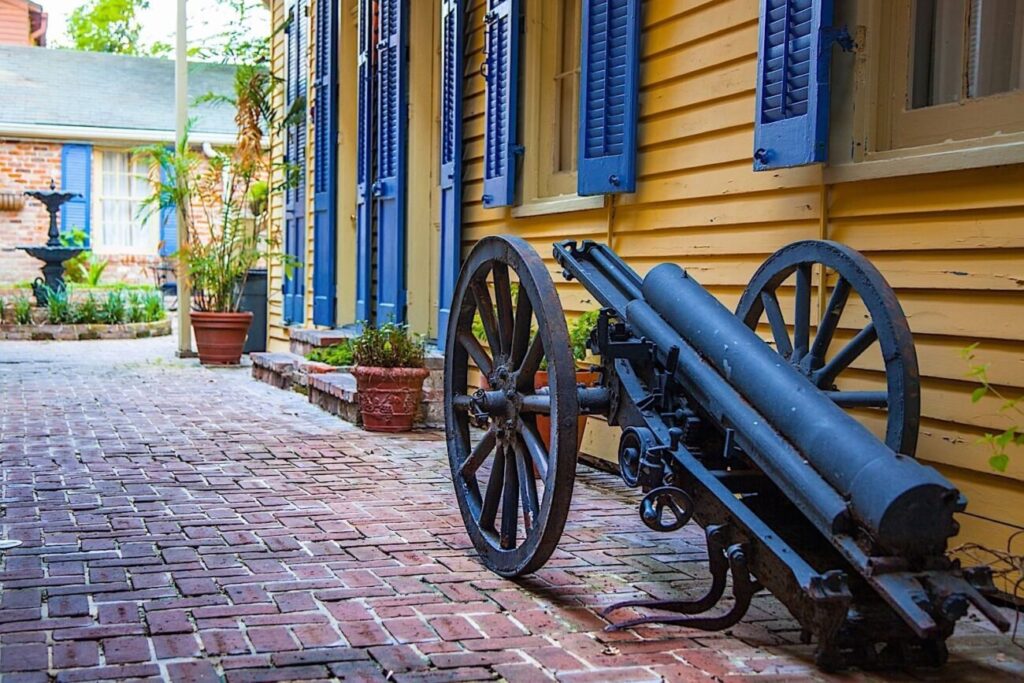
The ground beneath this 21-room French Quarter property has held more history than most city blocks can claim. The Spanish Colonial Government opened a boys’ boarding school and orphanage on this site in 1792, housing children orphaned by the yellow fever epidemics that tore through New Orleans each summer. In the Great Fire of 1794, the school burned with five boys inside. A Federal Courthouse replaced it almost immediately, and it was in that courthouse where General Andrew Jackson was fined $1,000 for contempt of court after refusing to lift martial law following his victory at the Battle of New Orleans.
The courthouse stood until the late 1800s, and the current two-story brick building went up in 1890. Listed on the National Register of Historic Places since 1965, it now offers 21 guest rooms with wrought-iron balconies overlooking Royal Street, a fountain courtyard, and a reputation as one of the most actively haunted properties in the city. The storytelling here is embedded in the ground itself, several centuries deep. Visit andrewjacksonhotel.com for rates.