

In the 1870s, a heavily indebted newspaper called The Daily Picayune passed to a woman named Eliza Jane Nicholson after her husband’s death. She could have sold it. Instead, she introduced society pages, family columns, and a reader-focused voice that tripled circulation within two decades.
By the 1890s, she had turned a struggling penny paper into a national institution, and in the process became the first woman to publish a major metropolitan newspaper in the United States. The hotel that now bears her name sits inside the very warehouses where that paper was made.
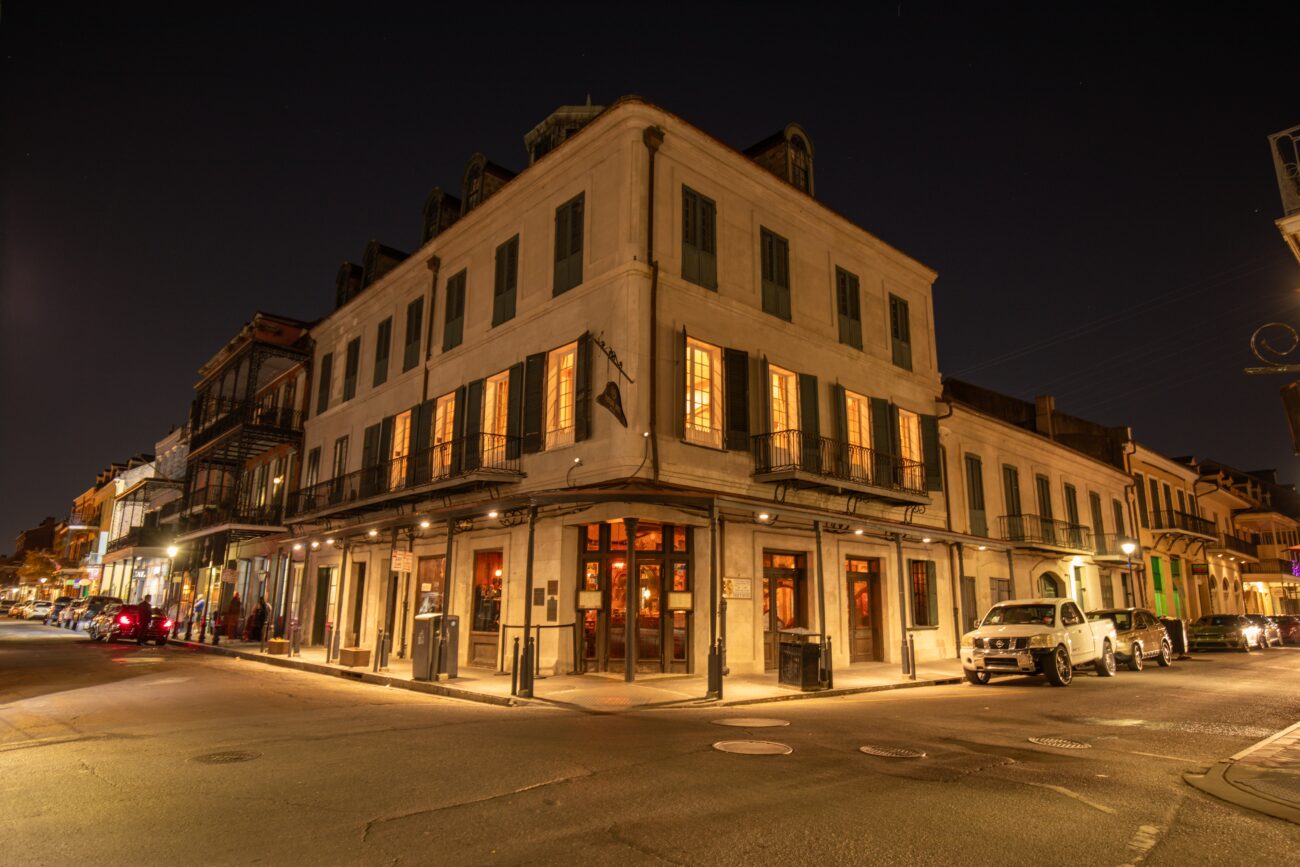
The Eliza Jane occupies a collection of historic 19th-century warehouses in the Central Business District, two blocks from the French Quarter and a short walk from the Warehouse Arts District. The buildings once belonged to The Daily Picayune, the Peychaud Cocktail Bitters factory, the Gulf Baking Soda Company, and a Peters Cartridge shop, among others.
New York design firm Stonehill Taylor linked them together around a 2,000-square-foot open-air courtyard, keeping the exterior facades distinct while uniting the interiors into a single, layered property that rewards slow exploration.
The design team spent serious time in the archives before touching anything. Reception desks were built from salvaged index card cabinets.
The lobby bar and lounge, called The Press Room, is lined with locally sourced vintage typewriters, antique books, and printing-era accessories arranged across paneled shelves beneath a 60-foot vaulted atrium ceiling.
Ink-colored leather headboards run through the guest rooms as a nod to the print trade. Suites carry names like the Editor’s Suite and the Publisher’s Suite.
The references accumulate without tipping into theme-park territory, which is the hard thing to pull off and the reason it works.
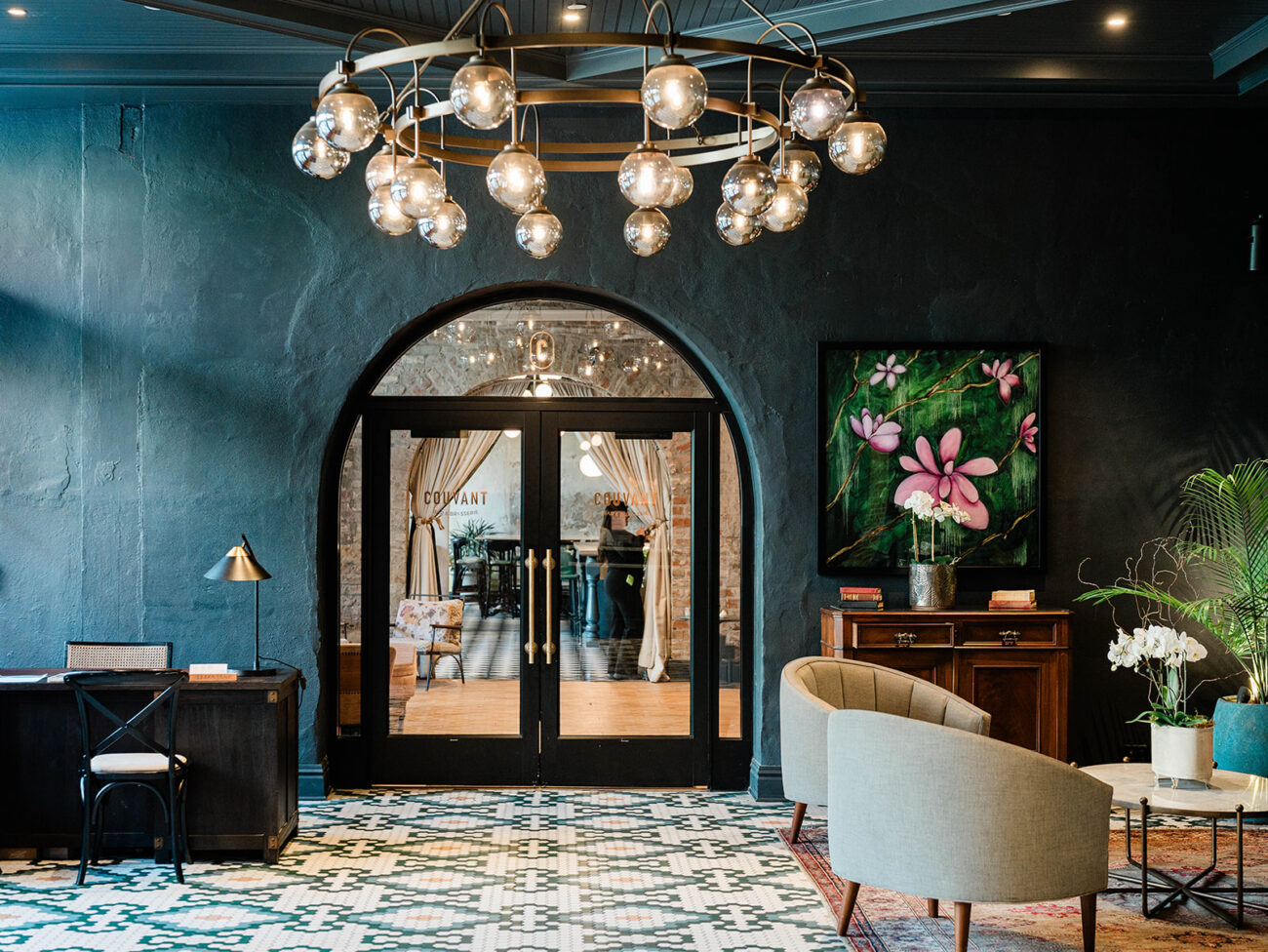
Couvant, the hotel’s French-inspired brasserie, occupies the former Peychaud Bitters factory, and the original exposed brick walls behind the bar make the history hard to miss. The oyster bar is clad in black-and-white tile. The sweeping oak bar was built from repurposed newel posts.
From Couvant, the open-air courtyard spills outward with original brick walls, overgrown trellises, a Venus-inspired fountain by local artist Brent Barnidge, and gas lanterns that make a New Orleans night feel the way it’s supposed to.
The 196 rooms and suites are warm and well-detailed, with exposed brick, brass Kohler fixtures, arched floor-to-ceiling windows in many rooms, and subway tile bathrooms in either teal or full Carrara stone.
The Eliza Jane is at 315 Magazine St. Visit their site for rates and reservations.